
NICK FRIEND AT BRISTOL: Australia are there, out on their own. They are almost playing their own sport. Rarely did these sides seem to be jousting on the same plain. England may well still be the next best. But second best has never felt so far away
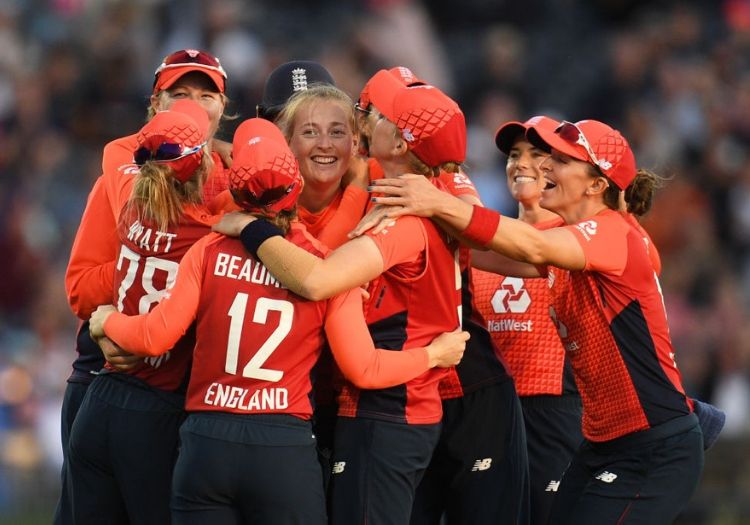
A victory for England. A much-needed result – not so much for the future of English women’s cricket, but for the morale of a team that has endured a difficult month of soul-searching and self-doubt. It was a performance of greater intent, fearless hitting and indebted to a superb bowling effort.
However, it is also a result that must not cloud the wider picture. It is evidence that this Australian team is beatable, but it must not be the ultimate takeaway from this series for England.
From the home team’s perspective, the last month has been a reality check. Glory at Bristol has added a tint of respectability to a one-sided scoreboard, but it is one that provides an unlikely twist to a different reality.
For the wellbeing of this England team going forward, hiding behind a last-gasp triumph will solve nothing. What is needed is a total acceptance – an admission that Australia are living in a different, vastly superior sphere.
As the ECB brings through its restructuring of the women’s game, it must not be afraid to copy what Cricket Australia have done. It will take time. Australia’s revamp has taken time. But it must be done. Imitation, after all, is the sincerest form of flattery.
“It’s not a quick fix by any means,” Tammy Beaumont admitted after a meek surrender at Hove in the second T20.
“At the moment we've got a lot of belief in the group we've got, we've got to change a few things and work really hard and come back stronger, but looking to the future in maybe four years, five years' time, that's what's got to happen.”
It has opened eyes to what features ahead of them in this Australian side. “Athleticism,” Mark Robinson observed as the difference between the two teams after the Test draw at Taunton.
He was not wrong, but in describing it as he did, he drastically underplayed the secondary impact at play. He was speaking not of acrobatics, but rather hinting at the capacity to clear the ropes, a propensity to affect run outs, the power to bowl faster.
Everything that England did, so too did Australia – but at greater speed, with superior force, awash with a gusto absent in their opponents. And crucially, with a consistency that comes with fitness.
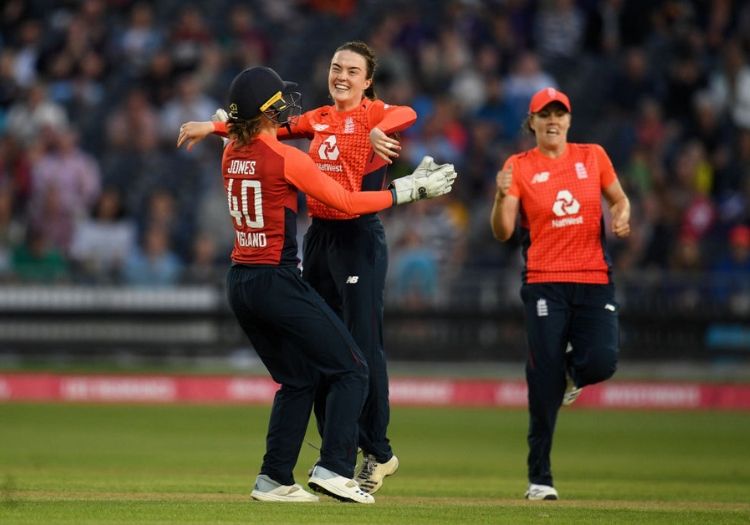
Mady Villiers had an excellent debut for England
Ellyse Perry – a former international footballer – is an obvious outlier; she is an exception to any rule with bat, with ball or in the field. But in Alyssa Healy, Ashleigh Gardner and Sophie Molineux among others, Australia possess an array of multi-dimensional stars – the type that England are desperately missing.
Mady Villiers showed the way at Bristol. Picked partially for her batting, she bowled beautifully on debut and added a level of dynamism in the field that many of her more established colleagues appeared to lack at times. It was the exuberance of youth coming to the fore. Sophie Ecclestone is another – her character is all that this England team should centre itself around.
There are more like her out there; Sophia Dunkley was part of England’s World T20 squad, while Kirstie Gordon played in the Test at Taunton. It was an individual performance that provided a rare positive in a series of disappointment.
Whether she might have been picked earlier is a different debate, but what is certain is that she will – and must – become a more prominent part of this side as times move forward.
For the sake of both Heather Knight and Mark Robinson, one hopes that the recriminations in the hosts’ camp are focused higher up. In truth, it is difficult to know what more the pair could have done in recent weeks – particularly Knight.
Furthermore, it is tough to comprehend what many expected from a series that – off the field, at least – is a structural mismatch.
Australia’s domestic setup, quite simply, is streets ahead of England’s. And while the ECB are preparing to introduce long-awaited and painfully overdue reforms, Cricket Australia have announced that Meg Lanning’s side will earn the same as their male equivalents when the World T20 reaches Australia in 2020.
The timing of the announcement is no doubt a coincidence, but it will have resonated in the sphere of the women’s game, not least among an England camp clinging onto the coattails of their great rivals. It is hard to recall the last time these two teams felt so far apart.
It takes us back to the World Cup of 2017, a month-long festival of women’s cricket that changed attitudes, created extraordinary memories and culminated in a final that few will ever forget. But at the same time, two years on it sticks out as a red herring. In a country where the women’s game is still to capture a regular mainstream television audience, Knight’s side is – to many – the team that won the World Cup.
That, in itself, is not the issue. The problem, however, is one of stagnation. This England side is that England side, but two years later, two years older, two years without truly developing. It is a team without innovation, but it is also a team that has been mostly unchallenged by those below them.
The Kia Super League, for all its good, has failed to produce the stream of young talent that the Women’s Big Bash has cultivated so successfully. In short, the best players in England are on the field for England.
England’s two brightest young players, Amy Jones and Sophie Ecclestone, have shown so much promise in their fledgling international careers, but they are not the norm.
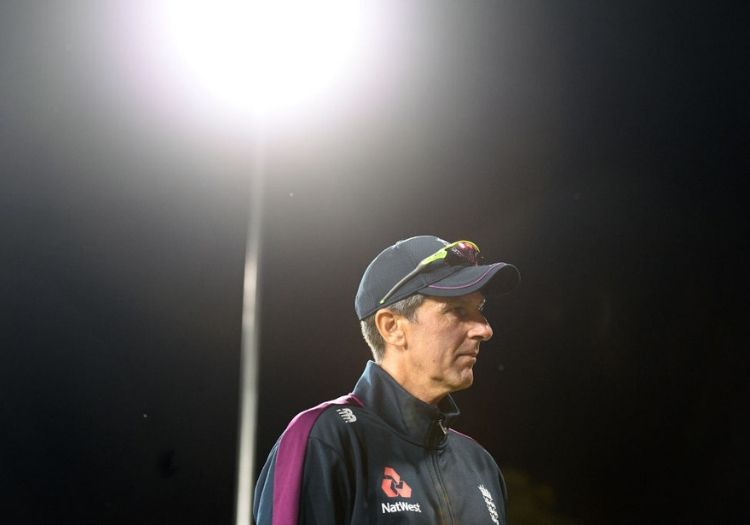
England won just once in the seven-game Women's Ashes series
While the excellent Ecclestone has bowled far better than her 13 wickets in this series suggests, Jones has endured a torrid time, making just 24 runs in the six limited-over games. In her previous series against West Indies, she had stroked her way to scores of 80 and 91. The step-up has been immense. She will come again – her half-century in the Test highlighted a rare talent.
When England lost Katherine Brunt to a freak ankle injury in the second ODI – a blow that ruled her out of the subsequent game at Canterbury as well, it displayed a stark reminder of quite how reliant England remain on the 34-year-old seamer who, sadly, will not be around forever. She was replaced for that game by Fran Wilson, a middle-order batsman, but certainly not a bowling option.
Allrounders of Brunt’s ilk do not grow on trees, but the panicked lack of cohesion in her absence should concern England. The consequence in the final ODI was a hideous one for England, backing their reinforced batting lineup at the expense of a key bowler against a side loaded with runs.
The inevitable transpired; England were left facing what would have been their highest successful chase in ODI cricket.
As it happened, they succumbed to their third-lowest total in ODI history. It was their lowest against Australia and their most meagre return against any opposition for 14 years. In England’s narrative, that game has been somewhat swiped from memory – as it had to be if Knight’s side was to have any chance of recovering a perilous situation.
The line has been that the first two games showed England closer to their best. This win at Bristol was ultimately their most complete performance by some distance.
Yet, the third game showed Australia at their zenith – and that is what England must measure themselves against. The gap was stark. It was a brutal unpicking of the world champions – and in the format in which they had claimed that crown.
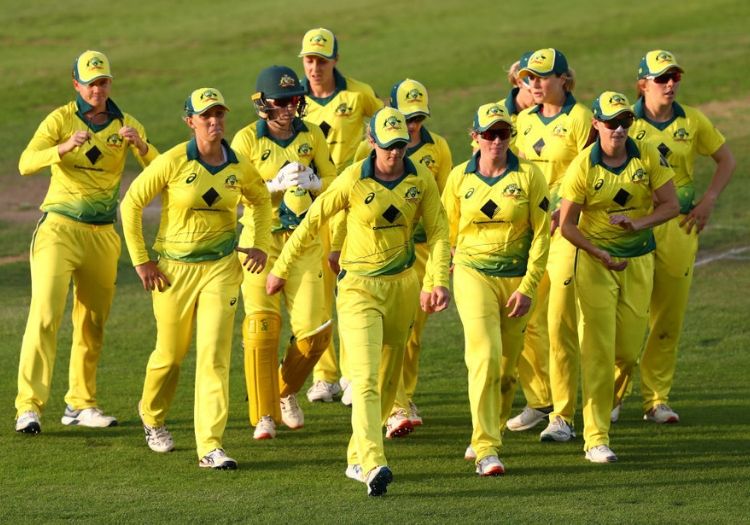
Australia were dominant for much of the month-long contest
In many ways – and for wont of a better phrase, it is what it is. This series has provided a microcosm of where England are at and, indeed, of where Australia lie.
Arguably, the only session of the entire Test that England won was when they counterattacked to pass the follow-on target. Even then, it was a response that came later than it should have done. That, perhaps, tells its own story.
The inquest, in reality, has been in full flow ever since the third ODI was lost in such brutal fashion. The series may well have been lost even earlier, when Knight’s side contrived to lose two games they ought not to have done in a contest where their opposition’s very best was always likely to be too much.
Failing to take the points, therefore, when they were there for the taking and their visitors were below par, always felt like it might have fatal consequences.
Ultimately, though, this Australia team wins games. As the last rites were read out at Bristol, Australia had lost just three times since the beginning of 2018, winning 29 games in the process across the sport’s three formats.
England, of course, entered July on the back of 14 consecutive white-ball wins. What they have learnt, though, is the enormous gulf that has born its teeth as this series has progressed. That they dragged it back at Bristol was to their immense credit. It was, if nothing else, a show of serious mental strength. The gap, however, is widening.
Australia are there, out on their own. They are almost playing their own sport. Rarely did these two sides seem to be jousting on the same plain. England may well still be the next best. But second best has never felt so far away.
To celebrate England winning the World Cup you can subscribe to The Cricketer for just £20.19. Click here to learn more

Welcome to www.thecricketer.com - the online home of the world’s oldest cricket magazine. Breaking news, interviews, opinion and cricket goodness from every corner of our beautiful sport, from village green to national arena.