
HUW TURBERVILL: Late last summer I was at Canterbury for the fourth and final day of Kent v Leicestershire, and I saw something that initially surprised me, and then warmed the heart

Late last summer I was at Canterbury for the fourth and final day of Kent v Leicestershire, and I saw something that initially surprised me, and then warmed the heart.
Martin Saggers, the former Kent stalwart, was walking out to the middle as umpire. I thought, how nice cricket can still do that.
Just think of the stink when Martin Atkinson – born in Greater Manchester, living in Altrincham, six miles from Old Trafford – refereed Liverpool v Manchester United in October 2016 (without drama as it happened).
It prompted me to have a chat with Chris Kelly, who has been the ECB’s umpires’ manager for 12 years. The 60-year-old was also in charge of the ICC Elite Panel between 2002–06.
“Sometimes it is difficult to put your finger on why somebody is a better umpire than somebody else,” he said. “We have 25 full-time umpires. They are full-time ECB employees. There are also eight on what used to be called the reserve list who have now been incorporated into the team of first‑class umpires.
“We have a robust performance-management system but this is far from a perfect science. Currently there is no policy to select ‘neutral’ umpires with the intention to avoid sending umpires back to their old clubs. Neil Mallender was born in Yorkshire, and Alex Wharf was also born there and played for the county. It’s practical for them to cover Yorkshire on occasion. Peter Hartley played for three counties (Hampshire, Warwickshire, Yorkshire) so it is not always practical to avoid him officiating those teams.
“We had an occasion last summer where David Millns had to call off umpiring the Somerset v Middlesex match at short notice, and Mike Burns, a former Somerset captain, was the nearest available alternative. Middlesex were fine about it, however…
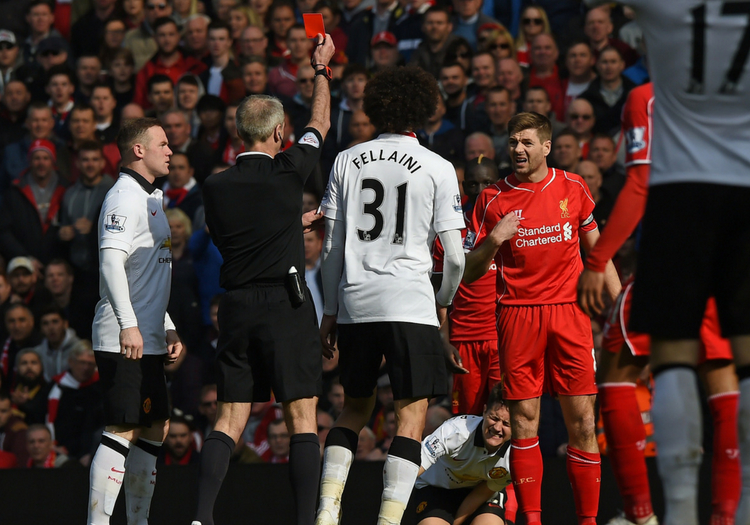
Martin Atkinson sends of Liverpool's Steven Gerrard
“Whether in 2020, with the new city competition, when the stakes are higher, and potentially more money is up for grabs, levels of scrutiny will go up… we will have to see…”
On the type of umpires he looks for, he said: “Of course I understand why players want correct decisions to be made. But it’s also all about having honest, credible characters… the late, great David Shepherd made some mistakes, but he had knowledge, experience… he instinctively knew how to talk to cricketers. He didn’t necessarily know the Laws off by heart, but he followed his gut cricket instinct, then went to look things up and found he was 95 per cent right.
“So when picking umpires, we look at the person and their ability to adjudicate. You could train people to make a decision and respond to specific situations. You cannot necessarily train someone to respond and to manage people in the most effective manner.”
My father’s cousin Roger sent me something he had recorded off the telly in about 1987. It was called ‘Men in White Coats’, part of the On The Line series.
It suggested umpires were not treated quite as well back then…
Billy Ibadulla (now 82) played for Warwickshire, and appeared in four Tests for Pakistan, before becoming an umpire. After finding himself out in the cold, though, he told the programme: “I was a worker… there to receive orders.”
The late Peter Roebuck, captain of Somerset back then, chimed in: “You don’t pay them [umpires] much and you work them as much as possible.”
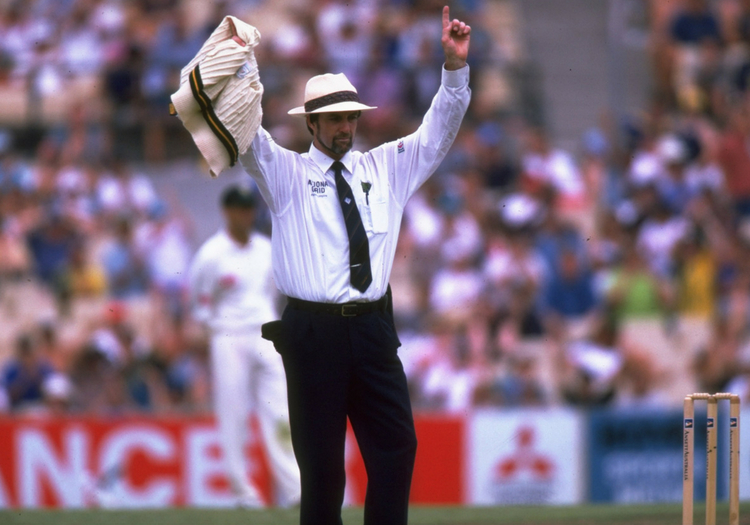
"We conform to employment law. We don’t just drop people”
The narrator says umpires “are household names in the summer, on the dole queues in the winter”.
The programme makes the point that in no other sport were the referees/umpires/officials assessed by the players, which Kelly sees as a positive. “Players’ perspective is a key part of the puzzle,” he says.
The insinuation was that umpires were reluctant to give captains out, a view resignedly backed up by England bowler Mike Hendrick. Stats then showed that lbw accounted for 14.7 per cent of batsmen’s dismissals, but only 12.2 for captains (although the fact skippers are often the best batters in cricket could be a factor in that – discuss…)
Umpires also felt the heat when it came to taking players off in bad weather, with some of course wanted to stay on to push for victories, and others seeking refuge, a hot brew and a draw in the dressing room.
“I still ask captains their views,” said Kelly. “I’m careful with the questions I ask, and that they are talking about all four days of a game, rather than just day four, for instance. We also ask the cricket liaison officers for a more objective view, and they will provide direct feedback to umpires. I also have every appeal analysed on video. The players are often impressed by our stats.
“I am asked, ‘players are judged by scores in the public domain – why are umpires not judged publically too?’ But you wouldn’t publish employees’ records, and when somebody is struggling, they go through support measures.
“When it does come to replacing umpires on our list, we conform to employment law. We don’t just drop people.”

Welcome to www.thecricketer.com - the online home of the world’s oldest cricket magazine. Breaking news, interviews, opinion and cricket goodness from every corner of our beautiful sport, from village green to national arena.