
NICK FRIEND: One of the great oddities of England's endless search for a long-term opener has been its scattergun approach – players reaching the top of the pecking order, only to be cast off into obscurity in no time at all
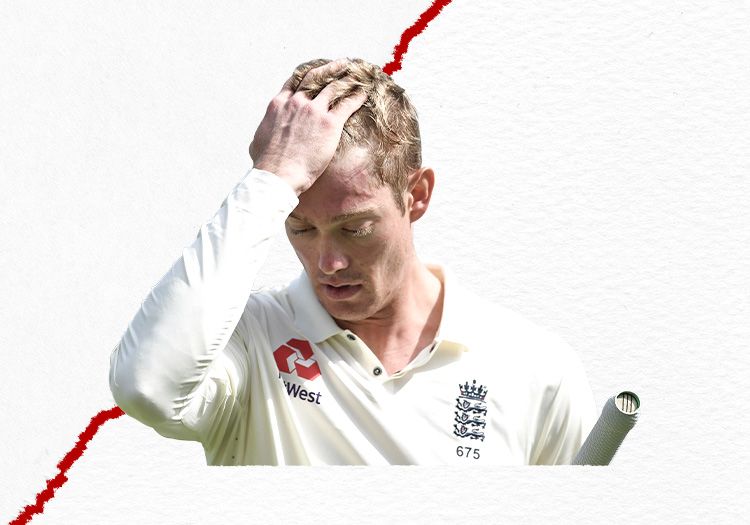
What's it like to sit on the scrapheap of England openers?
It's a question to which there is an ever-growing number of prospective respondents: of the 23 men to have tried opening the batting since the retirement of Andrew Strauss, 12 have been jettisoned on the back of their efforts. Some, like Joe Denly and Moeen Ali, have been repurposed for other roles – and others, like Zak Crawley and Haseeb Hameed, have earned a second visit to the merry-go-round.
But there's a fascination to vying for a position quite so volatile: nominally, 36 county cricketers pushing for two places, safe in the knowledge that when you've had your go, you shuffle back into a lengthy pack while someone else picks up the flame.
Once discarded, though, what happens next? And how do you recover? One of the great oddities of England's endless search for a long-term opener has been its scattergun approach – players reaching the top of the pecking order, only to be cast off into obscurity in no time at all. Sam Robson played seven Tests in 2014, scored one hundred and averaged upwards of 30 but has never been seen again. He scored 1,047 runs in 2021 and, given the challenge of batting at Lord's, that figure ought not to be sniffed at.
Keaton Jennings made two centuries – both on the subcontinent – in 17 appearances between 2016 and 2019. Adam Lyth hit a highly accomplished ton against New Zealand in 2015, struggled in the subsequent Ashes series, was dropped and returned to Yorkshire where he churned out more than 1,100 runs the following year. By then, though, his time had passed. Only, he almost reappeared last year, informed by Chris Silverwood in a personal phone call that he was on standby. His form promptly fell off a cliff and he was usurped by Hameed.
"I've never wanted to get back in as much as last year," Lyth tells The Cricketer. "I was in great form, champing at the bit, and was probably trying a bit too hard. That's probably why the form deteriorated a little bit."
Jennings can empathise with that sentiment: when he was dropped after struggling against South Africa in 2017, he made four off 10 balls in a T20 Blast innings less than a week later. In his next first-class match – against Derbyshire for Durham – he was caught behind off the game's first delivery. By his own admission, he found the transition back into the bread-and-butter of county cricket a tough challenge.
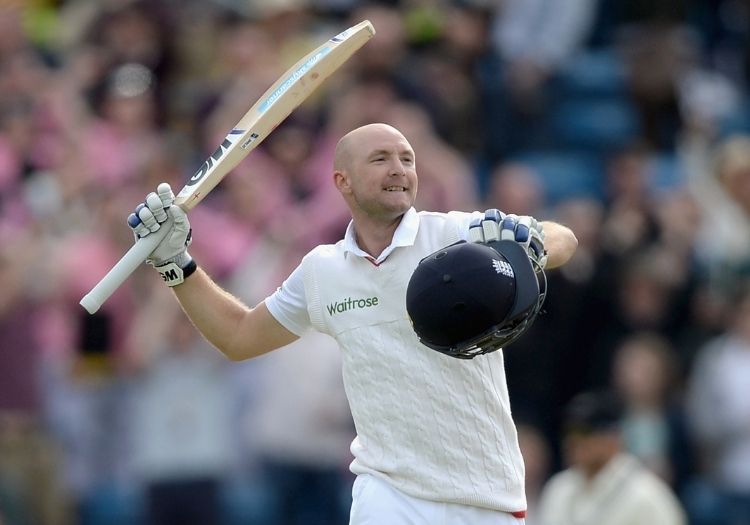
Adam Lyth only played seven Tests despite making a hundred against New Zealand (Gareth Copley/Getty Images)
"It's just the pressure-cooker of having failed," he says. "I'm a proud guy anyway, I wanted to do well. You come out of that environment and then suddenly you start looking at your own technique. You're trying to handle the hurt of being dropped, given the baggage that comes with representing England.
"You want to play for England, everyone wants to play for England. But that's been taken away from you. So, how do you handle that disappointment? You have to go and perform the next day. I remember being dropped in 2017 and the next day pretty much I was playing county cricket.
"One, you have to handle your emotions and handle your game; two, you have to go out and perform for your county in a really tough environment anyway. It's a tough place to be, especially immediately afterwards after being dropped.
"I'll be quite honest: I struggled for a period of time afterwards – it's an intense environment that nobody can prepare you for, to throw you into that cauldron of comment and criticism from people who you look up to.
"When I was small, I used to watch the guys who were commentating on me play, and now they're criticising you, which is quite a weird dynamic. But that's professional sport, and that's why there's such a keen interest in it."
He has learnt over time not to bother himself with reading too much into the opinions of others, even if he champions the importance of criticism as "vital in a professional environment".
He says: "What has irritated me in the past is when somebody has said something which has no validity to it. But if you put yourself in the space to read it, you're going to be in some way affected by it."
His father, Ray, played 159 first-class matches, while his older brother, Dylan, also had a professional playing career, and Ken, his uncle, is a renowned sports psychologist. Between the three of them – not to mention his own standards – he has found a means of keeping himself grounded.
After James Bracey's challenging start to his England career in 2021, he told The Cricketer how the travails of his first two Tests – the reward for years of progression through the pathways of Gloucestershire and England Lions – made it seem "like all the work I'd done had gone down the pan". He returned to his county and struggled to such an extent that he felt the need apologise to his teammates.
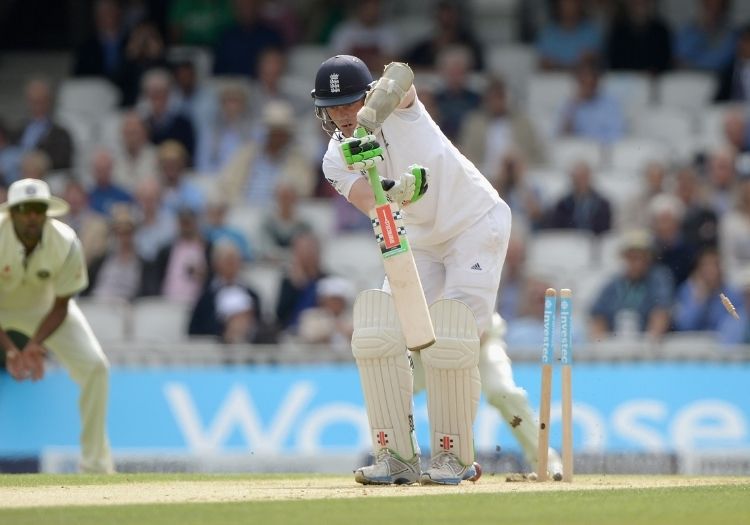
Sam Robson made a Test hundred against Sri Lanka and averaged 30.54 in seven appearances but hasn't been picked since despite passing 1,000 runs in the 2021 season (Gareth Copley/Getty Images)
"I'd be the first to admit that it wasn't really the same," he said. "I felt like I wasn't really in the best place to put in the best performances. I didn't have to apologise, but I did for coming back and having that effect my performances for Gloucestershire. It did hit me quite hard.
"Especially when I got that second duck and got out in a poor manner. You think: why would they pick you again? That's what goes through your head immediately.
“It's easy for me to say now that I feel like I've learnt a lot from it, but at the time it was gutting. It's the worst feeling in the world. It makes you feel so small."
In Bracey's case – and that of several young players tried by England in recent times – those difficulties were exacerbated by his relative inexperience. Ultimately, if you're playing for England at 24, your pathway has likely been smoother than most. The upshot is the Test arena – with its bright lights, intense public scrutiny and forensic opposition analysis – is often the site of their first failure as elite athletes. But speaking ahead of the new season, he now considers those struggles to be lessons "that I don't think you can learn before going into Test cricket" and that "it's probably more comfortable second time around".
As Mason Crane put it, speaking about his infamous Test debut as a 20-year-old thrust into an Ashes series: "You haven't learned enough about yourself at 20. I didn't know my best preparation for a game; when I went to warm up, I didn't know what really got me going in the morning.
"The shame for me would be if I were to finish my career and my career would always be defined by one game I played. But that game could be 12 years before I was at my best, and that's what I'd be defined by. That's why I'm so desperate to play and put it right."
Mark Stoneman was on the same Ashes tour and mostly held his own, before making fifties in the two Tests before his last. "He was banging on the door, and you couldn't ignore that he had to be playing," adds Crane.
"He's not become a worse player since he stopped playing for England, but no one says his name anymore. It's your one go, isn't it?"
In the cases of Robson and Lyth especially – neither of whom have been picked again despite big runs in recent seasons – it feels difficult to counter Crane's final point. "I genuinely can't believe that Robbo's never had another go," a county teammate told The Cricketer.
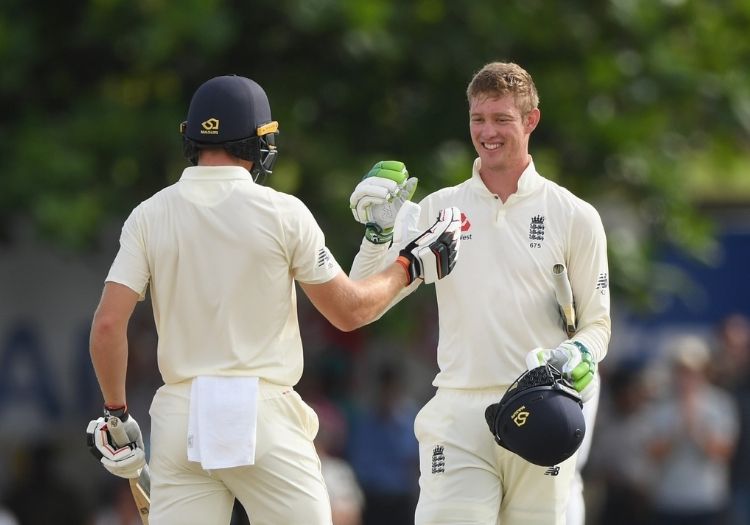
Keaton Jennings hasn't played for England on home soil since 2018 but has impressed with his batting against spin (Stu Forster/Getty Images)
When Bracey next earned higher honours, he dug in to make a century against Australia A for England Lions over the winter but was ignored for the subsequent West Indies series. It feels like a lifetime ago that Ben Duckett was handed his chance on twin tours of Bangladesh and India in 2016, having battered the door down with consecutive thousand-run summers that featured nine centuries between them. At the highest level, he found a nemesis in Ravichandran Ashwin but recovered to make three more hundreds in the following summer. Barring an aberration in 2018, not since 2014 has he averaged shy of 37, albeit no longer as an opener.
That's not to query the selectors' decisions since then, but it begs the question as to where players feel they fit on the food chain once their first taste of international cricket is over.
"Probably the back of the queue, to be honest," Lyth admits. "I got a thousand runs when I got left out in the following year, but that's just professional sport. At the end of the day, if you put in the big performances and get the weight of runs, they can't ignore you. Hence last year."
Jennings concurs: "It's a really good question. In essence, you need to score runs if you want to put your name in the hat. Wherever you are, you need to score runs. The guys that drop down, like myself, all we can do if we want to play for England again is go back to our counties, average 50, win games of cricket and put ourselves in positions where you could get picked again. At the end of the day, that's up to the selectors. All we can do is score runs."
Robson adds: "In the first couple of years after England, maybe I thought about it a bit too much at times rather than just going out there and playing. It's in the back of your mind all the time – I'd be lying if I said it wasn't – but now it's not something that I really analyse or think much about.
"I'd love to play for England again. As long as I'm playing first-class cricket, that is something I'll always be striving for, regardless of whether a player's 25 or 35. I think that should always be in the back of your mind."
Asked how he'd have fared if the opportunity had come his way last summer, Lyth adds: "It's just experience. I'm sure if I got the chance again, I'd do a hell of a lot better than what I did."
To a degree, that's why the selection of Alex Lees for the tour of the Caribbean made plenty of sense and why Rory Burns, who had scored 7,601 first-class runs before his Test debut, remains perhaps the most successful incumbent since Strauss.
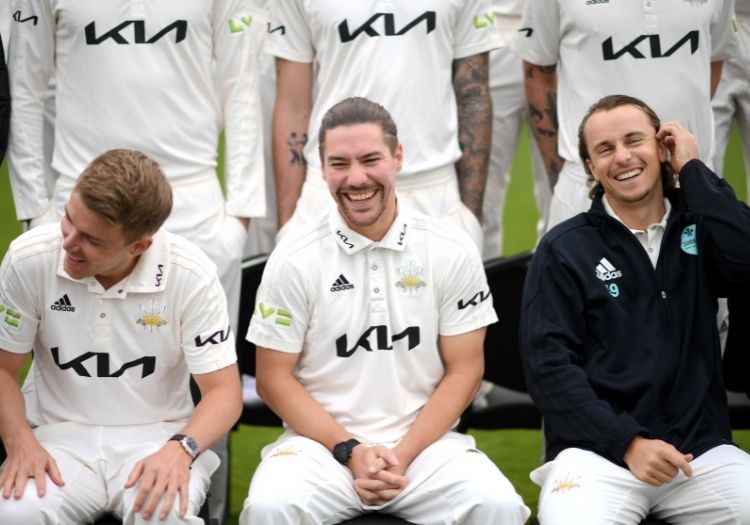
It's hard to believe that Rory Burns won't be among the leading run-scorers in the first months of the season (Alex Davidson/Getty Images)
Aged 28, Lees has been through plenty as a professional cricketer, captaining Yorkshire at 22 but leaving to reinvigorate his career after finding the going tougher as the years wore on. And unlike some previous selections, where players have been plucked for winter tours on the evidence of a solitary fruitful summer, he has done the hard yards and put together three consecutive years of solid run-scoring.
Crane points to Jonathan Trott and Michael Hussey as two examples of where picking seasoned pros bore fruit, while 33-year-old Ben Brown – with 17 first-class tons since 2015 – has made the same point in recent days. Robson adds Chris Rogers and Adam Voges to that conversation – both former Middlesex teammates. "Guys like that have been a bit of an inspiration," he says. "Maybe that's a bit over the top, but seeing guys like that play at their best as they got older spurs me on.
"The more you play and the older you get, the better you get until the point where it's time to call it a day. I think that's been the case with me, but that doesn't always mean that's when you're going to get your opportunity. I feel in a good place, so hopefully I can carry that on."
By contrast, the risk with picking players on the back of a single season is that they get found out or that a solitary fruitful summer was all it ever was. As one county pro told The Cricketer: "That's the problem with picking them after their year. If they're in the form of their life, then pick them during that year when they're in the form of their life, not after when it's finished and died down and the sheen's come off." At that point, often after months without a competitive hit, you're hoping that run is still going.
Take Tom Haines, touted in some quarters for an England Lions winter after ending 2021 as the County Championship's leading run-scorer, but for whom nine of his 13 career scores above fifty came last summer. It may well be that he's cracked it – he told The Cricketer of an epiphany following a chat with Cook – but he will be much closer, you sense, if he can back up last year's haul with another in 2022.
If nothing else, then, Lees' journey means he is battle-hardened. That much was clear in only his second Test when, having been trapped in front twice on debut, he arrived in Barbados with a technique that had been subtly adapted.
So, what of technical adjustments? Jennings recalls a conversation with Andy Flower who "once said to me that change is good, as long as it moves you forward". But the Catch-22 has often been this: players arrive on the international scene with a technique that has worked at domestic level and given them their chance in the first place – take Gary Ballance's pronounced backward trigger or Jennings' own upright, mechanical stance.
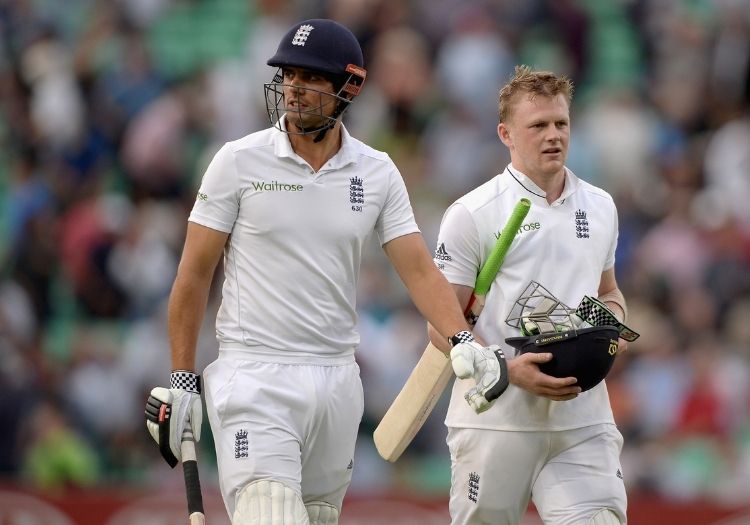
23 players have opened the batting for England since Andrew Strauss retired (Gareth Copley/Getty Images)
When it doesn't work with England, then what? Do you return to county cricket and change what's previously worked (Jennings averaged 64.08 in 2016 with seven centuries before making his Test bow) for a different setup, even when there's no guarantee of an international recall? For one, Lyth reckons his game remains more or less the same now as when he had his brief sojourn with England.
"That's the million-dollar question," says Jennings. "You would be helping 23 guys out if you could answer that! It comes down to criticism and making sure you grow and get better.
"I'll point the finger at myself: when you're in that environment, there are a lot of voices and there's a lot of pressure to do things differently. When things look different, people don't like it which – at times – is a shame. You watch guys in the past: Graeme Smith was very different, but his essence was that he scored runs."
Burns – "the best opener in the country" in the recent words of his county head coach, Gareth Batty – is a more recent example of the same nuance. It's hard to imagine the Surrey skipper, batting at The Oval, not being among the leading run-scorers in the county game come the end of May. What then?
Two Tests before he was dropped following the Ashes defeat at Adelaide, he made 61 against India's much-vaunted attack at Headingley. Four Tests further back, he hit 132 against world Test champions New Zealand at Lord's, following that up with 81 at Edgbaston.
And yet, the decision to relieve a player at one stage touted as a potential future captain and stick with Hameed, albeit temporarily, suggested that England – under Chris Silverwood, at least – were prepared to move on from Burns and his idiosyncrasies. And while his record was generally unspectacular – three hundreds in 32 Tests, averaging 30.32 – it seemed that his unusual movements were too much for people when he was out of the runs.
"It becomes quite a hostile environment," says Jennings, who went through a similar reckoning around his technique.
What is clear is that having done the job in any capacity breeds "serious empathy". He watched from afar through the winter and sympathised with Burns, Hameed and Crawley – more than anything "because they're good people as well".
"To see them struggle is hard, to know the struggle that I went through is hard."
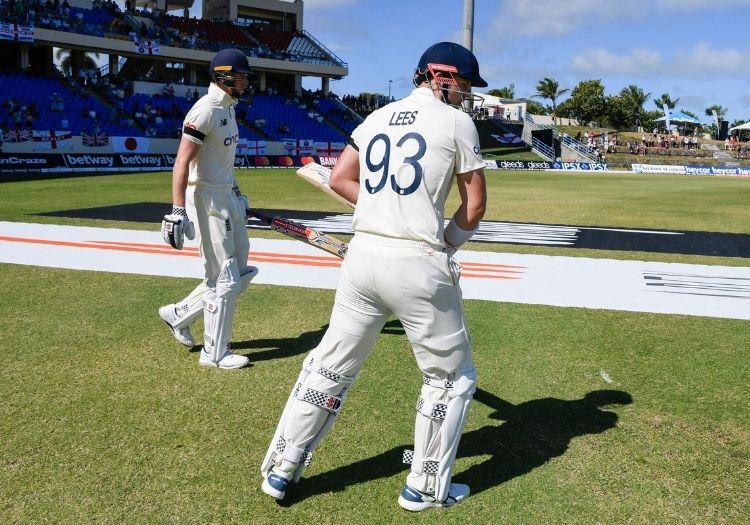
Alex Lees' experience makes him a sensible fit as the latest incumbent (Randy Brooks/AFP via Getty Images)
For him, the turning point was when the critics came for Joe Root and Alastair Cook: "These guys are averaging 50. I think that's probably when the penny dropped for me, when I read criticism of Cooky. If he's getting stick when he's literally the greatest of all time – undisputed, scored the most runs as an opener ever – how am I going to escape this?
"I think you have to take it with a pinch of salt when you're in that reality that you're probably going to catch it in the neck, and ride the wave."
Because the simple truth is a poorly-kept secret: opening the batting for England – or, indeed, in England – is a brutal challenge. If it were easier, someone would have nailed it by now. In the last decade, only four Test openers – Cook, Strauss, Rogers and Rohit Sharma – have averaged in excess of 40 on English soil. Lyth, who was an unused squad member on the West Indies tour in 2015, admits he'd "have loved to" play some of his Tests abroad, where the surfaces might have been more forgiving.
The irony in Jennings' case is that he remains highly thought of as an option on turning pitches in Asia, even if his record in the UK leaves much to be desired. It was widely considered an error of judgement not to include him on the trips to Sri Lanka and India last winter, especially after he was picked for the Covid-aborted series in Sri Lanka a year earlier. It's a strange perception to carry, but not one that he resents.
"To be honest, if you said to me I could only play Test cricket in the subcontinent, I'd snap your hand off," he says. "You want to play as many games as you can for England for as long as you can. I'd love to have performed at home and away, but unfortunately I haven't done that – not through lack of effort, it's just the way it is."
Not that he has given up on a home recall: barring a serious calf injury that ended his summer prematurely, Jennings enjoyed a solid season, averaging 48.08 in first-class cricket in a Lancashire team that narrowly missed out on the title.
"All you can do is try your best and try to improve. I'd like to think that every day nobody is more guilty than that, and I try to give myself the best chance. If I travel to the subcontinent again and play for England, cool. I'd be more than happy with that. If not, I've played for England, I've watched Deco belting out Jerusalem at the top end of the Antiguan stand. You have memories that nobody else can take away from you."

Welcome to www.thecricketer.com - the online home of the world’s oldest cricket magazine. Breaking news, interviews, opinion and cricket goodness from every corner of our beautiful sport, from village green to national arena.