

ELIZABETH BOTCHERBY takes a look at the major topics to emerge from day one of the fifth Test in Hobart
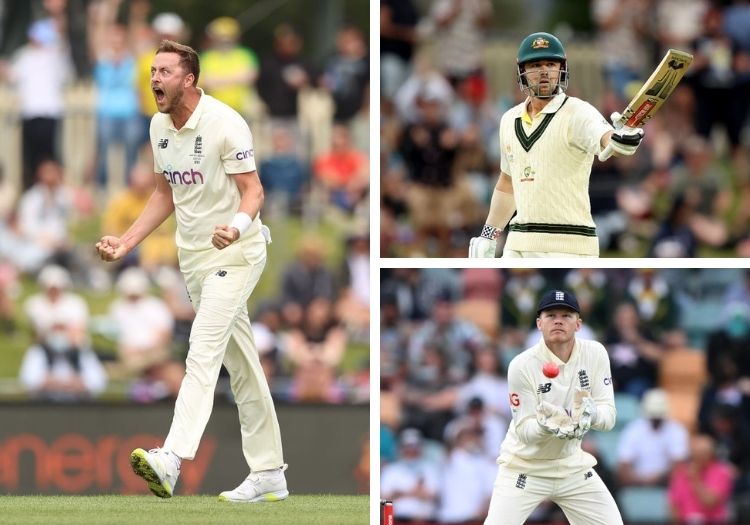
England made five changes for the final Test in Hobart with Sam Billings, Ollie Pope, Rory Burns, Chris Woakes and Ollie Robinson replacing Jos Buttler, Jonny Bairstow (both injured), Haseeb Hameed (chronically out of form), James Anderson (resting, or possibly carrying a knock) and Jack Leach (surplus spinner).
Although not unexpected, the sheer number of changes prompted Sir Alastair Cook to query on BT Sports when England last made so many alterations to their XI.
According to resident TMS statistician Andy Zaltzman, it is actually the ninth time in their past 17 Tests that England have made four or more changes and the 11th time in 23 Tests. In 235 Tests between December 2001 and January 2020, it happened on 10 occasions.
Covid-19 will have played a role in this, with bubble fatigue and England’s favoured rotation policy necessitating frequent changes in personnel. But is it any wonder Joe Root’s side have struggled to string results together over the past two years with such regular and sweeping changes to the playing eleven?
Isa Guha, meanwhile, questioned why Saqib Mahmood wasn’t brought into the line-up to offer a glimpse of what could come in the future.
The Lancashire pacer was on stand-by for the Test side while playing in the Big Bash with Sydney Thunder but was sent home with the rest of England’s white-ball squad earlier in January (Billings was also due to depart before his call-up).
That said, Test caps shouldn’t be dished out willy-nilly and with both Chris Silverwood and Root fighting for a win to ease the pressure on their respective positions, perhaps mass experimentation was not a priority on this occasion. After all, at least two of the five changes were unavoidable due to injury.
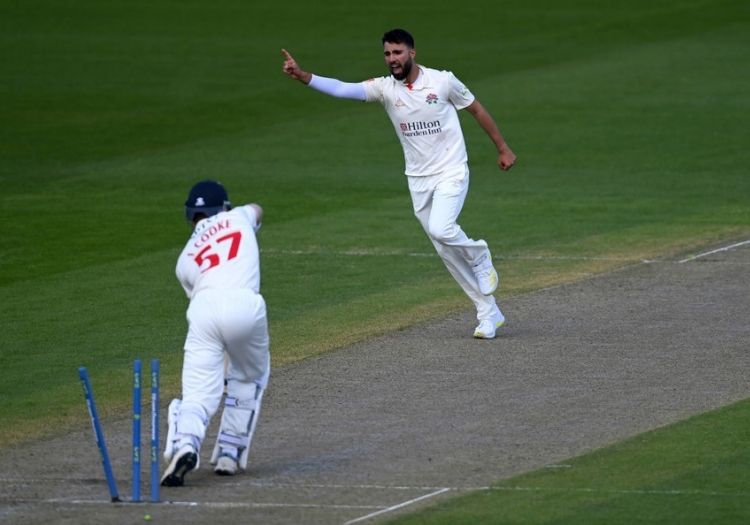
Saqib Mahmood [Gareth Copley/Getty Images]
For the first 10 overs, it was hard to recognise this England side.
Just a few of weeks ago, the nation was pleading for fuller lengths from England’s bowlers. In Hobart, Stuart Broad and Ollie Robinson delivered, the latter, in particular, oozing confidence and consistency in his line and length.
They reaped the benefits of the early seam movement, too, with cries of 'edged', 'leave' and 'beaten the bat' dominating the first hour of commentary. David Warner, Usman Khawaja and Steve Smith all fell to slip catches during this period and the trio should have been a quartet, Zak Crawley putting down Marnus Labuschagne after diving in front of Root at first slip.
All in all, it was a dynamite start for England, who had Australia wobbling on 12 for 3.
Unfortunately, Glenn McGrath, or Nostradamus as David Gower refers to him, was bang on in his predictions during his pitch report – a tricky first hour for the batting side but the potential to control the match beyond that point. His advice? Win the toss and bat.
And while the pitch shifted in the batting side’s favour, England’s bowlers also played their part in changing the momentum of the match. In fact, between overs 10.1 and 59.3, Broad’s dismissal of Labuschagne a few minutes before lunch was probably England’s only reason to be cheerful.
Counter-attacking became the name of the game with first Labuschagne and Travis Head and later Head and Cameron Green picking off deliveries with ease, drives and pulls replacing the defensive strokes and leaves of the opening 10 overs.
Change bowlers Mark Wood, introduced in the 13th over, and Chris Woakes (16th), struggled to nail their lines and lengths, with Wood’s skiddy deliveries yielding 31 runs in his initial three overs. And it turned out to be highly contagious. In the first 10 overs, 55 per cent of England’s deliveries were of good length; between overs 27 and 37, 51.7 per cent were short.
The only mitigating factor was a back injury to Robinson which limited him to just six deliveries in the second session and forced Root to bowl himself under lights.
The narrative of England’s Test performances is rapidly becoming a tale as old as time – flashes of brilliance punctuating a general theme of disappointment – prompting the usual questions around England’s selection policies (picking a injured Stokes and putting pressure on an injury-prone Robinson in a four-man attack, for example), decisions at the toss, and slip fielding.
The latter, admittedly, is quite harsh on Crawley, who is a fine fielder, but with so much change around the side how can anyone build a relationship with their slip partners?
Whoopsy-daisy 😵💫⛸️
— Cricket on BT Sport (@btsportcricket) January 14, 2022
Marnus Labuschagne gets into a tangle and Australia are 8⃣3⃣-4⃣!#Ashes pic.twitter.com/LHrBTqyfqP
As mentioned above, Mark Wood endured a tricky first day in Hobart. His first three overs yielded 31 runs as Labuschagne and Head went to town on his bowling and while he pulled it back, figures of 1 for 79 will please few bowlers. Had a wicket fallen during his change spell with Woakes, Australia may have been seven or eight down at lunch.
However, his Ashes should not be remembered for this innings.
Granted, his statistics heading into the fifth Test did not make for exciting reading – eight wicket at 37.62 – but as our very own George Dobell put it during the Sydney Test: "Stats are like words: you can arrange them in any order you like to say whatever you want. The idea that they offer some intrinsic truth is hubristic nonsense."
Not only has he dismissed Marnus Labuschagne (on three occasions), Steve Smith and David Warner in the past six weeks, he’s also been forced to take sole responsibility for England’s fast bowling in the absence of Jofra Archer and Olly Stone.
He's been intimidating, kept a good line, bowled quite relentlessly and made things happen. And, crucially, his ankle has held up beautifully.
All in all, whatever the numbers say, it’s been a solid series for Wood.
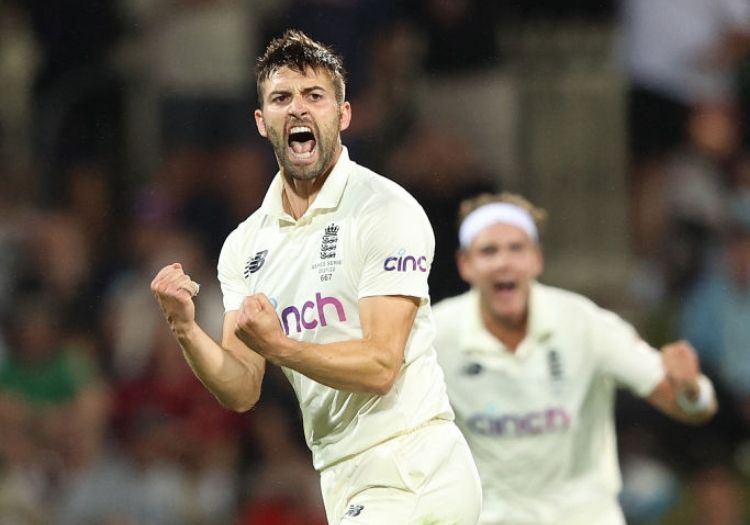
Mark Wood had a tough day in Hobart [Robert Cianflone/Getty Images]
Anyone who backed Travis Head to finish the Ashes as the leading run-scorer will be feeling pretty smug about their bold decision right now. The South Australian has scored 349 runs in five innings and sits 19 runs clear of Labuschagne and 72 clear of Root. He’s not wrapped up the gong quite yet but, on current form, is probably the favourite.
Sadly, it’s not a sensation we at The Cricketer will be sharing - the seven editorial staff backed Smith and Labuschagne.
But back to Head, who’s been nothing short of a revelation this series. His century at the Gabba was splendid, 152 runs coming off 148 balls, but with England all out for 147 and Warner and Labuschagne also cashing in with big runs, it doesn’t carry quite the same pizzazz as his knock in Tasmania.
He entered the match with Australia in dire straits, the sounds of his teammates frantically Velcro-ing pads likely ringing in his ears.
For 183 minutes, he picked off wide deliveries and straight deliveries with equal ease, he bludgeoned 12 fours and forced the walking wounded Ben Stokes to lurch back to the rope on numerous occasions, and was the senior partner in game-changing stands with Labuschagne and Green, the latter also enhancing his reputation with a 109-ball 74.
His departure, one ball after his reaching his century, was disappointing and a poor lapse of concentration. But his innings as a whole was both bold, affording him plenty of credit in the Test bank going forward, and a demonstration of the strength of this Australia team.
They are by no stretch of the imagination a great Australia Test side but what they do have is options. On day one, their top four suffered a rare failure but their batting depth, which extends pretty much down to Scott Boland (and even he has two first-class half-centuries to his name), bailed them out of a sticky situation. If only England had the same.
Our coverage of the Ashes is brought to you in association with Cricket 22
RELATED LINKS (APP OPENS IN EXTERNAL WINDOW)

Welcome to www.thecricketer.com - the online home of the world’s oldest cricket magazine. Breaking news, interviews, opinion and cricket goodness from every corner of our beautiful sport, from village green to national arena.