
A semi-final berth at the 2017 Champions Trophy has, for many, slipped under the radar. Yet, that performance was a symbol of inordinate progress, backed up by a runners-up spot at last year’s Asia Cup

Perhaps, in a height of oxymoron, the greatest compliment one could pay to Bangladeshi cricket is to suggest that it should be stronger than it is. To criticise a one-day international record of 122 wins in 362 games.
On some level, it is a debate that carries some merit. It implies that there is a visible potential, but one that has not been mined to its full depth.
There is certainly a hint of truth in casting such an aspersion; in Tamim Iqbal, Mushfiqur Rahim, Shakib Al Hasan and Mashrafe Mortaza, Bangladesh have produced a quartet of remarkable cricketers since the turn of the century. Phenomenons, more through their perpetuity than any statistic.
And yet, at the same time, there has often been little to support this sturdy, world-class spine. As a team, they have flirted with young talent; precocious ability sometimes disappearing as quickly as it appeared.
However, this summer represents an extraordinary milestone: 20 years since the subcontinental country’s first ever World Cup – also, of course, on English soil.
That’s right. Twenty years. That’s all. Twenty-two years since they qualified for the 1999 tournament, beating opponents as varied as Denmark, Argentina, West Africa (an amalgamation of players from Nigeria, Ghana, Gambia and Sierra Leone) and Malaysia en route to ICC Trophy glory – a title that handed them a place in the main event.
When put like that, it has been quite a journey. It is a statistic that has left Bangladeshi cricket in a curious spot; they are no longer necessarily viewed as developing overachievers, but rather a nation of which more has been expected than produced. It is an intriguing conflict – not least because it seeks to ignore a relative embryo in a field of older, more established competitors.
“We are a young nation,” says Aminul Islam, who captained Bangladesh at the 1999 World Cup and scored his country’s first ever Test hundred in its inaugural test match – a defeat to India in 2000.
“Nineteen years after getting Test status, we are playing against all these strong teams. We have established ourselves as a strong opposition. It is a mid-term, solid achievement for Bangladesh.”
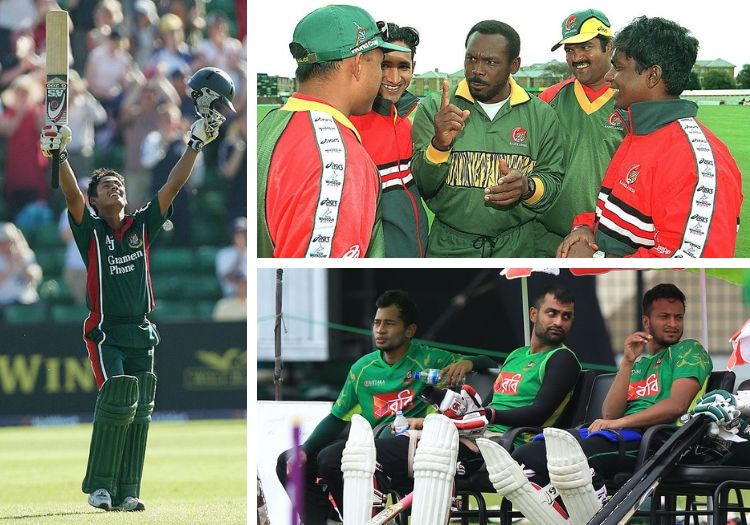
Mohammad Ashraful celebrates a match-winning hundred against Australia in 2005 (left), as former head coach Gordon Greenidge addresses his Bangladesh players in 1999 (top right).
A semi-final berth at the 2017 Champions Trophy has, for many, slipped under the radar, possibly because the nature of Pakistan’s tournament victory stole away any other narrative. Yet, that performance was a symbol of inordinate progress, subsequently backed up by a runners-up spot at last year’s Asia Cup.
For Islam, the question facing his nation is of how to transfer that improvement into something more meaningful. After all, growth spurts end as quickly as they begin. This is about continual progression.
"It is very hard for Bangladesh," he admits. "If it was only Test cricket and the 50-over games, Bangladesh would have concentrated more and would have been in a better position.
"Since T20 is a newer format and we really have the same bunch of players playing in all three formats, this is a challenge. If they had more players, they would have been better in all three formats, but in Test and ODI cricket, Bangladesh has become a team that can match other nations.
"On their day, they can beat anyone. The expectation in Bangladesh is huge; everyone is following Bangladesh’s cricket and supports the team."
It is an old, overused trope these days, but in Bangladesh it is true. "Cricket is like a religion," Islam says. It is a national unifier in a country that has not always enjoyed unity.
"Everyone follows it," he says. "The country is a very small, concentrated area in which everyone loves the sport. Cricket is the number one event in Bangladesh when Bangladesh win. When Bangladesh play, everyone supports the country."
It is hardly a unique situation; rather, it is the norm in a cricket-obsessed, geographical hub. Indeed, if England is the game’s spiritual home, then its more tangible abode is on the subcontinent, where moods and livelihoods depend on the game.
When he speaks of the national expectation, he does so from his own experience. He recalls his historic hundred – it came against a bowling attack including Zaheer Khan, Murali Kartik, Javagal Srinath and Ajit Agarkar. Sunil Joshi took five wickets in the innings.
It was a 380-ball knock that placed his name in the history books; Islam is one of four men – alongside Charles Bannerman, Dave Houghton and, more recently, Kevin O’Brien – to score centuries in their countries’ first ever Tests.
"150 million people were backing us up," he laughs.
"The expectation was that we would play a good game, but we never realised or believed that we would score 400 runs."
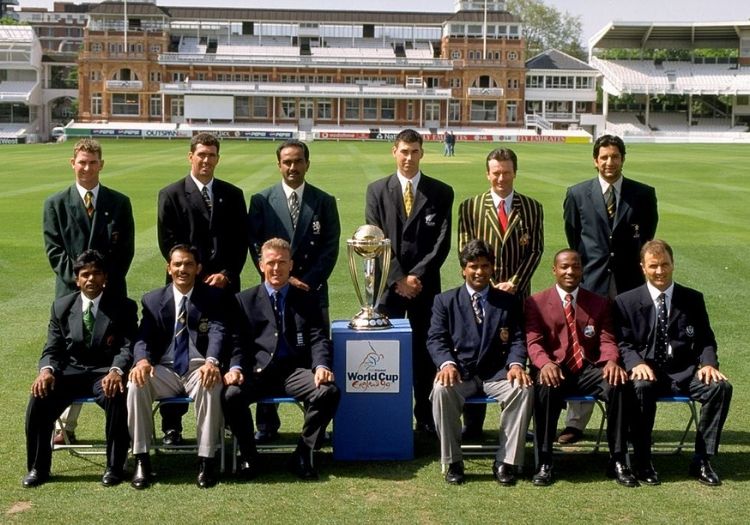
Islam (bottom left) sits alongside the other 11 captains ahead of the 1999 World Cup.
Indeed, after winning the toss and opting to bat, Bangladesh sat just 29 runs behind after both sides had batted; their 400 had been only narrowly usurped. And while India’s superiority came to the fore as the game entered its final two days, it was an effort from the Tigers that would cement a fine future.
"Until day three, we were matching them," Islam remembers, not with frustration but with a sense of surprise that lives with him even nearly two decades on. "We didn’t think we’d have been able to restrict them to a score like that. Playing for the first time ever, I think we played really well.
"That was the first time we had ever played a five-day match. After day three, we had never really had to think about the fact that there were 180 overs to go.
"Because of experience, we lost that Test match, but it was a really solid start for Bangladesh. It really helped us, and that start is still driving Bangladesh."
Bangladesh have played 113 Tests since; Mushfiqur has featured in 66 of them, Tamim in 58 and Shakib in 55.
There are few men whose collective significance is greater to their national outfit; Shakib, still just 32, has long-since been recognised as one of the world’s top pound-for-pound protagonists, while both Tamim and Mushfiqur are ageless greats. Both debuted as teenagers and, aged just 30 and 31, the pair have been in our lives, seemingly, forever.
Even Mortaza, a member of the side that beat a full-strength Australia side so famously in 2005, remains just 35. Alongside Chris Gayle, he is the only man in a 2019 World Cup squad to have featured at the 2003 tournament.
Part of this gives Islam some cause for anxiety; agelessness does not extend itself to playing careers. Quite simply, how do you replace the irreplaceable? As Sri Lanka have found to their detriment since the retirements of their own glut of global stars, you don't and you can’t.
"I’m worried for Bangladesh that we are going to see the same problem," he confesses. It is, of course, a natural concern. Consistency, longevity, stardom – it is a priceless trio, and not one found growing on trees.
"With the likes of Shakib, Tamim, Mushfiqur and Mortaza, they don’t have many replacements for these guys," he adds. "This is the problem for Bangladesh. But at the same time, these guys are still key players and they can take Bangladesh forward. They are playing the heroes for Bangladesh in most of their wins."
It is an anomaly prevalent in the makeup of this World Cup squad. The experience is there, laid out among that key quartet and Mahmudullah, the 33-year-old batsman who has improved with his own advancing years.
At the other end of the scale, six of the squad are aged 25 or under. That leaves just four in what Islam categorises as the “intermediate” bracket – the group from which new leaders must emerge, to which the baton will eventually be passed.
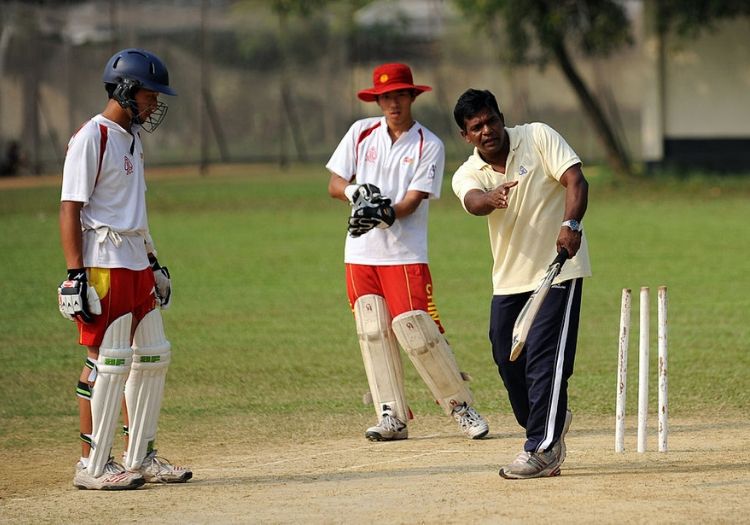
Islam has gone on to become an ICC development officer in China.
"Bangladesh is missing that middle level of player – guys who have played 100 ODIs," he explains. "That group is missing. It means there is a solid mix of senior and junior players."
Of course, development continues to be the name of the game for this Bangladesh side – even if its win over England at the 2015 World Cup may have proven a humiliating launchpad for the rebirth of Eoin Morgan’s team.
And if there is one man whose own story replicates that of his country, then perhaps it is Islam himself.
"Money cannot buy the feeling that we have from playing for our country and being part of our first Test match, our first ODI win, our first World Cup," he reflects.
"I am really proud and grateful. I never look back and wish I could have played now – it would have been more difficult to get into the team!"
He has gone on to raise the profile of the game in other parts of Asia, working as an ICC development officer in China, Myanmar and Brunei, among others.
China, naturally, presents a particularly pertinent example on the eve of the sport’s worldwide showpiece event. No country houses more people, while few – if any – possess as much influence.
"If China don’t play cricket then you can’t say that this is a global game," he states. He is not wrong, though that is a wider issue being considered by all kinds of sporting federations – an enormous, relatively untapped market open for business.
"They don’t have any history or any culture or any heroes when it comes to cricket. It makes this all very challenging, with the language as well," he adds.
Yet, 12 years on from the start of his journey with the country, eight regions are now playing the sport, while the 2022 Asian Games are set to take place in Hangzhou – a tournament with the potential to prove a watershed moment.
In the meantime, however, Islam has his sights set on more pressing matters – the issue of a World Cup and the fate of his own country. He was there for the first, taking Bangladesh from beyond onto a seat at cricket's top table.
Our coverage of the ICC Cricket World Cup 2019 is brought to you in association with Cricket 19, the official video game of the Ashes. Pre-order your copy now at Amazon.co.uk

Welcome to www.thecricketer.com - the online home of the world’s oldest cricket magazine. Breaking news, interviews, opinion and cricket goodness from every corner of our beautiful sport, from village green to national arena.