
NICK FRIEND – SPECIAL REPORT: Spread across the cricketing landscape, members of the England Women teams through the 2000s are running the show; this part of a wide-ranging project focuses on the early years of Ebony Rainford-Brent's career
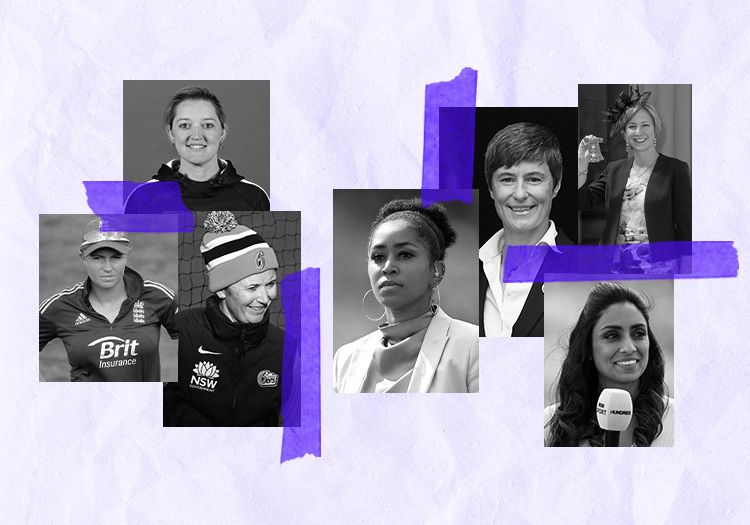
There is so much that you don't know about Ebony Rainford-Brent.
"I was at Lord's Taverners for a few years, where I redesigned all of their cricket programmes around disability and disadvantaged children," she says.
"It wasn't easy and I had to learn, but the old chief executive, Matthew Patten, taught me a lot about communicating with boards. When I first went in and said what I thought we needed to do, no one was interested. It was Matthew who took me away and said: 'If you want to communicate in these spaces, then this is how you need to start.' So, I learnt a lot there about communicating with leaders. That was my first cricket job."
To scan her Cricinfo profile was one of the highlights of The Cricketer’s conversation with Ebony-Brent for this series. The profile was written in 2008, when making 98 not out for Port Adelaide in Australian club cricket was enough for a mention. These days, a reservation is required through a virtual calendar just to sneak in a half-hour with one of the sport's most influential people.
Of the dozen former teammates polled, every single one said they were not surprised that one of their generation's biggest personalities has ended up in commentary. Television aside, she has been at the forefront of the game's push for inclusivity, founding and chairing the ACE Programme, which was in operation even prior to her powerful duologue alongside Michael Holding on Sky Sports.
Long before that was her calling, she was Surrey's director of women's cricket. Even further back, she was England's first black female cricketer.
But she was so nearly lost to cricket, over and over again.
"I was out for three years," she says, with a wry smile. "It was a mental journey."
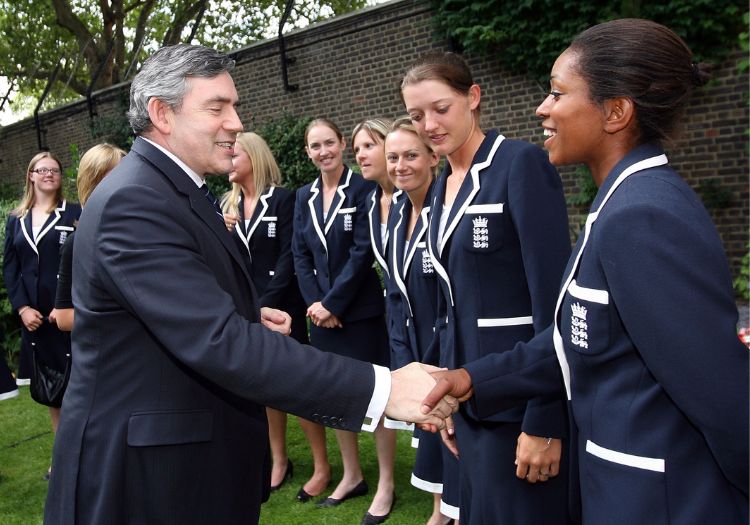
Ebony Rainford-Brent credits being part of a double World Cup-winning side for her career in cricket now (Dan Kitwood/Getty Images)
At one point, her back problems were so severe that the NHS advised her to put cricket to bed. At another, the pain was too great to carry on at university. She pulled out for a year to find treatment when her chemistry lecturers thought she was making it up, even when her mother accompanied her to a meeting about an extension on compassionate grounds.
She had made her England debut by then as a 17-year-old, though an ODI against the Netherlands at Reading in 2001 as part of a shadow side didn't feel like a proper start to her international career. So, training with the full squad was an opportunity.
"They saw me as a fast bowler," she recalls. "I was bowling in the session and I had this shoot up my back. I knew it was bad, but I also knew it was my chance to impress so I kept trying to bowl but I couldn't. I felt like my legs were going to go. I got in my Ford Fiesta, drove home to my boyfriend of the time and I remember going to pick up the remote that evening and feeling this horrific pain.
"I didn’t walk properly again after that for a year. I had this drag of the leg, and I was in a lot of pain. But there wasn't the financial support beyond a couple of physio sessions."
"We were World Cup winners rather than just someone who'd played. It changed how people treated you and the opportunities you got. It was a new world. There's no doubt if we hadn't won that, I wouldn't be in cricket"
Without any of the security guaranteed to today's England Women cricketers, it took a year to arrange a scan. "I struggled to sit up for more than half an hour, so I left university."
What followed was an emotional spiral: "I put on a load of weight, went into a depression and thought my life was over. The doctor, when she saw the scan, realised there were a lot of problems.
"She said it was unlikely I'd play sport again at that sort of level. I just remember thinking my life was over.
"I spent a year in bed, dragging my leg around. But then my brother got in touch and offered me £300 – I had no money at the time. We found a chiropractor who just started adjusting me. It was game-changing for my body. I hadn't walked properly for a year, but the first time I saw this guy he made an adjustment that allowed me to walk for two or three hours."
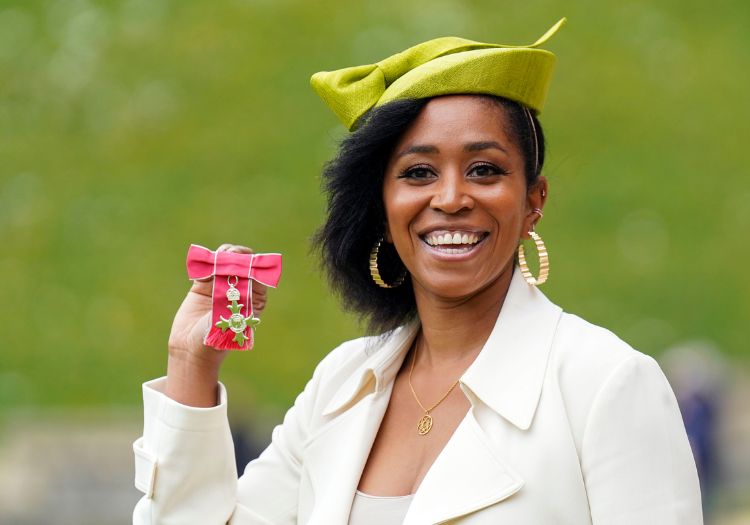
Ebony Rainford-Brent was awarded an MBE by King Charles (then Prince Charles) in 2022 for services to cricket and charity (Steve Parsons/Getty Images)
Then, Barbara Daniels, the former England batter and later the ECB's first manager of women's cricket, got in touch with news of a scholarship scheme set up to help university students involved in national sporting programmes. They funded the remainder of Rainford-Brent's recovery, including regular physiotherapy at Surrey.
Back then, being England's first black female cricketer meant nothing to people. And six years later, when she made what she calls her "senior debut" in 2007, little had changed in that regard, though that was less about race and more to do with the paucity of women's cricket coverage. That was still the case in 2009, but England were world champions, four years on from a two-run win over Australia at Stratford-upon-Avon that several consider a turning point.
Conquering the world goes a long way. Gary Lineker said so to The Guardian late last year: if only England had won Italia 90; if only he could be 'Gary Lineker, World Cup winner'. It's a label for life and, as Rainford-Brent found out, the key to an open door as a world champion twice in the same year. It was a sequence of events that changed her life: her notoriety today needed the success of 2009.
Colvin describes the aftereffect as the arrival of "a cross-pollination of sports fans" – they were nominated for Team of the Year at BBC Sports Personality of the Year and for the first time had proper cut-through.
"We were World Cup winners rather than just someone who'd played," Rainford-Brent explains. "It changed how people treated you and the opportunities you got. It was a new world. There's no doubt if we hadn't won that, I wouldn't be in cricket.
"It started to propel us. I would say I was treated very differently in the game pre-that and post-that. In a weird way, it's like understanding what privilege might mean."
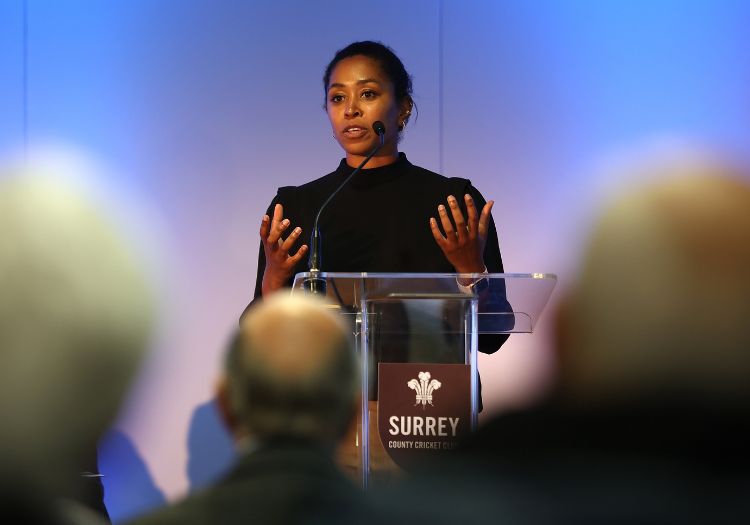
Ebony Rainford-Brent is one of the busiest, most influential people in the sport (Ben Hoskins/Getty Images)
By the end of 2016, the year in which Great Britain's women's hockey team won gold at the Olympics, Sam Quek had appeared on I'm A Celebrity… Get Me Out Of Here. Cynics might call her an opportunist, but in reality she was simply intelligent enough to understand that her relevance – as an individual within a non-mainstream team sport – would have a shelf-life if she didn't capitalise immediately. Seven years on, she is a captain on A Question of Sport.
"I wasn't savvy," says Rainford-Brent. "I didn't consider myself someone to capitalise on that team. I've got more caps from running drinks than playing!"
Yet, winning World Cups ultimately led to an opportunity with BBC radio, even if it was never something she sought when she retired in 2010.
"I still thought: 'There's no money for women in cricket.' I assumed I'd finish playing and I genuinely thought I'd go back to chemistry or go into finance. That was it."
She missed central contracts by four years: "I might have stuck around a bit longer, but I didn't come from a family of wealth, so you're thinking: 'There's no cash in the house, I have loads of debt from spending so many years chasing the dream.' I just knew I'd never pay that off if I kept chasing."
A couple of days after her low-key announcement, Test Match Special producer Adam Mountford called Rainford-Brent while she was on the platform at Streatham Common station.
"I had no plans, no clue. If he hadn't called me that day, I wouldn't be in cricket. I'd be long gone."
Over six sections - available via the links below (and all free to read on March 8, International Women's Day) - this project tells the story of how these women graduated from their careers as international cricketers to become industry leaders following their retirements.

Welcome to www.thecricketer.com - the online home of the world’s oldest cricket magazine. Breaking news, interviews, opinion and cricket goodness from every corner of our beautiful sport, from village green to national arena.