
NICK FRIEND: Harmanpreet Kaur steered India to just their fourth T20I win over England in 18 attempts in Lisa Keightley's first official international match in charge
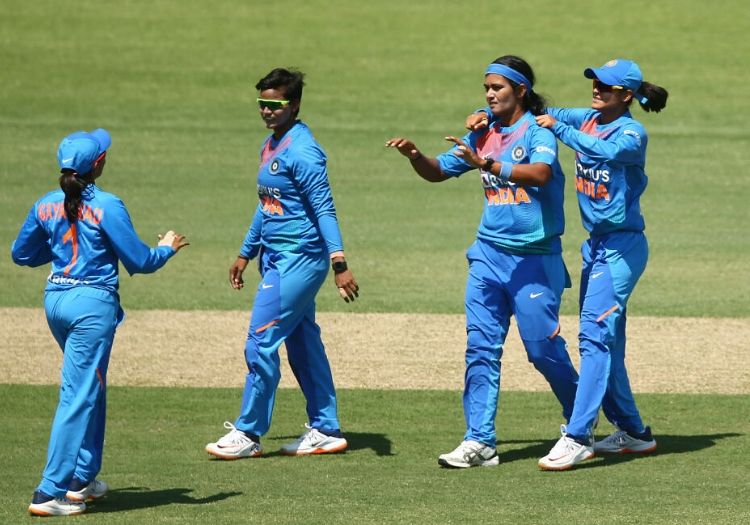
“I hate waiting.” That was the verdict from Tammy Beaumont as she joked with commentators about her new role down the order at No.6.
Finding the best use of the Kent batter has been one of England’s post-Ashes quandaries; in the T20I series in Malaysia, where Heather Knight’s side faced Pakistan, Beaumont batted at No.3, No.5 and No.7 as she was shuffled up and down the tourists’ line-up.
With Amy Jones now a permanent fixture in this side following the international retirement of Sarah Taylor, a spot at the top of the order appears to have been designated for the wicketkeeper, while one in the middle order – once Taylor’s abode – has opened up. Jones, of course, opened up at Perth Scorchers, where she played under new England head coach Lisa Keightley.
And so, with Danni Wyatt assured of her own place at the top as England’s dasher-in-chief, it has left Beaumont without a home, so to speak, especially given Keightley’s early preference to see Nat Sciver in at first drop.
And here, it worked. Beaumont came in after England had lost four early wickets, giving her time to assess conditions and form what became an important partnership, even in a losing cause. She was busy at first, happy to hand the strike over to Knight, who herself played the T20I knock of her life – curiously, this was just her second half century and her highest score in the format.
As the stand progressed, Beaumont unfurled her range of strokes, striking a six over wide long-on and hitting effectively on both sides of the wicket.
The question, then, is a simple one. Is this the best use of one of the world’s premier players? It worked here, and handsomely so. But that was due to deficiencies elsewhere – she was at the crease at the halfway mark. Here, the role was not that of finisher, but of insurance policy. There will be times – when the those above her perform – that she does not even get to the middle.
Lauren Winfield, who opened the innings in the 2017 World Cup final, found herself striding in at No.8 – an interesting move from England, who opted for both Winfield and Fran Wilson, which in turn meant coming in with four specialist bowlers, as well as the all-round skills of Sciver, Knight and Wyatt. In the end, with Sciver bowling the penultimate over of the match, they might have been a bowler light.
But stacking the batting, they have decided, is the way to go. And there is plenty of merit in that regard.
The desire to make the most of the death overs is a perfectly fine plan and there is certainly nothing wrong with innovation, but if Beaumont can do it at No.6, then might she not be better used up in her natural position?
Eoin Morgan’s men have found a similar debate around Jos Buttler – is he too low for someone so good? Do you not want your best players facing the most deliveries? That, you sense, is a dilemma that Knight and Keightley will face going forward.
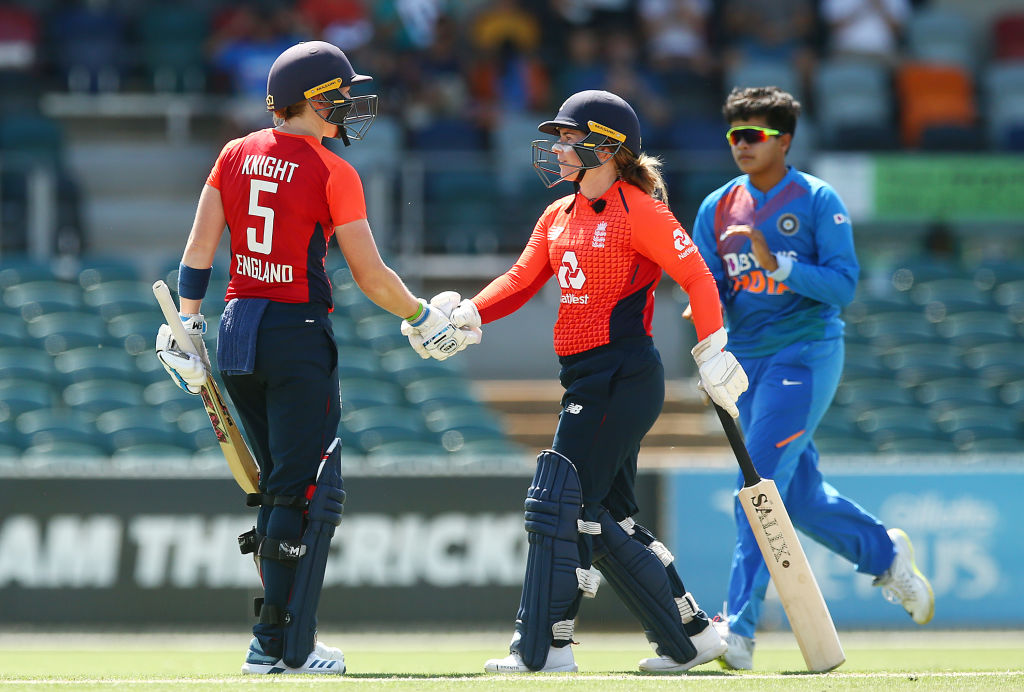
Heather Knight made her highest ever T20I score (67)
It was hard not to sympathise with the players out at Canberra’s Manuka Oval in some pretty difficult conditions – a warm-up game in every sense.
It was announced midway through the second over of the game that temperatures had burst through the 40-degree mark and then an over later the news came through that the Australian Capital Territory had declared a state of emergency in the region.
Residents are preparing for worse to follow, with Cricket ACT chief executive James Allsopp warning that the decision to abandon all games on Saturday came with weekend conditions forecast to be the most extreme Canberra has seen since 2003.
“With the threat of fire and the predictive map that has been released, we certainly don't feel comfortable with people, particularly from the south, having to go off and play cricket when they're leaving families and properties behind that could be under threat,” Allsopp said.
“There'll be no local cricket [on Saturday] at all. We obviously want cricket to be played, our core business is delivering high-quality cricket for our community.
“But when you start comparing playing cricket to fire threatening properties around Canberra, it's a pretty easy decision which I'm sure people understand.
“We would certainly rather err on the side of being too cautious rather than not being cautious enough.”
Harmanpreet Kaur and Jemimah Rodrigues were both guilty of shelling straightforward chances, giving Nat Sciver and Heather Knight a life each.
Kaur’s opportunity was the simpler of the two – a real dolly in truth. It would have left England in some serious trouble – they were just 17 for 2, with Danni Wyatt and Amy Jones already back in the hutch inside the first 13 balls of the match.
Rodridgues’ misstep, while a marginally more difficult opportunity – Knight had nailed her slog-sweep out towards deep midwicket, might have been more worrying to an Indian coaching staff well aware of the need to improve its side’s work in the field.
A desperately talented youngster, she dropped an almost identical chance in a defeat against a Governor-General XI on Tuesday as Phoebe Litchfield chipped to her at long-on. What emerged in each circumstance was how late her hands went up above her head, allowing the ball to burst through her palms.
Veda Krishnamurthy became the third Indian fielder to miss an opportunity, failing to cling on as she dived forward at long-on after Knight miscued, while Pooja Vastrakar limped away from proceedings after tweaking her hamstring on the legside boundary.
Room for improvement, most certainly. Without being blunt, what sort of trouble might England have found themselves in if India had taken their chances?
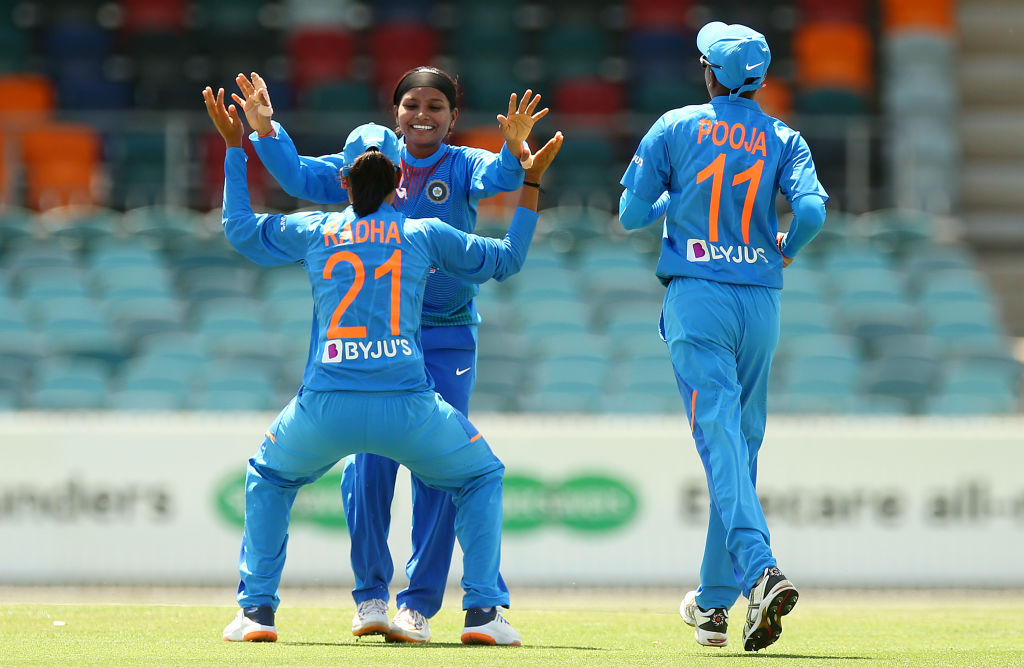
Rajeshwari Gayakwad took the wickets of Amy Jones and Danni Wyatt in her first seven balls
Having only just spent a fortnight in Malaysia facing Pakistan on low, slow surfaces, England will be disappointed with how they approached India’s spinners on wickets that, quite frankly, showed far more subcontinental tendencies than those they came across in Kuala Lumpur – at least, when Harmanpreet Kaur turned to her spinners.
Such was the lack of pace on the ball – Rajeshwari Gayakwad and Radha Yadav especially offered plenty of flight, England’s desire to meet the ball down the pitch was understandable early on.
But they were often reckless in doing so, desperate to force the issue – perhaps informed by the sheer heat out in the middle, but also out of an expectation of how the Manuka Oval would play. Knight admitted at the end of England’s innings that it had been far slower early on than expected, but also that her charges had reacted to conditions slower than she might have liked.
First, Amy Jones charged at Gayakwad, who had been all over the Solihull-born opener to the point that her demise hardly came as a shock when she chipped tamely to mid-off.
The same fate befell Danni Wyatt shortly afterwards as she looked to take the same bowler back over her head. On both occasions, they had been defeated in the flight and then subsequently done either by spin or a lack of pace.
What followed was, in essence, trial by sweeping. Led by Heather Knight’s propensity to reverse-sweep – she plays the shot while crouched unusually low down, there was a resourcefulness about the nature of their recovery.
One of the greatest takeaways from the series against Pakistan was England’s new-found strength in hitting back down the ground rather than relying on deflections and lap-sweeping – a shift from the 2019 Ashes series where Australia’s power-hitting was one of the major differences between the sides.
To England’s credit, however, their focus on hitting square of the wicket – which noticeably increased with Knight, Fran Wilson and Tammy Beaumont at the crease – was out of necessity here.
When they sought to play into the traditional V, they were tied up by a surface that became better for shot-making as the day wore on, and so they adjusted accordingly. In a sense, this kind of self-analysis and quick thinking was quite refreshing to witness from an England side criticised for its lack of in-game adjustment against Australia last year.
They were assisted here, it must be said, by India’s field placements. Despite the obvious difficulties in striking straight, Kaur persisted with fielders out at long-on and long-off, refusing to plug the gaps square of the wicket.
Only in the final few overs, with Knight and Beaumont both well set and comfortable on a turgid pitch, did they really open up – two of England’s most experienced players showing the way towards a competitive total.
Out or not out?pic.twitter.com/wJeF95nv1G
— The Cricketer (@TheCricketerMag) January 31, 2020
Herschelle Gibbs, anyone? This moment involving Amy Jones and Smriti Mandhana has caused some controversy. Jones didn’t actually appear to appeal initially, with the umpire putting his finger up before she had completed her tumbling dive.
The decision was overturned eventually by the third umpire.
England wouldn’t have seen much of India’s 16-year-old opening batsman until they were treated to a fearless, enterprising exhibition of her talents through a quite brutal powerplay.
In truth, there isn’t much of her. She began life as a wicketkeeper and that much is obvious in her slight build.
But England didn’t help themselves. It was pretty clear even from Sophie Ecclestone’s first over that Verma was far more comfortable when offered width to swing her arms through.
When she was tucked up or pushed back, she looked uneasy and less sure of herself. Katherine Brunt bowled one bouncer at the teenager – albeit on a free hit – and Verma spliced it to mid-on.
It is a trait that is far from unique among the Indian batsmen – they camp on the front foot and look to pull from there. With the extra pace of Katherine Brunt, though, they were regularly late on the shot. It was the exact manner of Rodrigues’ dismissal.
And that should have been the cue for England. But whenever they presented Verma with length, she continued to deposit the new ball over mid-off. A frightening level of ability in one so young.
She will be a thrilling watch come the T20 World Cup - and in decades beyond. And India, full of raw talent and guided by a couple of experienced heads, might just fancy their chances.

Welcome to www.thecricketer.com - the online home of the world’s oldest cricket magazine. Breaking news, interviews, opinion and cricket goodness from every corner of our beautiful sport, from village green to national arena.