
It is so painful to see, at first hand, someone so dear to you have their mind taken from them in slow motion
Dear readers,
I can’t be at Old Trafford this weekend, I’m going to run two-and-a-third marathons instead.
On Saturday and Sunday, I’m swapping the Ashes grind for the Thames Path Challenge - a 100km course starting in Putney and ending in Henley - raising money in the fight against dementia.
There are 850,000 people affected by dementia in the UK, so it is highly likely your family has already been hit by this cruel, cold, callous disease. If you haven’t, you likely will. I hope to high heaven you aren’t, but with numbers expected to rise to in excess of 1million by 2025, the chances are that most will either suffer themselves or experience the suffering of a loved one at some point in their lives.
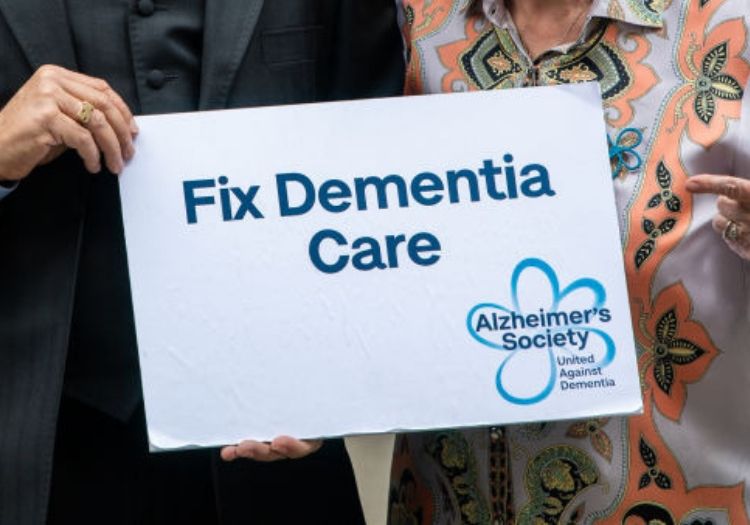
This is where the research and care provided by charities like the Alzheimer’s Society are so important.
There is no cure for dementia. It is rampant and savage and does not deal in compassion. It removes from its victims the power of rational and linear thought, it rids them of treasured memories and dumps them in a state of sometimes permanent confusion.
It is so painful to see, at first hand, someone so dear to you have their mind taken from them in slow motion.
My grandfather was a loving, caring, funny, giant-hearted man; a generous man, an intelligent man, a witty man. He would sit in an armchair in his study and recite fantastical stories of family history, and lead us hand in hand to the pond to feed fish, and attempt forlornly to teach us Arabic, and invest himself in my early adventures as a budding writer (quite politely, I might add, given some of the dross I served up in my early teenage years).
He would speak fluently about great swathes of the past, and conjure up images of magical journeys through Burmah and India and Pakistan, and on sea trawlers and ocean liners, and over grounds upon which I could only dream of laying foot.
He would play board games with us at Christmas, and get them hopelessly wrong. He would pour too much cream over his pudding and cry “whooooooops” with a knowing smile. And we would laugh. A lot. And often. Fuck, we loved him.
And then he began to change, through no fault of his own.
Grandpa suffered with dementia for more than half-a-decade. With each passing visit, his mind regressed a little more. The emotions and feelings and sentiments were still there - and the smile too, by now gummy and tired but certainly there - but most of the memories were not. He forgot my wife’s name, and then mine. I would sit with him and let him talk, but the infinite tales of yesteryear were no more, and instead he would repeat the same half-dozen - obscure episodes some 40 years old of moving wardrobes in beaten-up cars.
Soon, even they were gone, and he was in a nursing home, and we were craning him from his chair and undressing him, and cleaning him.
The last time I saw him - frail and feeble and blank behind the eyes, lying in bed but neither sure where he was nor why he was there - was among the most painful experiences of my life.
When grandpa passed away, I was on tour with my village team in the Isle of Wight. We had just won, and the minibus was boisterous and boozy. I pulled myself off to my hotel room and cried, but it was a confused emotion.
Because, to me - and whether or not grandpa felt this way I cannot say - it felt like in dying he had been truly granted peace. It felt, too, like my grandmother had been granted peace. That my dad had been granted peace. Because dementia does not care for peace. It scorches the mind of its victims and the hearts of their families. It fractures everything.
Delaying the onset of dementia by five years would halve the number of deaths from the condition, saving 30,000 lives a year, but research into the disease is horribly underfunded.
For every person living with dementia, the annual cost to the UK economy is over £30,000 and yet only £90 is spent on dementia research each year.
There are not enough researchers and clinicians joining the fight against dementia, with five times fewer researchers choosing to work on dementia than on cancer.
Alzheimer's Society is committed to spending at least £150 million over the next decade on dementia research to improve care for people today and find a cure for tomorrow - it is work which will affect us all, and of which we should all be aware.
So, this weekend, while England battle to save the Test, I’ll be doing what I can in the battle to save lives, minds, memories and family.
I am certainly not an experienced long-distance runner - prior to embarking on my training programme for this challenge I had not gone beyond a half-marathon - and I will be extremely nervous lining up at Putney Bridge for the start on Saturday morning.
But with every kilometre run, and with every pound raised, that worry will be steadily eased.
If you can spare a few pennies, it would mean so much.
See you at The Oval,
Sam
If you would like to donate, please click here

Welcome to www.thecricketer.com - the online home of the world’s oldest cricket magazine. Breaking news, interviews, opinion and cricket goodness from every corner of our beautiful sport, from village green to national arena.