
HUW TURBERVILL: After watching Kusal Perera’s magnificent, matchwinning innings at Durban, a tweet from Jason Gillespie caught my eye. "Could be the greatest Test innings of all time taking into account situation and opposition bowling attack."
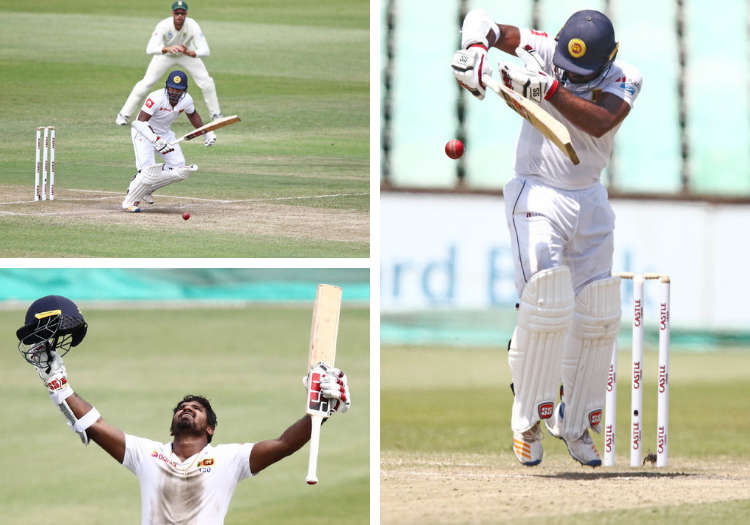
After watching Kusal Perera’s magnificent, matchwinning innings at Durban, a tweet from Jason Gillespie caught my eye. “Could be the greatest Test innings of all time taking into account situation and opposition bowling attack.”
I respect Gillespie’s analysis hugely, but I had not yet considered that this innings was better than the one played by Brian Lara against his great Australia side at Bridgetown, Barbados, in 1998/99. Like Perera, Lara also scored 153 not out (following on from his 213 in the second Test at Sabina Park).
West Indies were chasing 308 and like Sri Lanka, they also made it over the line nine wickets down. That was the third Test. It put Lara’s side 2-1 up (although Australia squared the series in the fourth and final Test). It was a cold evening in south London in March 20 years ago and my housemates and I were all transfixed by that knock. A gifted genius, singlehandedly defying oppressive opponents – rather like Russell Crowe in Gladiator perhaps (which came out the following year).
Could be the greatest Test innings of all time taking into account situation and opposition bowling attack.#SAvSL https://t.co/0V0hRYlwgC
— Jason Gillespie 🌱🌈 (@dizzy259) February 16, 2019
Gillespie opened the bowling with Glenn McGrath, and it was a rare occasion when Australia played leg-spinners Shane Warne and Stuart MacGill in tandem. McGrath and Warne were two of the finest bowlers in Test history; Gillespie was not far off for a long time – he was rated particularly highly by Nasser Hussain. MacGill was a very fine bowler and would have played a lot more if it had not been for Warne.
Fast forward two decades. After three weekends in succession of West Indies versus England Tests, this last one could have felt a bit flat. Perera had other ideas.
Cricket fans in the UK would have been aware of the match situation at Durban, where South Africa were hosting Sri Lanka in the first of a two-Test series. Maybe because it was a busy Saturday morning they were following the score on websites or Twitter, but surely most would have rushed to their televisions – if they have Sky – and sat glued to them in the closing moments.
Sri Lanka lost their ninth second-innings wicket with 78 still needed. What followed was a master class by Perera in shepherding a side – and a No.11 (Vishwa Fernando) – to victory.
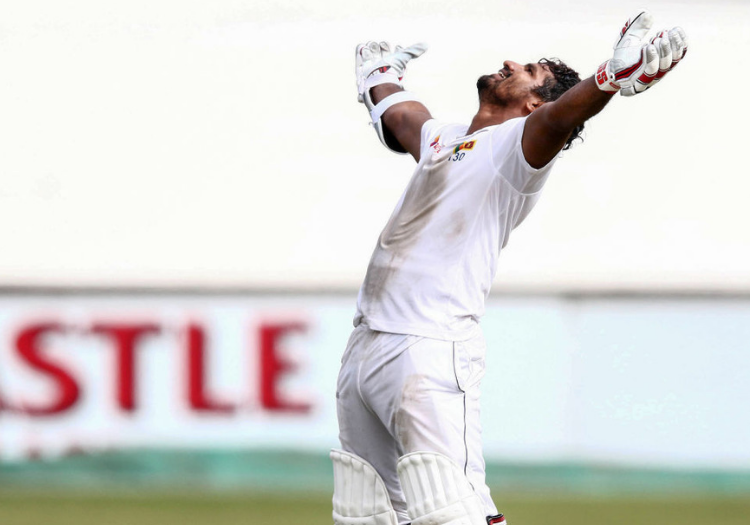
Perera - 153* off 200 balls - scored over half of his team's runs
Perera’s second Test century was no nudge and nurdle your way over the finishing line affair, like the Ashes Test of 1982/83 at the Melbourne Cricket Ground, when Allan Border and Jeff Thomson came agonisingly close to knocking off the 70 they needed (Australia lost by three runs). Or Edgbaston 2005 (the Australians needed 59, and of course they fell two short).
Perera played with panache. The first of his five sixes took him to 93 off Keshav Maharaj. He surpassed his highest Test score – 110 against Zimbabwe at Harare – with a second off Duanne Olivier. He then smashed Dale Steyn for maximums over deep square, with a top edge off Kagiso Rabada in between.
Lara and Perera are both left-handers of course. They both squat low and their bats go up like periscopes; they are both fluent, and fierce on any width.
The Lara performance was one of the last vestiges of greatness from that magnificent West Indies generation. In a winter in which Sri Lanka have suffered emphatic defeats to England, New Zealand and Australia, the hope is that this is not Sri Lankan railing against the light in Test cricket. Surely the passion for cricket on that lovely island still burns?
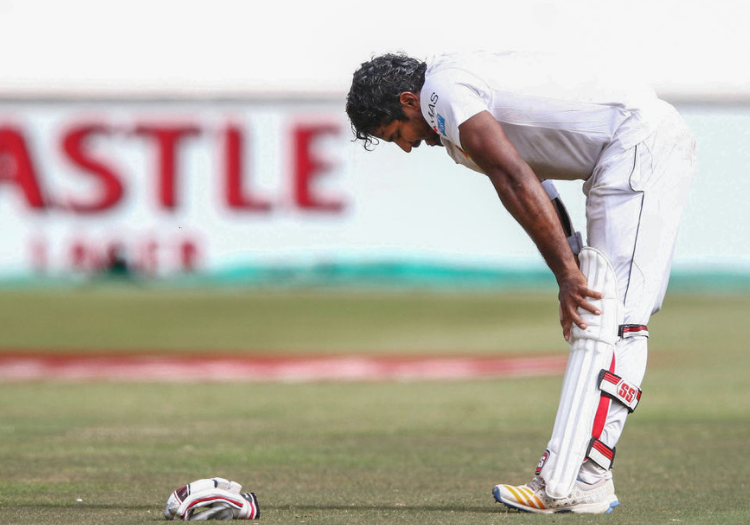
"Perera’s second Test century was no nudge and nurdle your way over the finishing line affair"
Funnily enough, the averages of the South African seam quartet – going into the Test at Durban – do compare very well to those 1998/99 Australians though (I will leave Keshav Maharaj out, but 90 at 28.14 is not bad either): Vernon Philander (211 wickets at 21.73), Kagiso Rabada (168 at 21.41), Dale Steyn (433 at 22.81) and Duanne Olivier (41 at 18.19).
They are all superb records and compare favourably – in terms of average at least – to (going into that Bridgetown Test) McGrath (217 at 22.62), Warne (316 at 25.30), Gillespie (50 at 21.30) and MacGill (53 at 21.67).
A caveat to that comparison is that players sell their wickets a little less dearly in this T20 era perhaps…
Spicier pitches are also cited when it comes to the travails of the modern batsman.
Great innings young @KusalJPerera8!! You have shown the talent, grit and determination needed to become a special player! @OfficialSLC#special153#SAvSL#talent#grit#determination#testcricket pic.twitter.com/ldhReIjOp1
— Brian Lara (@BrianLara) February 18, 2019
Lara himself paid tribute to Perera afterwards, tweeting: “Great innings young @KusalJPerera8!! You have shown the talent, grit and determination needed to become a special player!”
Other greats also had their say. Kumar Sangakkara called the innings “a beauty” and said it was “one of the best innings under pressure” and “showed intelligence and mental strength”. South Africa captain Faf du Plessis called Perera "Superman".
There has been much discussion about how his innings compares with other great Test innings. You could pick many of Don Bradman’s knocks of course, but his 270 at Melbourne in 1936/37 on a pitch that was initially decidedly ‘sticky’ seems to be the one most mentioned. VVS Laxman’s 281 for India v Australia at Calcutta in 2000/01, and Graham Gooch’s 154 not out against West Indies at Headingley in 1991, will also have their backers, as will many others.
Perera has a long way to go to match the deeds of those players of course, but this memorable knock is a great start.

Welcome to www.thecricketer.com - the online home of the world’s oldest cricket magazine. Breaking news, interviews, opinion and cricket goodness from every corner of our beautiful sport, from village green to national arena.