
HUW TURBERVILL looks back at previous England tours of India and as Joe Root's side prepare to embark on the four-Test series...
Channel 4 to broadcast India v England series
Where can I watch India v England on TV? Test series streaming details
England are in India for their 15th Test series (not including the one-off Test in 1979/80), starting on Friday (February 5)
The first six series were really spaced out. England won two (1933/34 and 1976/77), a pair were drawn (1951/52 and 1963/64), and India took the others (1961/62 and 1972/73). Instead of visiting every four years, they seemed to go every seven, which was a shame. They could have done more to help Indian cricket develop.
Since then England wins have been precious.
This is how they did it…
Have Ian Botham in your side
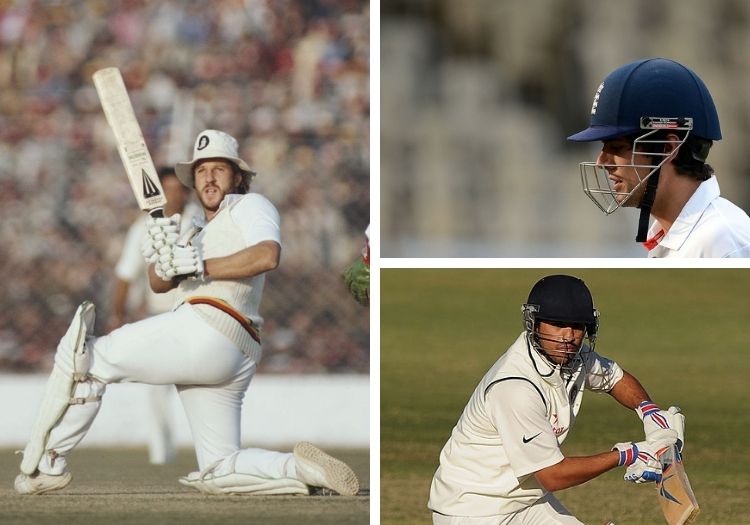
1979/80: The Golden Jubilee one-off Test in Bombay saw Beefy at his absolute peak. In a match to mark 50 years of the Board of Control for Cricket for India, he took 6-58 and 7-48, and struck 114 – perhaps the greatest performance in a Test by an England allrounder (although many would argue for the same man’s display at Headingley 1981 – 50, 149, 6-95, 1-14).
It helped England to a 10-wicket win. "It was the last game on the way home from Australia," he recalled to The Cricketer late last year. "The pitch wasn’t quick, but it just seamed a little bit, and it swung, which it doesn’t normally do over there – enough to keep me going. I think I bowled all the overs from one end bar one or two!" In fact, he bowled all the overs from one end in the second innings. Remarkable.
Don’t sulk about Beefy’s absence
1984/85: This was the most troubled of tours, with the assassinations of PM Mrs Gandhi and British diplomat Percy Norris, and when England lost the first Test, their task looked monumental. Botham had given this one a miss, and Chris Cowdrey was asked to fill his shoes. He was brave to even try! He wasn’t the matchwinner, but spinners Pat Pocock and Phil Edmonds helped to level the series in the second Test at Delhi.
The third at Calcutta’s Eden Gardens was a rain-affected draw. The fourth featured an epic stand between Graeme Fowler and Mike Gatting; they both made double-centuries before Neil Foster’s bowling finished India off. The final Test at Kanpur was then drawn. A superb 2-1 series win.
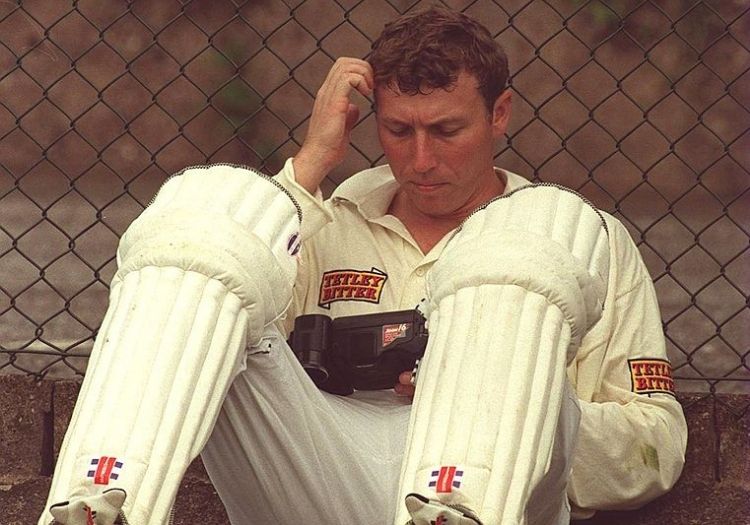
England's confused selection for the 1993 series left Mike Atherton scratching his head
Let Alastair Cook bat. And bat. And bat
2012/13: This tour was probably his finest hour. Again England lost the first Test, but Captain Cook turned things around, making 562 runs at 80.28. Cheteshwar Pujara made an unbeaten 206 in only his sixth Test in India’s win at Ahmedabad. England trailed by 330 on first innings, and although Cook made an unbeaten 176, India won by nine wickets.
One of England’s greatest ever wins was at Mumbai. Again Pujara reached three figures, but Kevin Pietersen’s brilliant 186 and Cook’s 122 proved a match, and Monty Panesar (11 wickets) and Graeme Swann (eight) spun India out. Cook’s 190 was the key to England’s win at Eden Gardens, and after Virat Kohli’s 103, Jonathan Trott (143) and Ian Bell (116 not out) saw England to the safety of a draw at Nagpur.
And here’s how not to win...
Get Gavaskar!
Although 1984/85 and 2012/13 provided evidence to the contrary, usually if a team lost the first Test in India they’d had it. And so it proved in 1981/82. England were on a high after Botham’s Ashes, but any euphoria was squeezed out of them by obdurate Indian batting and feather-bed pitches. Despite bowling out the hosts in the first innings of the first Test in Bombay for 179, England could manage only 166 and 102, and lost by 138 runs.
Frustration then followed. "If you lose the first Test in India, and they don’t want you to get back into the series, there is precious little you can do about it," said David Gower. "Five-and-a-half-hour days, flat pitches, slow over-rates … we were completely stuffed." Sunil Gavaskar applied most of the stuffing, scoring 500 runs at a strike-rate of only just over two runs per over. There were also 22 wickets apiece for Kapil Dev and Dilip Doshi. England expected Derek Underwood to be their main weapon, but he took only nine.
Where does one start?
1992/93: This campaign was as grisly as England tours can be. As Mike Atherton wrote: "We knew we’d be facing a phalanx of spinners so we left out our best player of spin, David Gower. In Calcutta, the pitch looked cracked and dry so we played four seamers. We knew that the food could be dodgy so we ate prawns in Madras and got food poisoning. It was that kind of trip."
In the warm-up games, Navjot Sidhu crushed John Emburey’s confidence, hitting him for 12 sixes in three innings.
England lost all three Tests. It left chairman of selectors Ted Dexter demanding answers. So he took the only logical course of action … and ordered an inquiry into the 'whole question of facial hair’.
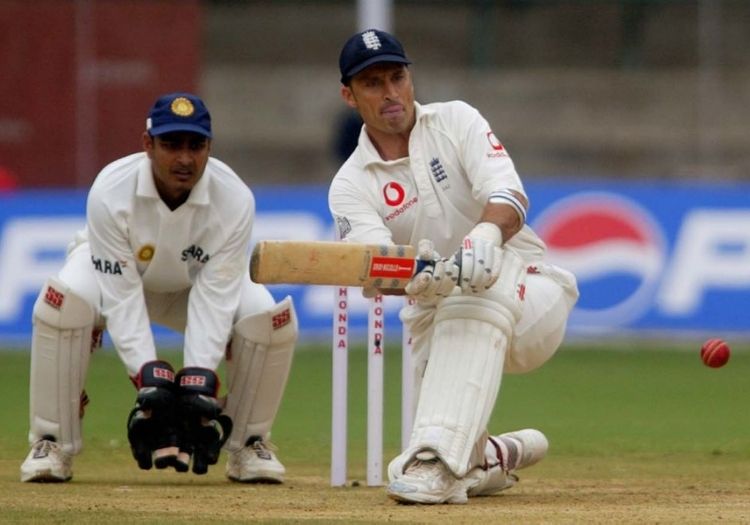
A depleted bowling attack meant Nasser Hussain was struggling from the outset in 2001
Hussain’s Bodyline
2001/02: Nasser Hussain returned to the land of his birth as a proud England captain leading an inexperienced tour party, so we mustn’t be too harsh. Alec Stewart and Darren Gough said they needed a break, while Andy Caddick and Robert Croft opted not to go on safety grounds after 9/11.
With his rookie bowling attack, Hussain adopted a pragmatic approach in an effort to restrain Sachin Tendulkar. The seamers were told to bowl wide of off stump with a 7/2 field, while Ashley Giles speared the ball into his pads, and wide of leg stump. Some compared the tactics to Douglas Jardine’s in the Bodyline series; Mike Brearley expressed “a deep uneasiness” about them.
The tactics did ensure the series was tight, though. England lost at Mohali, and then their mission became even harder when Graham Thorpe flew home to confront marital difficulties, but the tourists at least drew at Ahmedabad and Bangalore.
Exit captain and coach
2008: The two-Test series was a diplomatic triumph despite England’s defeat… but the fall-out afterwards was cataclysmic. The trip was a huge doubt after the Mumbai terrorist attack, but the England team elected to take part en masse, a decision then-PM Gordon Brown called "brave and courageous".
The first Test at Chennai was a classic. Andrew Strauss made 123 as England secured a first-innings lead of 65, then he and Collingwood both made 108, but an unbeaten century from Tendulkar saw the hosts home by six wickets. "Even the hardest of souls would have found it difficult not to appreciate what Tendulkar’s match-winning hundred meant to everyone around India in the aftermath of the terrorist attack," wrote Graeme Swann.
Centuries from Gautam Gambhir and Rahul Dravid then made the series safe at Mohali, despite captain Pietersen’s 144. While he was praised for his leadership in public, an ugly sore had developed in private in his relationship with Peter Moores, however. Anderson says it became "noticeable during the course of that match … that a few of the senior players had begun to whinge publicly" about the coach. Pietersen told the ECB it was either him or Moores. In the end, they both went.
Give Root some help
The 2016/17 series saw captain Joe Root bat well (491 at 49.10) but his team were found wanting. They drew the first Test at Rajkot thanks to Ben Stokes’ 128 and Cook’s 130 but then lost the next four. Virat Kohli’s 167 in the second was notable as it was his 50th Test.
Even more remarkable was Karun Nair’s 303 not out in the fifth Test, however. In was only his third Test he became India's second triple-centurion after Virender Sehwag, and only the third man in history to convert a maiden Test century into a treble. He only played three more Tests. He nearly died in a boating accident that year, and also had a hard time against Australia in early 2017.
Moeen Ali fared well with the bat (average 42) but not so well with the ball (10 wickets at 64.90), and England’s best bowler was Adil Rashid (23 at 37). The exciting emergence of Keaton Jennings (112 on debut at Mumbai) and Haseeb Hameed have so far sadly proved false dawns.
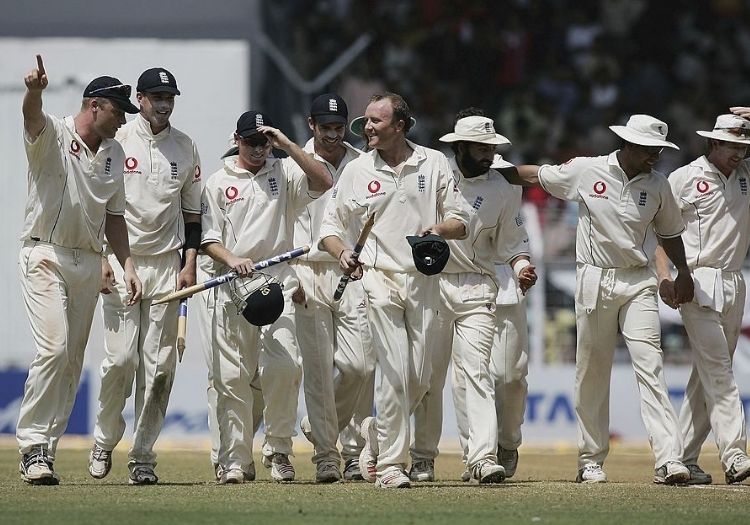
An Andrew Flintoff led England celebrate victory in Mumbai
And the drawn one...
Ring of Fire!
2005/06: After the euphoria of the Ashes, England were enduring a winter of discontent. They threw away decent positions in Pakistan before Christmas, then experienced a troubled tour in India after the festive season. Captain Michael Vaughan was injured, then his deputy Marcus Trescothick left the tour after falling victim to the anxiety attacks that would eventually force him into international retirement. England were also without the injured Simon Jones and Giles.
Instead, Andrew Flintoff led the tourists. Cook was drafted in from the A tour of the Caribbean to score a second-innings century in the first Test at Nagpur. Collingwood also hit a ton in the first innings, but the game was drawn.
A sorry second-innings batting display at Chandigarh saw the hosts take a series lead in the second Test, but Flintoff’s men levelled thanks to a feeble last-day collapse by India in the third Test at Mumbai, Shaun Udal encouraging the hosts to commit hara-kiri, giving Flintoff his finest hour as a skipper. They said they had been inspired by Johnny Cash's song, Ring of Fire, but actually, it was a curry joke.
Oh well, the Indians had heard them all before!

Welcome to www.thecricketer.com - the online home of the world’s oldest cricket magazine. Breaking news, interviews, opinion and cricket goodness from every corner of our beautiful sport, from village green to national arena.