
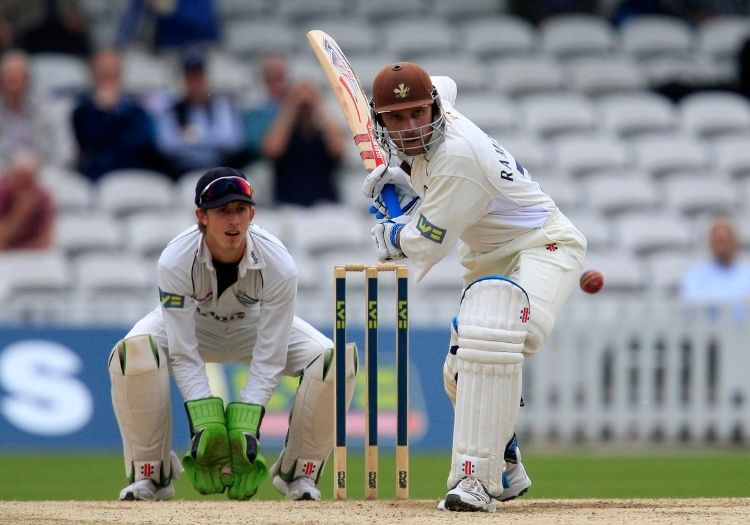
In terms of aesthetic qualities and the intensity of his batting against every ball he faced, nobody did it better than Mark Ramprakash, says Tom Maslona
I work in a state school in East London and, for a number of years now, a number of our sixth-form students have achieved the accolade of winning a place at Oxford or Cambridge University. It’s an exceptional achievement and one that should be celebrated. These students defy societal odds with their outstanding academic success. But those students are a small minority within large year groups and my fear, when their achievements are hailed in numerous assemblies and newsletters, is that we paint a picture for our other students that reaching this pinnacle is the only marker of success and that is, palpably, nonsense.
This article is supposed to be a tearful ode to my favourite cricketer – Mark Ramprakash – so you’d be entitled to ask where all this is going. Bear with me. Any article about the former Middlesex and Surrey batsman – nay, artist – is likely to dwell on his England career and those figures – two centuries in 52 Tests; an average of 27.32 – have been raked over so many times that most England cricket fans with more than a passing interest in the game will be able to trot them out as evidence that Ramps failed at the highest level. I’ve read too many times that he was too uptight and not mentally strong enough to succeed; his grades not good enough to secure him a place in cricket’s metaphorical top universities.
The great John Wooden once said: “The true test of a man’s character is what he does when no one is watching.” Considering that Ramprakash’s Test runs constitute just 6.59 per cent of his overall 35,659 first-class runs, we could, in fact should, hail Ramps’ character and mental strength. The vast majority of those runs were scored on the county circuit in front of handfuls of spectators, millions around the country oblivious and uncaring, while he ground out scores, excelling day after day.
In fact, the verb ‘ground’ is wildly inappropriate as Ramprakash was one of this sport’s great aesthetes. Pristinely correct, each shot, each leave, played meticulously as if rehearsing a pose for a technical manual. Each ball played as if this ball, this very ball, would determine his fate. Surrey should have pinned hoardings to the walls of the ground on Harleyford Road. ‘Come and Watch! See how the cover drive should be played! Watch and learn how to build an innings! See how to manipulate a field! The great Mark Ramprakash will be batting here all summer!’ And that’s how it felt: Mark Ramprakash batted all summer, every summer, and the cricketing world was better for it.
And he batted with an intensity in his eyes, muscles, and every fibre. Always.
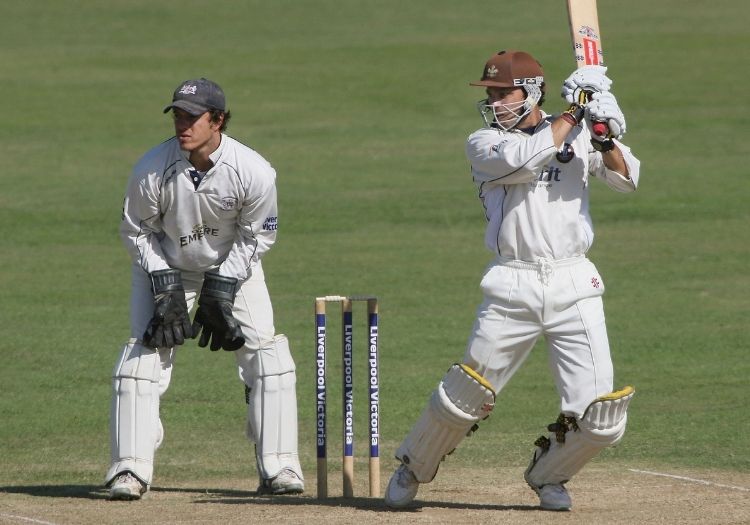
In Surrey colours
If I’m honest, I think that intensity is what I loved most. Many times, I would arrive at The Oval for the start of play midway through a county match and he would be not out for plenty of runs overnight. But, no matter the conditions, he would play himself in, as if on nought, as if worried that a nest of vipers had burrowed their way into the pitch overnight; or that a toiling, labouring attack had metamorphosed into McGrath, Marshall and Warne in their sleep. Once ‘in’, and those first 30 balls were repelled, the metronomic accumulation of runs would continue and the spectators could settle in and watch this artist at work.
Let it be understood, though, that while Ramprakash moved across London to The Oval in 2001 ostensibly to join a more successful side, and to compete for trophies, many of his peers such as Stewart, Hollioake, Brown, Butcher and Thorpe were retiring and that famous County Championship-winning squad broke up quickly, possibly quicker than he expected. Ramprakash stayed on until his own retirement in 2012 topping the averages for eight consecutive seasons from 2003 onwards. And that Surrey side were, at times, poor to the extent that Ramps carried the batting card on his shoulders. Surrey members knew that his innings would always be pivotal. But his shoulders globed and he bore the weight despite the fact opponents recognised that once he had been dismissed, the pack would collapse. In 2006 and 2007, he averaged over 100 in first-class games for the season, remarkable testament to his quality, durability, and commitment to the side.
It seems ridiculous to say this but I hope that he knows that he was loved and appreciated. As he closed in on 100 first-class centuries, I travelled down to Hove to watch the start of the final day of a Championship match which was drifting, inevitably, towards a draw but Ramps was 66 not out overnight and I wanted to be there to watch him reach three figures and ensure that there would be warm applause from at least one section of the ground. I shouldn’t have worried. When he reached his century that morning, every spectator rose to their feet. There was genuine appreciation and recognition that we were watching a master at work.
The end, in 2012, came too quickly. A young side was taking shape but Ramps had surely earned the right to unlimited time to regain form – this was, statistically, his first slump in Surrey colours. But in a period of transition for the county following Tom Maynard’s death, he retired, seemingly aware that opportunities, at the age of 42, would be limited.
There were so many memories. My favourite is an odd one but it came at Lord’s in his final season. Following his dismissal for 17, my friend and I left our seats in the middle tier of the pavilion to go to the bar. Ramps stormed past, head down, eyes blazing. A Middlesex member, oblivious to mood, enquired after him, hoping to engage him in a conversation that was destined never to happen. Seconds later, the door to the visitors’ dressing room slammed shut, the sound reverberating around the old pavilion. Ramps: always intense, always disappointed to be dismissed, always desperate to succeed, never satisfied.
As he walked away from a stage he had graced for almost 25 years, with 114 first-class hundreds to his name, only the 25th man in the history of cricket to reach a hundred hundreds, I reflected on a verse from the poet, AE Housman:
When summer’s end is nighingAnd skies at evening cloudI muse on change and fortuneAnd all the feats I vowedWhen I was young and proud.
Ramps was a colossus of the game and he brought joy to those who watched him. People may suggest that he didn’t succeed at Test level but is that really the only measure of accomplishment? He was the best he could be every single day of his career. That is all anyone can ask for.
This article was published in the August edition of The Cricketer - the home of the best cricket analysis and commentary, covering the international, county, women's and amateur game