
JAMES COYNE: It’s hard to avoid the suspicion that, through much of my lifetime, English cricket has been fixated with catching up and replicating Australia, and happily picking up the kids churned out by the private schools
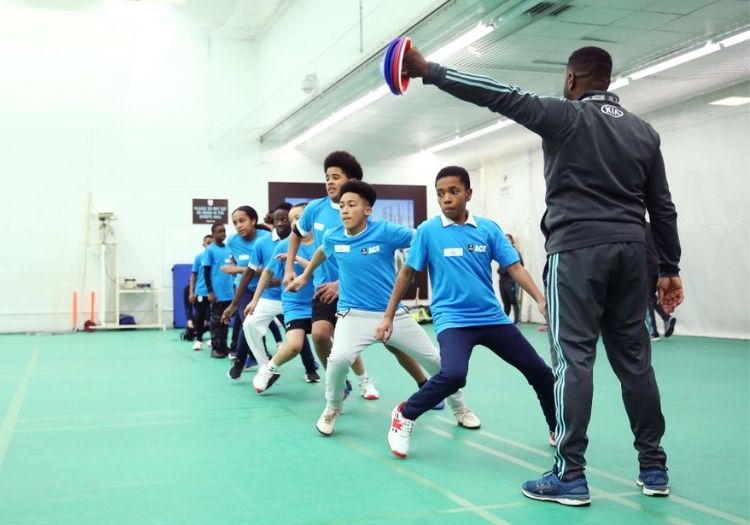
Anyone who’s been thinking seriously about cricket in this country will have been worried about the drop-off of black and mixed-race players for some years now.
There’s been an awful lot of printed words committed to the subject, and a lot less concerted action, though plenty of charities and coaches have tried their best in their own areas.
It’s no accident that Surrey are the ones who’ve helped make the African Caribbean Engagement Programme happen. They are the wealthiest of the 18 county clubs, led by probably the most impressive of the county chief executives in Richard Gould. Ebony Rainford-Brent, the driving force behind ACE, is – aside from her prominent roles on Sky and the BBC – Surrey’s director of women’s cricket.
And, to be clear, they were setting up ACE before Black Lives Matter came to the fore this year. They were responding to a longstanding issue on their doorstep, where, as Rainford-Brent says, thousands of black people in the borough of Lambeth will have walked past the Kia Oval every year without ever venturing inside.
It has to be good news that ACE is converting into an independent charity, which will alleviate some of the costs, and allow them to be more ambitious in what they can do in cities across the land.
Because this needs to be a national project. Yes, London is the capital, has the biggest population and is the driving force of so much, and what goes on there with ACE will spill over into satellite towns like, say, Luton, which Rainford-Brent said was a “surprise” possible option for expansion.
ACE is already expanding into Birmingham this winter after Warwickshire – a club with a patchy recent record of producing players from their local area, but which has one of the strongest recreational league scenes in the country – pledged to adapt the scheme.
Manchester, Nottingham and Bristol are the other cities on the radar. Each will obviously have their own specific complexities.
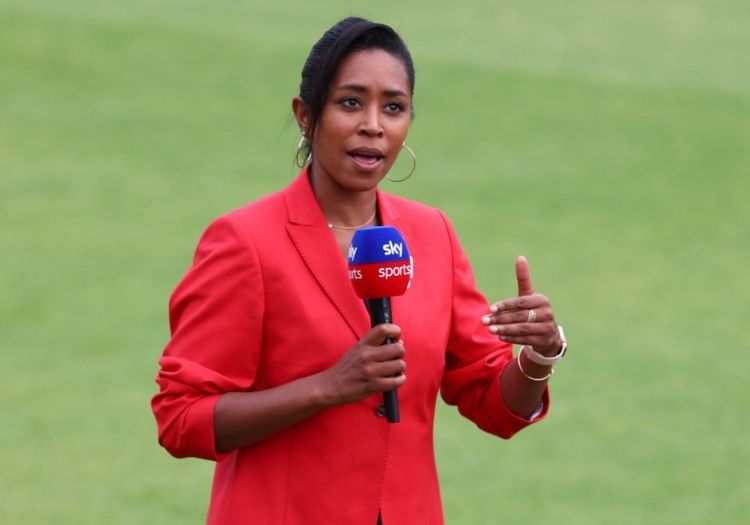
Ebony Rainford-Brent is the programme's driving force
Most of all, in these confused and difficult times, to go into the wider country will require significant sums of money additional to the £540,000 committed to ACE by Sport England now. This was clear from the appeal by Rainford-Brent at the end of this week’s press conference for help with financial backing.
She acknowledged that expanding to each of those cities would require a full-time salaried member of staff in each, as ACE now has in London with Chevy Green. He knows all about these issues from his prior role as cricket participation manager in the Surrey Cricket Federation.
But the game really ought to get to a point quite soon where the county boards in Lancashire, Nottinghamshire, Gloucestershire and elsewhere are all rolling out the ACE Programme. Because I don’t see the trend reversing without it.
The ECB reckon that somewhere between 1 to 1.5 per cent of recreational cricketers are black or mixed-race, which is significantly below their share of the overall population (which, according to the 2011 census, was around 3 per cent, but that figure would appear to be higher among young people). And anyway, it’s the speed at which black cricketers have fallen out of our game – professional and recreational – that is so alarming.
We have to be careful to base too much on anecdotal experiences. But I believe they are instructive in this case.
For what it’s worth, I have played with and against perhaps six black cricketers in the past six or seven years, and I play a fair amount of league cricket in a pretty diverse part of southern England.
I would wager that anyone who plays cricket around a town or city with a sizeable African-Caribbean population will have seen a local West Indian club wither away.
Some of my first forays into adult club cricket were with a village side against the town’s West Indian club on parks pitches. As a longtime obsessive of West Indies cricket in general and Brian Lara in particular my teenage self looked forward to these games more than any other.
Ebony Rainford-Brent: Trailblazer, influencer, game-changer
But, with one or two exceptions, all their black players were comfortably over the age of 30, and most nearer 60. The rest of the side was filled out with Asian or white youngsters with no obvious connection to the Caribbean. The club folded a few years ago. Another West Indian club which my club regularly plays against now, and has a good relationship, has a similar demographic situation.
This is in a way a heartening tale of integration, but also a sign that much of my generation – the last to access free-to-air TV coverage of cricket, by the way – wasn’t especially energised by cricket – especially if you went to state school, where cricket was virtually non-existent. Hence why Green has said to me before that “we are almost starting from scratch, in a way”.
It hasn’t helped that West Indian clubs have traditionally been wandering operations, hiring facilities from a local authority or another club. These kind of clubs, of any make-up, have gone out of fashion. This kind of model is harder to maintain with land so expensive, playing fields being snapped up by developers, and pitches in urban and suburban areas that do remain often prohibitively expensive.
It’s not just in my area. As Lonsdale Skinner, chairman of the African Caribbean Cricket Association and an ambassador for ACE, told me two years ago, the number of West Indian clubs in south London – within range of The Oval – were down from 30 to six.
“There are people all over the country fighting to keep these clubs alive,” he said. “We just don’t have the resources. It doesn’t have to be millions – just enough to allow the game to be played on reasonable pitches.
“We come from a tradition of wandering clubs; we stay after the match and have a drink and a barbecue. But in March 2016 Sinjun Grammarians, where we play at in Tooting, turned round and upped our ground hire from £130 to £250, so we are back to wandering again.” Other grounds are significantly more expensive.
All wandering and friendly cricket is struggling, and I suspect the 2020 Covid-affected half-summer, where many leagues clubs reverted to friendlies in extremis, will be a red herring. We know many cricket clubs stay afloat on the money they recoup from colts cricket, and if clubs don’t have a youth section they may struggle to balance the books.

The ACE Programme was initially launched in January
Even if a club do have young players, other barriers exist. St Albans West Indian, who played on council pitches, won Division Three B of the Saracens Hertfordshire League in 2017, beating my club’s 2nd XI to the title. But they were unable to comply with ground and facilities requirements for promotion to a higher level, withdrew from the 2018 league and have not returned. Most of their promising players gravitated to other clubs.
Of course plenty of black and mixed-race players don’t play for expressly ‘West Indian’ clubs. And the hope is that black and mixed-race youngsters are being pointed towards whatever club might be in their area – something Chance to Shine and All Stars Cricket are supposed to be helping with. It’s upsetting that more haven’t made the transition up to now. There must be more than that 1-1.5 per cent who could be involved in the game.
Mercifully, there are some encouraging pockets. In Birmingham, the players who pass through their ACE Programme will be signposted to Handsworth CC and a timetable of cricket at Holford Drive Community Sports Hub in Perry Barr. Handsworth CC have an entire colts framework in place.
Why does this matter? It matters because, unless you are among the 7 per cent of the population who attend fee-paying schools – and African-Caribbean children disproportionately do not – clubs are what produce cricketers.
Chance to Shine is a noble and necessary project, but what it basically does is introduce state primary-school kids to the game, not hone the necessary skills in competitive cricketers, or even produce coaches, scorers or umpires. ACE will have its own coaching programme, but they can only work in parallel with providing match opportunities in club cricket.
One of the many telling stats cited in the ACE press conference this week was that 46 per cent of the attendees (11 to 18 years old) to the first year of coaching sessions didn’t previously have a cricket club. But of the 25 then selected to go on to a coaching and match programme, 88 per cent were attached to a club.
One more thought. For many black or mixed-race kids in Generation Z, it may be three or four generations since their family came over from the Caribbean. That’s if they have roots in the Caribbean at all; around half of black people in Britain are black African in origin. The Islington Street Project which won a Chance to Shine award in 2018 was made up of mainly Somalian and Eritrean children.
ACE Programme launches as independent charity as Sport England provide £540,000 investment
As Green told me two years ago, before ACE was set up: “You have to remember, black kids from a West Indian heritage – they’re young British. They grew up here. A lot of their attachment isn’t with the Caribbean anymore. They’ve had three generations since that. Some of them have never been to the Caribbean.
“A lot of their values are British. They’re just young British black boys and girls. When I was growing up, yes, Brian Lara, Courtney Walsh, Curtly Ambrose, Chanderpaul… I saw these guys all the time. But that was mostly because of my dad.
“I wanted to play for England – but play like a West Indian. Because in those days West Indies were better than England and had more flair. It was a different atmosphere. There’s no point associating back to the Caribbean because many don’t have that attachment… although, don’t get me wrong, lots do.”
💬 "The African-Caribbean community wasn't engaged to cricket, it was married!"@Sport_England Board Member Chris Grant on the importance of the ACE Programme.
— Surrey Cricket (@surreycricket) October 30, 2020
MORE ➡️ https://t.co/IkXkASJ5or pic.twitter.com/Oje6ftrsWq
Football and rugby have done a pretty good job in attracting black youth, and they haven’t had the glory days of West Indies cricket to draw on. Cricket has to appeal to a new generation, of whatever background, through what it is now.
All of us who have played and watched the game for any length of time know it’s the greatest thing on earth; the main problem in this country is accessibility to a game which requires a lot of investment, time and effort.
It’s hard to avoid the suspicion that, through much of my lifetime, English cricket has been fixated with catching up and replicating Australia, and happily picking up the kids churned out by the private schools. Only in recent years had it seen its chickens come home to roost.
ACE at least appears to have a handle on what needs to be done – and there is a will now like never before.

Welcome to www.thecricketer.com - the online home of the world’s oldest cricket magazine. Breaking news, interviews, opinion and cricket goodness from every corner of our beautiful sport, from village green to national arena.