
The South Africa seamer will join the county on a year-by-year basis after announcing he will retire from the international game following the current Test series with England
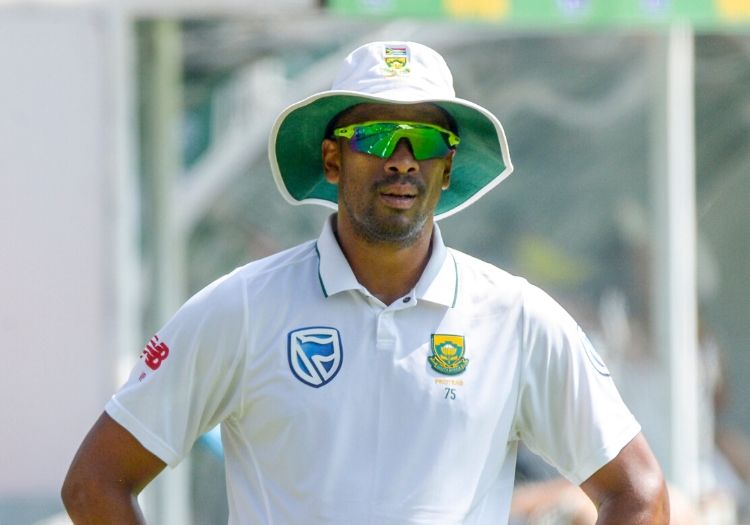
South Africa seamer Vernon Philander has confirmed reports that he will join Somerset for the upcoming county season after announcing his international retirement.
The 34-year-old is expected to join on a Kolpak contract after announcing earlier this week that he will leave the international game at the end of South Africa's ongoing Test series with England.
Following Daily Mail reports that Somerset were leading the race for his signature, the player himself confirmed the news in a press conference after the second day's play in Centurion, during which he led the home attack with four England wickets for just 16 runs.
"There's a few [matches] left and I've got to make the most out of it," Philander said.
"[Retirement] has obviously been planned over a period of time – it's not an overnight decision – and yes, I've made my decision and got to live by it, I suppose.
"We're going to go on a year-by-year basis [with Somerset] and see how we go."
Philander previously collected 23 wickets in five games for the county at the start of 2012, and he has also represented Middlesex, Kent, Nottinghamshire and Sussex at the county level. The club is yet to announce terms of the deal.
He follows longtime Proteas teammates Morne Morkel and Hashim Amla in opting to play out his esteemed career in the county game, though it has been suggested that all-rounder Dwaine Pretorius – who is making his Test debut this week in Centurion – has been convinced by Cricket South Africa's new director Graeme Smith to forego a Kolpak opportunity with Nottinghamshire.
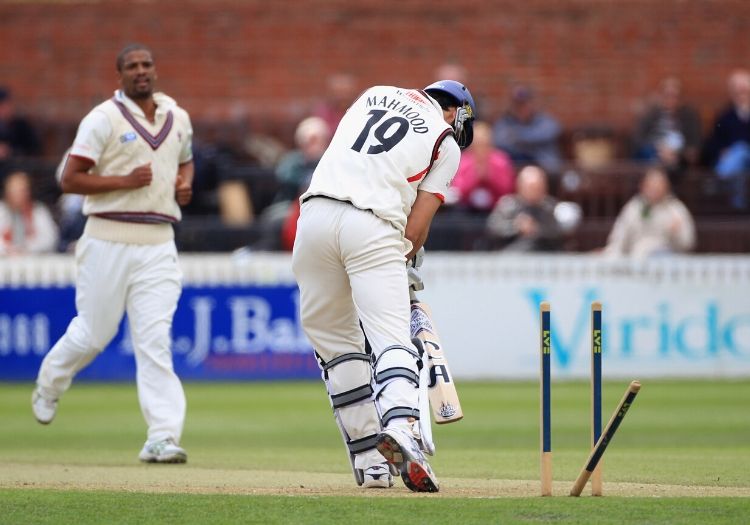
Vernon Philander last appeared for Somerset in 2012
After a vital contribution of 35 in the first innings, Philander opened his series with the ball by bowling five successive maidens, which included the wicket of England opener Rory Burns.
Conceding only 1.11 runs per over, Philander went on to add the crucial wickets of Joe Root and Jos Buttler to help South Africa dismiss England for 181, handing the hosts a 103-run lead.
Though James Anderson removed Aiden Markram just five balls into the second innings and Zubayr Hamza, Dean Elgar and Faf du Plessis all fell cheaply before the close of play to leave the Proteas on 72 for 4 overnight, the seamer is optimistic that his side can push towards a match-winning lead of 300 on an unpredictable Centurion pitch.
He commented: "I think it was tough to score yesterday afternoon, [but] in saying that I knew that of we bowled in the right areas it would be tough for them to score as well.
"At times we probably bowled a little bit too short and offered them a bit too much just after lunch, but then once Anrich [Nortje] and KG [Rabada] found the length it was really tough to score again, and we got [Ben] Stokes out and it was really tough from there onwards.
"I'd like to see us keep the aggression up because I feel if you're just going to meander on there, then there will be a ball with your name on it eventually.
"It is a little bit easier when the ball is older, but the ball is only 30 overs old now so we're going to have to play well tomorrow."
Philander also commented on the unusual scenes in the penultimate over of the day, where Jofra Archer finished with two consecutive full-tosses to nightwatchman Anrich Nortje while attempting off-pace knuckleball deliveries.
Though both were deemed to be above waist height by square leg umpire Paul Reiffel, the second one appeared not to be confirmed by partner Chris Gaffaney amidst protests from Archer towards Reiffel's signal.
Had the initial call stood, Archer would have been likely to be banned from bowling for the remainder of the innings, as is the protocol for bowling a second full-toss above the waist.
"If you're at square leg and you call a no-ball, you've got to obviously stand your ground. At no time did they actually cancel it, so that's probably what irked [captain Faf du Plessis] a little bit," Philander added.
"For me, it's plain and simple: we're playing a game [and] we set an example for the rest of the people looking into this game. You've got to make the right call.
"Are we going to tolerate it in another game, or are we going to put a stop to it? That's in the hands of the umpires."
Subscribe to The Cricketer this Christmas and receive a £20 John Lewis voucher or Alastair Cook's autobiography. Claim your free gift here

Welcome to www.thecricketer.com - the online home of the world’s oldest cricket magazine. Breaking news, interviews, opinion and cricket goodness from every corner of our beautiful sport, from village green to national arena.