
Ben Gibbons, a coach and teacher with experience in both state and independent schools, talks to ED KRARUP about supporting individuals
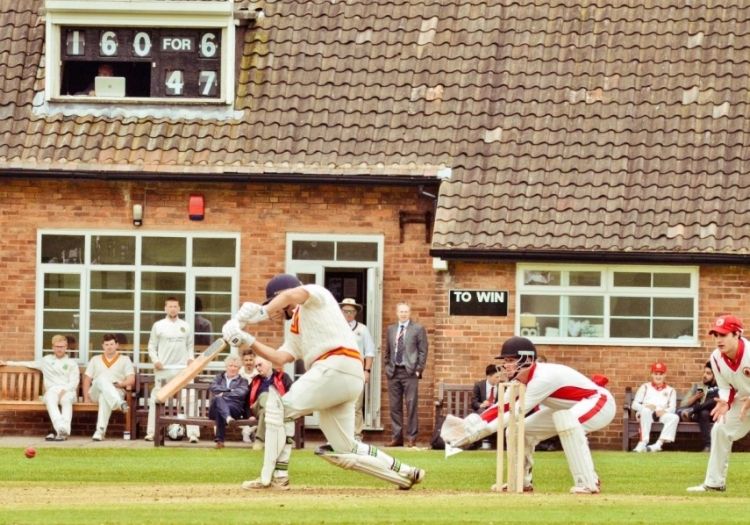
The differences of the cricket offering in state and private schools is well documented.
But few are more aware of these contrasts than Ben Gibbons. He is head of boys’ PE and director of cricket at Newcastle-under-Lyme School, an independent institution. He was previously master in charge of cricket at Queen Mary’s Grammar School, a state school in Walsall.
Queen Mary’s is a traditionally strong sporting school, particularly for rugby, hockey and cricket. However, as ever in many state schools, these sports were driven by individuals. With the retirement of Lloyd Taylor in 2012, QM had lost a dedicated and passionate figurehead of the game and, until Gibbons arrived in 2014, cricket struggled at the school for a couple of years with nobody leading the programme.
“Cricket had fallen off the agenda since Taylor retired and I inherited a very slim, watereddown fixture list,” Gibbons says. “There was very little enthusiasm because nobody was driving cricket. In the first instance, it was about maintaining participation, then trying to grow and drive the game to put cricket back as a main sport.”
As is often the case with successful state school cricket programmes, staff volunteer their time to run Saturday fixtures, often the only day when independent schools are available to play. While there was a large South Asian community at QM who had an interest in the game and were playing for local clubs, cricket cannot be run in schools unless there is a figurehead who will give up their time in the evenings and at weekends.
It was for these individuals, who just wanted to play cricket, that Gibbons built his programme around.
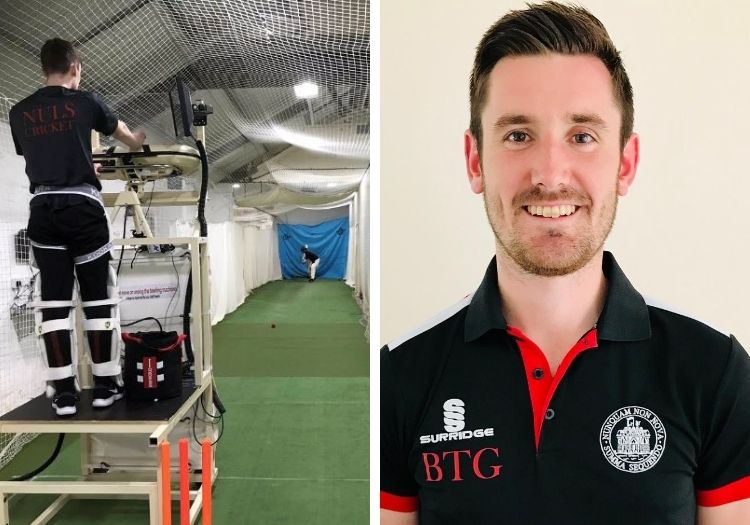
Gibbons is currently head of boys PE at Newcastle-under-Lyme School
Gibbons was faced with other difficulties too. “The first reason for pupils to come to the school is academic. The parents are also aware that they are getting an independentquality education for free.”
Parents may understandably be reluctant to let their child focus away from studies, cricket can be seen as a distraction especially in the summer term when exams are looming.
“The parental pressure is something I tried to change the mindset on,” Gibbons explained. “I was trying to change the culture to say that pupils do need to have a break from studies and cricket isn’t this evil during the summer that takes lots of time away.”
Getting the numbers to play cricket is one aspect, but keeping the pupils engaged and spending extra time at school is another challenge.
“Winning cannot be the end goal. You’re trying to ensure pupils enjoy and love the game. Fixtures are so the boys can experience the game and if that means experimenting with the formats that’s fine. This could be tape ball or soft ball.”
Success is not the aim, unless of course the players want it to be. But for the majority, enjoyment came with informal formats, such as tape ball, where players are less afraid to lose their wicket or drop a catch.
As has been referenced previously in our schools coverage, when talking to Watford Grammar School for Boys, enthusiasm goes a long way. Like at Watford Boys, the headmaster at QM takes fixtures, as does the deputy head and several other volunteering members of staff.
Cricket is back on the map in Walsall and for Gibbons a new challenge awaited. He moved to Newcastle-underLyme School, an independent establishment, to take over as head of boys PE and also to lead a cricket programme left in good shape by his predecessor Gareth Breen.
The Saturday fixture list was well-established and Gibbons had plans for more midweek games and a bigger focus on girls’ cricket. However, there was immediately a rebuilding job to do.
“One of the biggest challenges was a lot of our talented players had left to attend other schools on scholarships.”
This is an increasingly common occurrence, independent schools at the very top of the sporting ladder offering big scholarships for cricket.
As a parent it is an understandable decision, why would they continue to pay fees at one school when their child could attend another school with topquality cricket facilities for free, or a fraction of the full price? But while this may help particular players fulfi ll their full potential, it turns schools’ cricket into a transfer window and possibly takes away scholarships from those who truly need them.
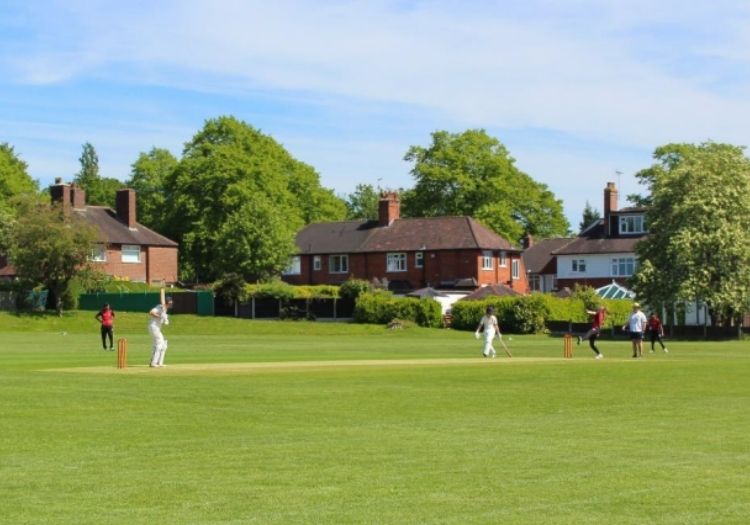
NULS v Shrewsbury School 2019
“As a department, we feel the scholarship system should be offered to those in the local district. There are a lot of talented sportspeople who don’t get access to the facilities a school like ours has.” NULS offer small scholarships of 10 per cent but Gibbons suggests offering just one big scholarship for sport that targets those who would not normally consider NULS as an option, even with that reduction on the fees.
“From a moral perspective that sits a lot better with us. A 10 per cent scholarship is not going to be enough of a lure to somebody from a state school.”
Gibbons arrived at NULS having lost a handful of pupils who would have been his top cricketers, who had moved to attend other schools on scholarships. “I hadn’t had the chance to work with them so I feel they didn’t give me the chance. There’s no bitterness at the end of the day, if they feel that’s right for them. “If the aim of the school is to have success on a national level then you need to pick the best players.”
A school may only need to recruit for a few years to establish themselves as a top cricket school, so the best school players will start to come to them anyway.
“That doesn’t sit comfortably with me. I’d prefer to develop players and if that means they get to 16 and get an opportunity to move elsewhere and it’s the best move for them, then that’s brilliant.”
Several internationals spring to mind who have moved on scholarships to independent schools, a decision that was clearly the right one, but moving may not always be best for the player.
“At QM we had just beaten a prestigious school and straight after the game somebody came over and offered a scholarship to one of our players. If he felt it was the right decision to go then I wouldn’t have stood in his way. He decided against leaving because he didn’t want to board and the school wouldn’t have suited his lifestyle. You just have to support the individual and think about what is best for them.”
Perhaps that is the most important aspect of schools’ cricket: supporting the individual. Gibbons has experienced this across both sectors of education, whether it be figuring out how best to engage a pupil in the game or if a player should make the lifechanging decision to move away from home to attend a school with the best facilities in the country.
Schools cricket is just a part of a wider education and if a pupil will benefit more from just playing tape ball, so they can build team-work skills or boost self-esteem, then schools have a duty to consider what will be most beneficial to the individual. The same too if a pupil has to decide whether they fully commit to cricket by moving away from home to pursue a career.
The Cricketer would like to thank Durant Cricket for their ongoing support of our schools cricket coverage. For more on Durant Cricket, including booking a site visit, please click here

Welcome to www.thecricketer.com - the online home of the world’s oldest cricket magazine. Breaking news, interviews, opinion and cricket goodness from every corner of our beautiful sport, from village green to national arena.