
SIMON HUGHES spoke to DEAN HEADLEY, EBONY RAINFORD-BRENT, ABI SAKANDE, RODNEY HINDS and ROLAND BUTCHER about the issue as the Black Lives Matter movement continues to gain global momentum
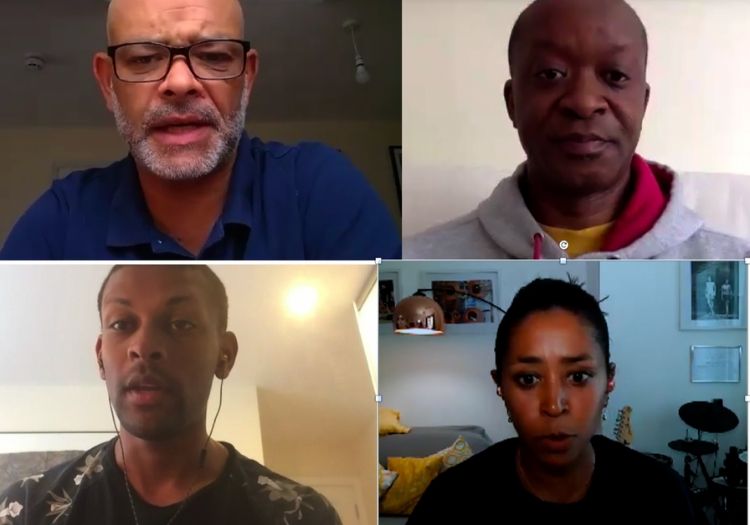
England’s first black player, Roland Butcher, says black sportspeople are now more interested in football.
Dean Headley, the former England international seamer whose father and grandfather played for West indies, believes there needs to be much more effective targeting of inner cities to find talented sportspeople of all ethnicities.
Rodney Hinds, sports editor of The Voice, Britain’s leading black newspaper, thinks black people have felt alienated from English cricket for some time now.
Ebony Rainford-Brent, the first black female to play for England, says that since the introduction of Surrey’s ACE (African Caribbean Engagement) programme in February, “the phone has been ringing off the hook and the talent that has emerged has been tremendous.”
Black cricketers were once so much part of the fabric our county game. There were often five in the Middlesex team I played in (two born in England), and many in other teams too.
As recently as the mid-1990s there were over 30 black cricketers competing in county cricket. Last summer there were nine who were born or raised in the UK, and if this county summer ever gets going there will potentially be only six: Daniel Bell Drummond, Keith Barker, Tymal Mills, Ben Mike, Liam Hurt and Emilio Gay (excluding the likes of Chris Jordan and Jofra Archer who were of course born and raised in Barbados).
As Mark Alleyne pointed out in the Daily Telegraph last week, he has been the only black county coach this century.
With the Black Lives Matter campaign gaining such momentum we wanted to explore this issue on The Analyst: Inside Cricket podcast.
So we assembled the above cast list along with Abi Sakande, the former Sussex fast bowler, who is currently caught between pursuing a cricket career and doing a masters degree in Anthropology.
There was uniform agreement among the guests that there is a problem.
Headley, now a schoolteacher at Stamford School, was adamant that far more needs to be done to find talented black (and ethnic) athletes in inner city areas (“where most of the BAME community live”) and channel them into cricket.
Hinds bemoans the lack of inner-city cricket facilities and also the alienation of those black cricket supporters who like to show their enthusiasm by banging drums and blowing conch shells.
“Lord’s likes to call itself the Home of Cricket,” he said. “But home to who? They don’t allow musical instruments to be played there. And how much diversity is there amongst the people who run the game? The diversity of your personnel can be for the general good and that’s where I think cricket is missing out. Diversity of thought is as important as diversity of talent.”
Sakande, a first-class cricketer and Oxford University graduate, feels black professional cricketers now feel somewhat isolated because there are so few of them.
“Amongst the black cricketers around the country that I have been talking to there is definitely a discomfort about even raising the issue [of potential discrimination or racial bias] because there are so few members of the black community in a dressing room or in the management team.
“If there is an issue who are they going to talk to about it? There is no one really there to listen who will empathise with their situation. I have been trying to push the PCA recently into creating a space or a platform where black cricketers can perhaps talk to each other and maybe find some support because there are so few.
MORE FROM SIMON HUGHES: Click here
“They have agreed to commit a working group to this, which at least is a start. We saw the Premier League story the other day with the players wearing ‘Black Lives Matter’ on the (back) of their shirts. Why can’t the ECB look at doing that for the Test series against the West indies next month?”
All contributors felt there had been a lot of talking and ‘surveys’ but not much actual action. So great credit to Rainford-Brent and Surrey for getting their ACE initiative going.
“In Lambeth, the borough where I was born, 42 per cent of 10-19 year olds are black,” she says. “That’s 33,000 people. We haven’t had one black player at Surrey male or female since I first came through the door 25 years ago. We decided to set up ACE.
“I heard that the black community don’t care. But we had the phone ringing off the hook as soon as this initiative was announced. We have had so much talent come through immediately we had to double the number of scholarships we offered, we’ve had three that we think can be fast-tracked straight into the system. Nearly half of the players who came forward were not affiliated to any traditional cricket club.
“What became clear is that not all of the black community have gone over to playing football but there has definitely been a disconnect from cricket. Also the cricket clubs serving the predominantly black community are not well resourced enough for them to play in leagues etc, and the inner-city facilities are severely lacking. There is no junior club in the whole of Lambeth. We need to just get out there, because if we do we can completely change the landscape.”
Generally the debate was an illuminating insight into the impediments for black (and ethnic minority) sportsmen and women with cricketing talent or enthusiasm seeking to make their way in the game. Perhaps the ACE initiative can be rolled out nationwide. It won’t solve all the issues, but it’d be a start.
The full round-table discussion will be in next month's edition of The Cricketer. Click here to subscribe

Welcome to www.thecricketer.com - the online home of the world’s oldest cricket magazine. Breaking news, interviews, opinion and cricket goodness from every corner of our beautiful sport, from village green to national arena.