
Simon Hughes spends time with the Rajasthan Royals and finds that the IPL has evolved into a highly competitive celebration of cricket
When you talk about the Indian Premier League to people in England you mostly get glazed expressions, unless they're of Indian ethnicity.
"I can’t stand it," they say. "That’s not cricket, it's just a circus". Correction. It used to be.
Originally most teams were an assemblage of retired or soon-to-be retired international stars (one rather harsh translation of the IPL acronym was Indian Pensioners League), augmented with a few good, and a lot of fairly ordinary, Indian cricketers. The standard varied between decent and ropey.
It seemed to be a vehicle for some wealthy Indian businessmen to hang out and party with famous ex-cricketers and Bollywood stars. There were rumours it was all rigged.
The IPL is not like that any more. The blingy owners have been edged out, as have any ageing players past their sell-by date. Brendon McCullum, who set the tournament alight on that first memorable night in 2008 with his pyrotechnical 158 not out, is just a commentator now.
There are fewer TV cutaways to Bollywood stars flaunting their latest film or players with gimmicky bats. Perhaps most importantly, there are no mentions of matchfixing any more. There is too much at stake. The IPL is a serious business now.
That is very evident as soon as you mingle with one of the teams as I did for 10 days at the start of this year's tournament. I travelled with Manoj Badale, lead owner of the Rajasthan Royals with whom I have just written a book about the IPL. One of the original investors in the tournament, he has been a pioneer in how to run and grow a new franchise.
We arrived at the Jaipur team hotel at lunchtime before the Royals' first game. Most players had only just risen. Because matches start at 8pm and finish after midnight, they tend not to get to bed until 3am. So they set their body clocks for 11am wake-ups.
Some were in the hotel pool. Not cavorting about or cooling off from the baking midday sun but systematically loosening their muscles under the watchful eye of chief medical officer Jon Gloster, who is very meticulous about their training and nuitrition. Two or three of the players were also underwater experimenting with a revolutionary meditation technique developed by Royals head coach Paddy Upton.
There could be a temptation, given the time available, to go to the ground and hit hundreds of balls before the game. This is seen as counterproductive. The emphasis on match days is a slow build-up to the crescendo of the game itself. So the afternoon is taken up with relaxation in the team room – there’s a pool table, table tennis and an Xbox, dominated by Jofra Archer who is the Royals' FIFA champion – augmented with a few meetings.
The bowlers, for instance, gather together in a quiet part of the hotel's lounge to look at a presentation from the team analyst Panish Shetty. There are slides of tonight's opposing batsmen (Kings XI Punjab) on his laptop, with a 'beehive' on the left of screen (all the balls he has received in his most recent T20 appearances) and individual balls you can click on that bring up a video of that specific delivery. On the right of the screen are some general points, say a batsman's strike-rate to balls below and above stump height and an overview – "Pacers – pull shot, slot ball, likes width, bowl tight lines."
The bowlers discuss these blueprints and suggest solutions and strategies. The batters have had a similar meeting earlier about what to expect from the King's XI bowlers. But there is a surprise in store.
At 6.15pm the players – including Steve Smith, Jos Buttler and Ben Stokes plus family entourage – file through the hotel kitchens and out a back entrance into the coach to avoid the inevitable melee both in the foyer and outside. A police escort is rather more of a handicap than an advantage through the Jaipur rush-hour traffic to the Sawai Mansingh stadium. The blaring sirens just draw more attention to the vehicle. And cows don’t recognise police vans.
The ground, once a low-slung concrete bowl, has been tarted up with pink-imitation ramparts in keeping with the team's colour scheme, a refection of Jaipur's alter ego as the pink city. I watch initially from the Shane Warne Enclosure, behind the bowler's arm (Warne is an honorary Royal having led them in the first four years of the IPL, and now an ambassador to the team). I am interested to see how Archer, in particular, is shaping up with a possible World Cup appearance in the offing.
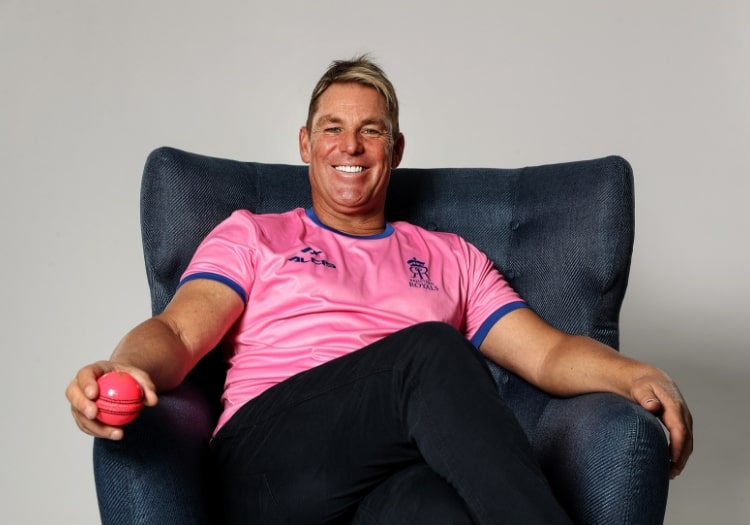
Shane Warne is an ambassador for the Rajasthan Royals
Amid the din of the Bollywood music and the rather screechy DJ, he has to compose himself to bowl to Chris Gayle. He does so highly effectively, producing slippery pace from around the wicket, alternating yorkers with back-of-a-length deliveries into the body. He concedes just two runs from his first two overs.
I'm sitting in the crowd, basking in a beautiful evening temperature of 28 degrees celsius among an extended family of 25 – uncles, aunts, mothers, fathers, sons, daughters and cousins (all called Sharma and all eating popcorn) as Gayle cuts loose, booming sixes over long-on and midwicket. It's a big ground this too. I notice that the spectators – almost exclusively in Rajasthan pink – are cheering these shots.
They come for the buzz and the entertainment as much as to see their team win. Archer returns at the death and, mixing fast yorkers and slower balls, is hard to get away, conceding just 17 from his four overs. He generates impressive 90mph pace from his short, languid run-up. But the other bowlers are plundered and the Kings XI total 184 for 4.
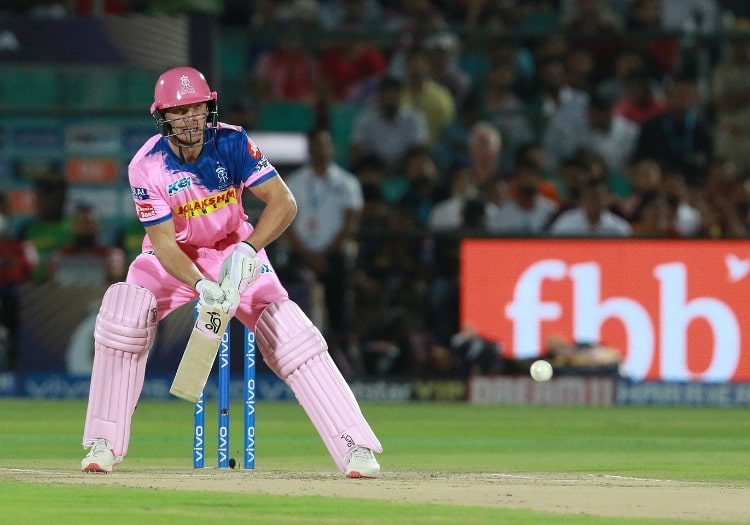
Buttler, whose stunning batting for the Royals last year (five successive half-centuries) won him an England Test recall, is making barnstorming progress to the target however. He takes 18 off the second over bowled by Sam Curran – bought for Kings XI after his stunning summer in England for a cool £800,000. Buttler is timing the ball sublimely and eases the Royals well past 100 in the 13th over.
Then, completely out of the blue – or perhaps one should say pink – the Kings XI captain Ravichandran Ashwin moves in to bowl, delivers, but doesn't let go of the ball. Buttler, the non-striker, eyes on his batting partner, moves out of his ground, habitually backing up. When he realises the ball hasn’t been released he turns to look at Ashwin, who, calmly, almost mockingly removes the bails.
There is initial shock, then anger on the field as realisation dawns. Buttler exchanges words with Ashwin, who is unrepentant. Waiting for the third umpire to adjudicate, Buttler suppresses a desire to whack the stumps (or Ashwin), before being obliged to walk off.
The incident sours a well-contested match and the Royals fall 14 runs short. Although their coach Paddy Upton impresses on them to still shake hands with the opposition afterwards (and they do) they are still fuming about it in the bar later. "The best way of retaliating is doing that back to Ashwin," I suggest to them.
"No way, I’m not stooping to those lengths," says Stokes adamantly.
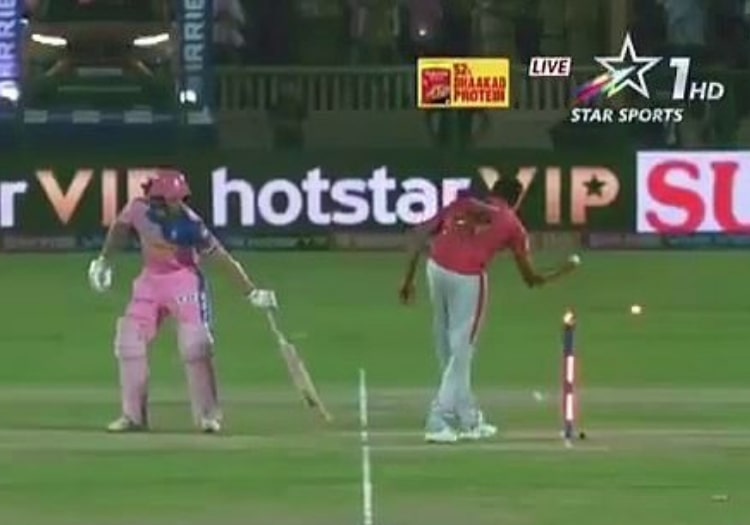
The moment Ashwin Mankads Buttler
The team practise at the ground the following evening. The standard and approach is impressive. Quick bowlers with international experience - India's Varun Aaron and Jaydev Unadkat and West Indian hulk Oshane Thomas – are flinging them down.
Smith and Stokes, batting together in the middle, are constantly sending white balls soaring into the dark sky. It is like being at a fireworks display. They both bat for an hour and a half. Balls are flying in all directions. Nowhere is safe. (Stokes broke the jaw of the England physio Craig de Weymarn with a straight drive in the nets last year).
As English counties creep into action with warm-up matches against the universities back home, I follow the Rajasthan team on their whistle-stop tour to India's south. First port of call Hyderabad, and a weaving, Wacky Races-type dash through the city to the orange-bedecked Sunrisers stadium and their 55,000 screaming fans.
Despite the precocious Sanju Samson's elegant hundred for the Royals, their bowlers run in to the most pugnacious opening pair in world cricket – David Warner and Jonny Bairstow.
Archer is treated with respect but still they put on 110 in 9.4 overs, helping to make short work of the 199 target. This partnership – featuring two men at loggerheads during the Ashes – is a superb example of the positive and unifying influence of the IPL. Our journey back to the hotel well after midnight is accompanied by streams of scooter riders wearing luminous orange 'Warner 31' replica shirts.

Bairstow is in sizzling form for the Sunrisers
He is an unlikely Hyderabad hero.
The next afternoon we fly to Chennai for an appointment with MS Dhoni. The decibel levels from the yellow army rise to bone-rattling as their emperor saunters into bat, with the Chennai Super Kings wobbling at 27 for 3. He stabilises the situation in his own inimitable way, though he is lucky to survive when a ball from Archer ricochets onto the stumps but doesn't remove the bails. With one over of the innings left he has manoeuvred the score to 147 for 5.
Momentarily I cast my mind back to Madison Square Garden, New York, circa 1997. The New York Knicks are playing the Chicago Bulls in the World Series finals. The score is 82-all and there is less than a minute to go. With 20 seconds left the Bulls throw the ball to the great Michael Jordan, basketball’s legendary finisher.
Calmly His Airness bounces it up and down in midcourt as the clock ticks down, 18….17…16…15. Then with about 10 seconds left he makes his move. Ducking inside one defender, sidling past another, weaving his way under the basket…7…6….5, then leaping and arching his back and displaying that incredible 'hangtime' that seemed to defy gravity to plop the ball into the basket, followed, almost immediately, by the klaxon that signalled the end of the match.
The most incredible thing about Jordan was that every player on the court, and most of the 15,000 people in the arena, knew what he was going to do. They had seen it all before. He knew they knew. And yet they were all powerless to stop him. He was propelled by a total, incontrovertible self-belief. There was a certainty, in fact a total inevitability, about his match winning move.
The same is true of Dhoni. There he is, on strike, for the last over of an IPL innings on his home ground. It is pre-ordained. Everyone knows his intentions, the bowler Unadkat most of all. He knows they know. He is not cowed by expectation, or an enervating 36 degrees celsius night or his 37-year-old body.
He delivers.
A smash over square-leg from a slower-bouncer, a biff over long-on, a scythe of a low, wide full toss into the seats beyond extra cover and a clenched-jaw club of a short ball back over the bowler's head to finish. Just the 28 off the final over. There is hysteria in the stands.
The Royals don’t just look winded. They look as if they have been run over by a JCB.
Their valiant run chase falls eight runs short. Three matches, three defeats.
They are understandably numb in the bar afterwards, while admiring Dhoni's ageless star quality. There is little time to reflect – there is a four-hour plane transfer back to Jaipur the following afternoon, arriving back at 10pm. Then a bottom-of-the-table clash against Virat Kohli's Royal Challengers Bangalore less than 24 hours later.
After a couple of personnel changes they manage to restrict RCB to just 158 with Kohli and AB de Villiers dismissed in the same over by unheralded leg-spinner Shreyas Gopal, who ironically hails from Bangalore.
Buttler has recovered his composure and makes a polished 59, but the innings stalls and stutters and Smith, struggling to find his timing, is caught in the deep with 10 still needed.
It is left to Stokes and the diminutive Rahul Tripathi to sneak the winning runs with a ball to spare. After 10 days of preparation, a dozen coach journeys, five flights, four matches and a 3,000-mile round trip the Royals are off the mark. Buttler gets the opportunity to chat to de Villiers, his idol, after the match.
The IPL is not just an extravagant jaunt for overpaid sportsmen; some English players end up paying back most of their IPL salaries to their countries as compensation. It is a cricketing brainstorm as the best players in the world interact on and off the field, driving them to ever greater heights of (albeit brief) achievement.
It is a celebration of the game. It might be a bit helter-skelter, but if I had the choice between playing in that or bowling 20 overs a day into a chill wind at Northampton, I know which option I'd take.
If The Hundred can achieve even half of this, it will have been worth it.

Welcome to www.thecricketer.com - the online home of the world’s oldest cricket magazine. Breaking news, interviews, opinion and cricket goodness from every corner of our beautiful sport, from village green to national arena.