
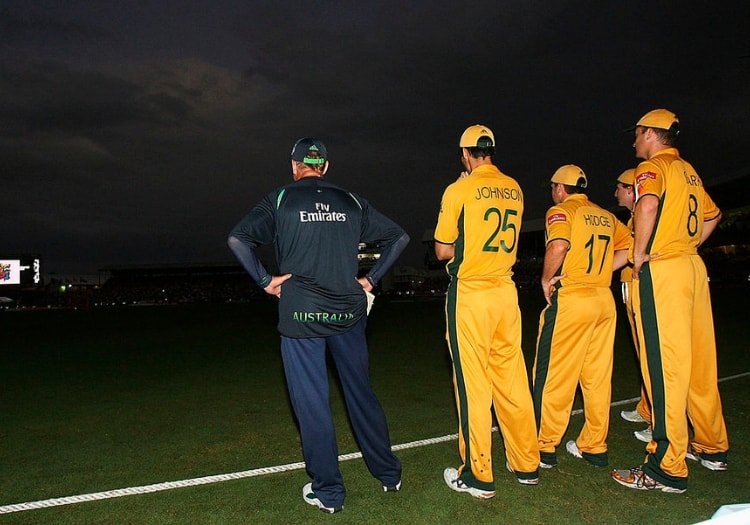
TOM EDWARDS: The 2007 World Cup final between Sri Lanka and Australia was, sadly, rain-affect and turned into something of a nonsense as a result. The match ended in darkness, and there was no reason why it should ever had

One of cricket’s glaring flaws it its susceptibility to being completely ruined by the weather. Though it can add an extra dimension to the longer format, there is rarely an instance where the weather improves a white-ball match.
The World Cup final is the showpiece white-ball cricket match. In terms of one-day cricket, there is no bigger game, so the effects of rain are felt even more keenly.
The 2007 final between Sri Lanka and Australia was, sadly, rain-affected and turned into something of a farce as a result. The match ended in darkness, and there was no reason why it ever should have.
The tournament had been something of a sorry affair, and some would argue that it got the finale it deserved. There were boos all round for the organisers and for match referee Jeff Crowe, who would eventually take the blame for how things panned out.
The start of the match was delayed by rain, eventually getting underway at 12.15pm local time, with the team batting first- Australia- having 38 overs to play with due to the time lost.
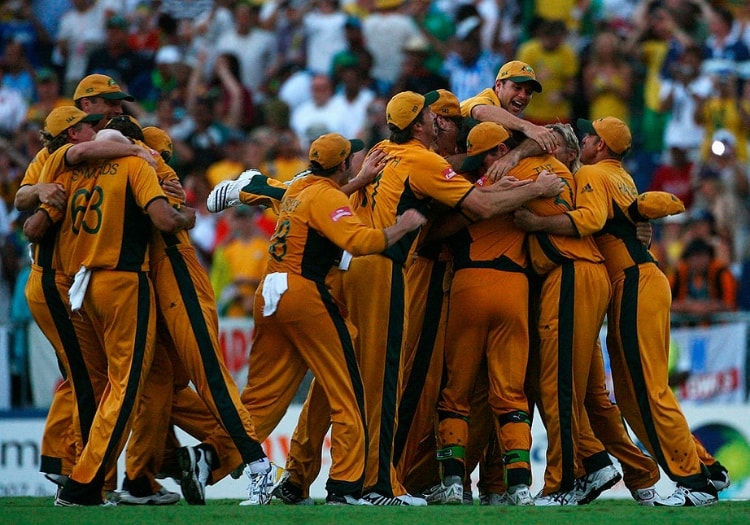
Australia celebrate their World Cup victory in 2007
The out-of-form Adam Gilchrist did his utmost to redeem the fixture when he wrote himself into World Cup history with a remarkable century, scored while he had a squash ball in his glove to counter a technical flaw.
It was truly one of the great knocks, so good that it is a moment in its own right. The rest of the match, however, was memorable for all the wrong reasons.
Eventual winners Australia finished on 281 for 4, with Gilchrist’s 149 the stand-out innings by some distance.
When the rain started falling against inside the 24th over of Sri Lanka’s over, they had battled hard but were behind the score needed on Duckworth-Lewis.
Sanath Jayasuriya and Kumar Sangakkara had put on a brilliant 116 for the second wicket, with both players scoring half-centuries. Both had been dismissed, but Mahela Jayawardene, an equally top player, had got off to a quick start.
SIGN UP TO OUR NEWSLETTER
Thankfully it was brief. The number of overs were reduced to 36 and the target dropped to 269, but Sri Lanka were unable to kick on from the reasonable start Jayasuriya and Sangakarra had given them
With light fading fast and Sri Lanka needing a hugely improbably 63 off 18 balls, they appeared to accept the offer of bad light and conceded the match. Cue Australian celebrations.
These ended rather quickly when Aleem Dar informed them that they still needed to bowl the last three overs or would have to come back on the reserve day, something that looked both pointless considering the runs needed and outright dangerous considering how dark it was.
The team of five umpires seemed to have forgotten quite an important rule however - once 20 overs had been bowled in either innings, that was enough to constitute a game of cricket.
Captains Ricky Ponting and Jayawardene agreed that Australia would do three overs of slow bowling in the interests of safety. Eventually these went down, and the match ended. Australia were, finally, world champions.
"In hindsight, I should have known the rules and said the game had been called off. I'm very embarrassed for the playing control team today," match referee Crowe admitted afterwards. Quite.

Welcome to www.thecricketer.com - the online home of the world’s oldest cricket magazine. Breaking news, interviews, opinion and cricket goodness from every corner of our beautiful sport, from village green to national arena.