
SIMON HUGHES: Jones had a bristling presence at the crease, slightly fidgety, sun-block applied to his bottom lip, clenched-jawed, gimlet eyed, jumping into position with lightning footwork to pounce on an only slightly short ball
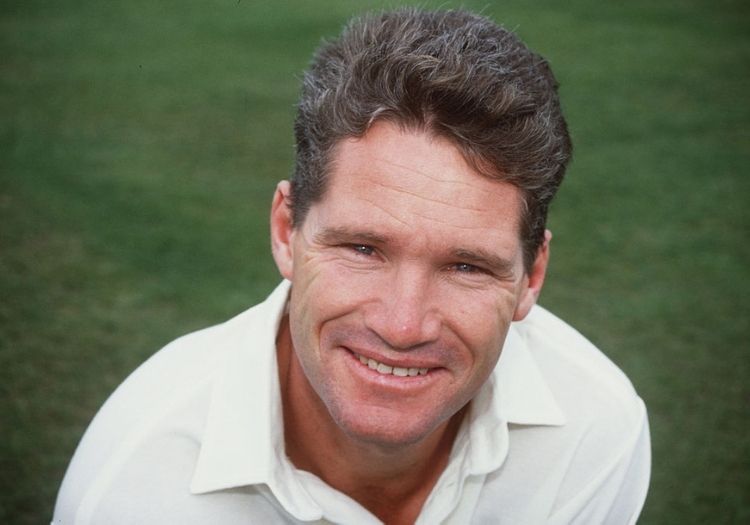

Turbervill: Everything he touched turned to gold
Dean Jones was a cricketer who inspired love and hate. You absolutely loved playing with him and totally hated playing against him.
He had that slightly cocksure strut – not arrogance, more optimism and enthusiasm, and incessant energy at the crease – that inspired teammates and aggravated opponents.
I played one season with him at Durham and, though I had become a journeyman, he made me feel like a worldbeater. “Come on Yozza, you can knock him over,” he’d yell from gully as the Kent No.4 took guard, ignoring the fact that it was the West Indian maestro Carl Hooper.
“He’s a dodgy starter. Get him with yer wicked outie!”
He arrived in the freezing north east in April 1992 – at the birth of Durham as a first-class county – and made an instant impression. In our first match, a Sunday League game against Lancashire at Durham University’s Racecourse Ground, he strode out at No.3, took guard outside his crease and slapped the bowlers – all internationals including Paul Allott, Philip DeFreitas and Danny Morrison – all around the place for a brilliant hundred.
After that he reeled off seven successive Sunday leagues fifties. Always first in the nets, he would constantly be assessing his technique, batting was his obsession. Fielding too. We lost count of the number of different fielding drills he introduced, making practice fun as well as valuable. He was the team dynamo. “I love winning,” was his mantra.
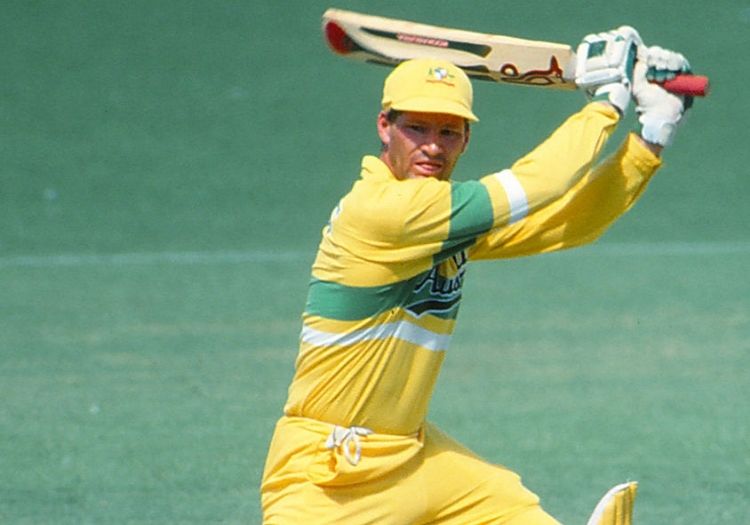
Dean Jones played in more than 200 matches for Australia
Bowlers' weaknesses and strengths were jotted down in a little black book, as well as his own scores, balls faced and manner of dismissal.
His running between the wickets was electric. A crisp on-drive would be accompanied by a loud “YES….HUSTLE!!!” declaring the intent to put the fielder under pressure. His turn for two, with body low and left hand pushing off the ground, had blistering pace and purpose. His commitment to the cause was total, and he worked as hard for his partner as he did for himself. His encouragement to youngsters or tailenders raised their confidence and expectations.
As one of those tailenders, I put on 100 with him once – probably the highest partnership I had ever been involved with (admittedly I only made 20 of those runs). It was against Northants and his perennial foe Curtly Ambrose, who had been after Jones’s scalp ever since the Australian had asked him to take his sweat bands off in a one-day international.
Ambrose tore in to bowl, making the ball leap from a length. Jones rose up on his toes and cuffed deliveries past cover that I could only fence hopelessly at. After one such ball, which flew past my nose and elicited a diving stop from the keeper, Jones was haring up the wicket shrieking “YES, YES!!” to get back on strike. He cut the next ball for four and rested with self-satisfaction on his bat. I marvelled at his reflexes and bravado. He made 157 (out of 253 all out) that day. I was second highest scorer.
He made light of our ropey batting order, and dodgy pitches, soldiered on through blows to the body and fingers, was always willing and never asked for a nightwatchman.
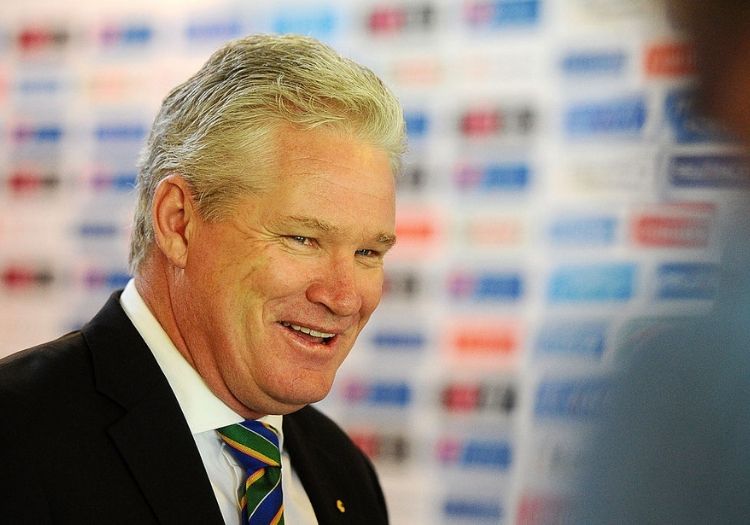
The former batsman died on Thursday at the age of 59
“I can get 25 in those last four overs with the field up,” he’d say. He was unceasingly enthusiastic. And that I think is what made him an effective TV personality too. He forged a real niche in India with his persona 'Professor Deano', going into minute detail about a batsman’s technique on Star Sports. It was just before doing an IPL game for them early today that he died.
I have two abiding memories of him: his bristling presence at the crease, slightly fidgety, sun-block applied to his bottom lip, clenched-jawed, gimlet eyed, jumping into position with lightning footwork to pounce on an only slightly short ball and rifle it through point for four.
And he and Ian Botham, who forged a close friendship that season, sitting in a pub in Durham quaffing pints and exchanging funny stories about Merv Hughes and Allan Lamb and, in Jones’s case, revealing an unknown expertise in the deaf and dumb alphabet, and a previous job as a prison detective.
It occurred to me that day that only two months earlier these two warriors had been locked in mortal combat in the 1992 World Cup. And now they were bosom pals.
Dean Jones was like that. Friend and foe. It all depended whose side he was on. And I’d definitely prefer him on mine.
For unrivalled coverage of the county season, subscribe to The Cricketer and receive 3 issues for £5

Welcome to www.thecricketer.com - the online home of the world’s oldest cricket magazine. Breaking news, interviews, opinion and cricket goodness from every corner of our beautiful sport, from village green to national arena.