
NICK FRIEND: After a bombshell winter for English cricket, Ankit Shah, co-chair of Middlesex's EDI committee, opens up on the work being done by the county to make significant changes
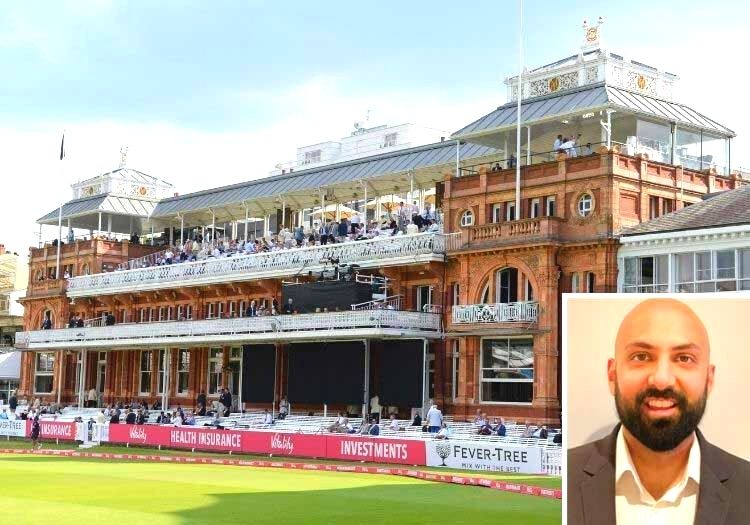

"Perception is reality," says Ankit Shah, and he knows what it looks like.
Shah, a management consultant by trade, took on the co-chairmanship of Middlesex's equality, diversity and inclusion committee last year, not long before Mike O'Farrell – the county's chair – was roundly criticised for remarks made before a parliamentary DCMS hearing.
Cricket rarely finds genuine cut-through, but those comments – in the midst of a bombshell winter for the game – garnered sufficient publicity that one employee, travelling to work in his club tracksuit, was called 'a racist pig' by a fellow commuter on his train journey into the office.
"The fallout definitely didn't help," Shah explains, "and it did make life difficult, but it hasn't changed the pace or passion with which we're running. In fact, it's probably given us a bit more oomph to get more people coming together to help and really be involved."
The committee has been running for almost two years now, and tangible change is on the way. For one, Shah was invited by chief executive Andrew Cornish to form part of the selection panel for a new first-team coach following the departure of Stuart Law over the winter. He was involved with the first round of interviews, helping to whittle down eight candidates to a final shortlist. Come the end of the process, Richard Johnson was one of his recommendations.
"The right person for the job would only be the right person for the job if they understood the sensitivities around EDI," says Shah. "If they don't understand that and they don't buy into our vision, then they're not the right person for the club.
"It was also about making sure they had the right thought process so that if anything did happen, that they would have the right thought process to deal with any scenarios but also be perceived as open and honest enough by the players to be someone that they'd go to, which is how Jonno came across. They trust him, and he also commands a voice in the dressing room that people listen to, which is zero tolerance."
Shah, 34, is impressive company, speaking openly about his role – a part-time position at which he is throwing every piece of his energy – and the work being done by Middlesex in this field. The establishment of an EDI plan centred around community engagement in some of the region's more diverse areas predates Azeem Rafiq's allegations against Yorkshire, though there is also an admission that Middlesex have not got things right in the past and are only now beginning to properly address certain matters.
In early March, the county hosted a Ramadan workshop in collaboration with Nujum Sports, whose Muslim Athlete Charter they signed up to in February, becoming the first professional cricket club to make that step. The purpose of that partnership is to ensure a better understanding of different cultures and faiths, and to make the club a more welcoming environment for players and supporters.
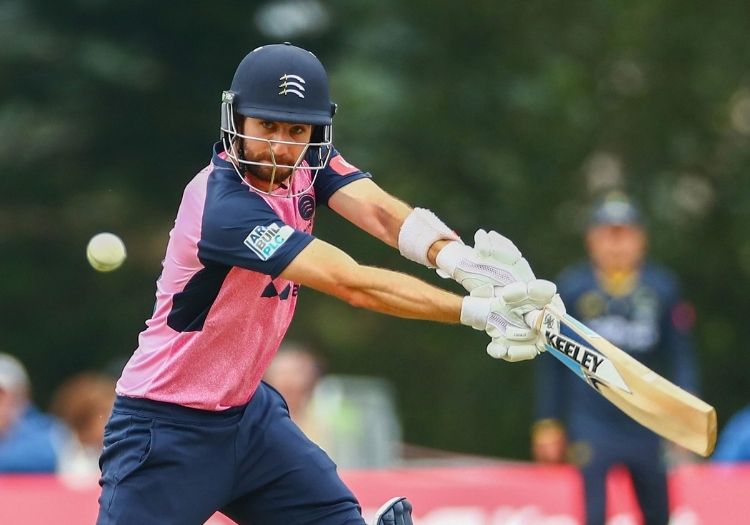
Stephen Eskinazi, one of Middlesex's senior players, volunteered his services to the club's EDI committee and is leading conversations in the dressing room around inclusion and diversity (Jacques Feeney/Getty Images)
"I remember at my club, a couple of our fast bowlers were fasting in the middle of the season in July," he says. "It was roasting for them to bowl their allocation of overs. Some people then wouldn't understand why they weren't then sitting with the team at tea. Or, as soon as the first innings finished if we were bowling first, they might go and shower. They can't drink water, but they need their bodies to cool down. They might go to find some shade or go to pray.
"We knew about it, and we knew they wouldn't be sitting with us. But it's about making sure that we were educated enough to know why they're not in a team huddle halfway through a game, because they're sitting under a tree in the shade to recover. It's about understanding that – and understanding dietary requirements, when there are religious festivals, when there are days that they can't train, when there are fast days – so it doesn't impact on their perception as a committed cricketer."
Next month, they are due to hold an event in collaboration with Graces, the world's first LGBTQ+ cricket club. Jamie Cross, the club's equality and diversity officer, also sits on Middlesex's EDI committee. There are also separate links being developed with temples, mosques and synagogues, while there are plans for the club's official website to be fully translatable into Urdu and Punjabi.
Shah spoke to Michael Holding recently through Mike Selvey, Middlesex's president and a good friend of the former West Indies fast bowler, to talk over the county's plans: "What Mikey said – and he kept saying it – is that being different isn't a bad thing. Through that, we have to educate ourselves in terms of a club but also as a society. Difference has to be embraced, and you need to learn about different cultures and different faiths.
"It's not an end-goal but an end-state, where we've got inclusivity well and truly baked into everything we do and, no matter who you are or where you've come from, you're going to have the opportunity to play cricket"
"It's not about people on 'the outside' coming in and adapting to an environment – whether be a small club, a school, a traditional club or the county – it's about being educated enough to create an environment in which people feel welcome and any differences they may have in terms of diet or wanting to pray or when they can play cricket or when they can train is embraced and you allow for that to happen rather than making people train on a certain day and saying that you have to play on a Saturday because that's when the first team plays its biggest match of the week.
"Whether it's in sport or in the professional world, if you're stepping into an environment where people talk differently to you, look different to you and dress differently to you, then you're going to feel uncomfortable and you'll take time to adapt. But should they have to adapt? I would say no."
To aid that education, Selvey has received copies of Holding's award-winning book, Why we Kneel, How we Rise, and has encouraged every member of playing and non-playing staff to read it.
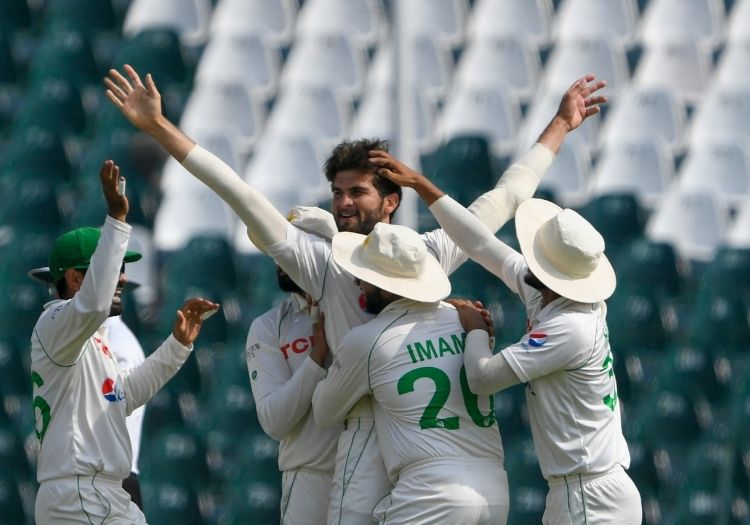
Middlesex have signed Pakistani fast bowler Shaheen Shah Afridi for the first half of the season (Aamir Qureshi/AFP via Getty Images)
"I don't think getting people to play cricket is a problem," adds Shah. "For me, the big thing about understanding different cultures is getting everyone to see that there is a future in cricket. That's where we need to get to, where people are staying in it. So, if you are a young cricketer – boy or girl, whichever part of the country or county you're from – it's about not thinking there's a glass ceiling or that you can only ever play Saturday cricket or Sunday cricket or midweek cricket or Last Man Stands cricket.
"We need to get to the point where people can think: 'You know what, if I'm good enough, I will make it. If I work hard enough, I'll make it.' I actually think community outreach to an extent is great to spread the word about cricket, but in Middlesex it's not about getting people to play cricket, I don't think."
Indeed, a study by Tom Brown and Adam Kelly found that British South Asians move from being generally overrepresented through county age-group cohorts across the country between under-10 and under-19 level to being mostly underrepresented when making the leap to professional status, so much so that they are 7.8 times less likely to reach that point than White British players, having been 3.8 times likelier to be selected between under-16 and under-19 level.
That issue extends to class as well: the same research found that those with a higher relative access to wealth are 22.3 times more likely to make it as professional cricketers in England and Wales than their lower access-to-wealth equivalents. Those disparities have effectively led to the foundation of initiatives such as the ACE Programme and the South Asian Cricket Academy, against whom Middlesex's second team will play in July.
"It's cliched to say the best will rise, but I don't think the best has always been given the opportunity. And you'll never know. It's something that people have had to live with and accept"
"Cricket was set up to be played on a Saturday and a Sunday," says Shah. "People worked a traditional nine-to-five and they could train in the evening, and then they could play cricket at the weekend. But if you're working two different jobs because you don't come from a traditional cricketing demographic, then Saturdays may not be feasible. So, how do clubs allow for that? How do Middlesex facilitate that from a membership perspective? Thinking about it isn't enough; it's about making some changes to allow everyone to play cricket."
On that theme, the club has just appointed David Burton as its first transition coach, a role born out of a focus group that featured players of Asian heritage who represented the county either at academy, second-team or senior level.
At present, 60 per cent of the club's academy intake are of ethnic minority background, but Shah knows better than most that such figures are meaningless if they don't translate into first-team cricketers and role models.
Speaking to The Cricketer last year, Alan Coleman, the club's new head of men's cricket performance, stated his aim of creating a team that "represents an area that we're from, inherently London". At present, the current first-team squad doesn't match up to that: Thilan Walallawita and Ishaan Kaushal are the only players of Asian descent currently on the men's senior staff.
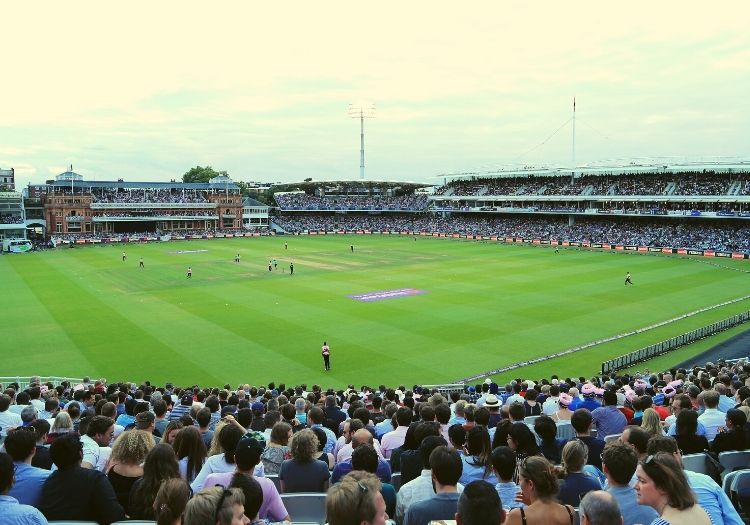
T20 Blast matches often sell out at Lord's, but the county are looking at how they can become more family-friendly in their offerings (Richard Heathcote/Getty Images)
"It's just about putting trust in the process and trust in what we're doing to hopefully make sure it is more representative," Shah explains. "That's not to say we all of a sudden have to only recruit certain kinds of players from certain communities or schooling systems, but to make sure that everyone has an equal opportunity."
In another guise, Shah is chairman at Kenton, a Middlesex League club whose membership demographic has altered over time and now prominently features Afghan, Pakistani and Hindu communities. Having been around the club game since his youth, he has seen plenty of quality youngsters pass through without taking the final step – a repetitive story he describes as "really frustrating". Part of that, he is sure, is down to the preconception that earning professional opportunities through club cricket are tied to playing for the traditionally bigger clubs and in the top leagues. As a consequence, the best players have moved away from their childhood clubs, leaving them worse off as de facto feeders, narrowing the funnel between the elite and amateur spheres.
"Club cricket needs to be seen as a pathway to play for Middlesex," says Shah, "so that it encourages clubs to continue to be better, to continue to hold onto their players. Middlesex need to facilitate that. By which I mean, you're not going to be penalised for not being in the Prem. If you're good enough and we hear of you, then we'll come and have a look."
He adds: "One of our ex-players came to speak at the EDI committee and he gave his experiences. To think someone with his talent didn't progress further, god knows how he feels – the anger and frustration that he and his parents must feel. There is so much talent out there.
"It's cliched to say the best will rise, but I don't think the best has always been given the opportunity. And you'll never know. It's something that people have had to live with and accept. We have to learn – not to make it a perfect world, but to make it more accessible for everyone."
"I can do all the planning and talking that I want, but if people perceive you and your club to be a certain way, then that's what they'll believe, whether that's right or wrong"
That is one of the major reasons for adding the transition coach, a multifaceted position that, at its heart, has been established to address the issues brought up by those in the focus group, and that have contributed to the struggles felt – by youngsters of all backgrounds – when making the leap to the professional game.
"That was a collective common theme – the transition was where they felt they could have had more support," Shah explains. "That's not to say he's here to help certain players from certain backgrounds, but it's to help all players transition into that environment. Whether you come from the same traditional environment as everyone else, you'll still have your own struggles. So, knowing there's someone there to support you and answer those questions that you might not feel comfortable answering in that environment, having that safe space of someone who's been through it, I think that's so important."
Essentially, a buddy system – the kind that exists in plenty of other industries. For what it's worth, personal development managers are provided by the Professional Cricketers' Association for players at each county, but the difference here is that Middlesex are hiring a man with a background in coaching. That isn't part of the role per se, but it is an invaluable add-on.
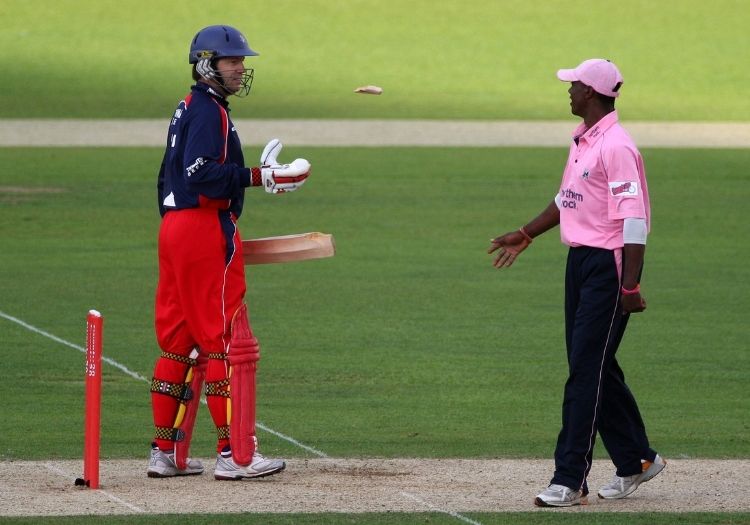
Former Middlesex seamer David Burton has been appointed as the county's inaugural transition coach (Mike Hewitt/Getty Images)
Burton, one of the few black men to have featured in a County Championship match over the last decade, has experienced the challenges of the county game himself during stints at Middlesex, Gloucestershire and Northamptonshire. So, the main hope is that he will be able to guide youngsters through the mental challenges that come with being a first-team cricketer. But having the option to talk cricket with someone beyond the head coach will give players an additional sounding board.
As part of this process, Shah – along with Cornish, Coleman, Angus Fraser and others – has reached out to every South Asian player to have represented the county in the last 15 years, as well as emailing close to 250 cricketers of all backgrounds who have turned out for the club in the last two decades at first or second-team level, asking them to highlight any issues they may have encountered either directly or indirectly as witnesses.
Norman Cowans, another member of the county's EDI committee, was part of the Middlesex side of the 1980s – along with Roland Butcher, Wilf Slack, Neil Williams and Wayne Daniel – that regularly featured five black players, better reflecting the ethnic diversity of the region.
"We should celebrate the success of that side," says Shah, "not necessarily because they were that diverse, but because they were comfortable in being a diverse team without being classed as 'look how diverse they are'."
The addition of Stephen Eskinazi, then, as the newest member of the EDI committee, has come as a major source of satisfaction. "They are the face of the club a lot of the time," says Shah. "They understand that they have responsibility."
Eskinazi, a senior player, approached the county himself and offered his services after chatting with Shah at a club day. In an interview on Middlesex's website, he revealed that the squad had changed a portion of the lyrics in the team's victory song in a conscious effort to steer clear from anything that might impact the inclusivity of the dressing room.
"When Eski came to speak to the committee and gave an honest account of what the players had been discussing, all of a sudden there's an extra layer of impetus behind everything that we're doing," says Shah. "The fact that they see where the club's going, and they brought into the vision and want to be part of it is huge."
In February, after the playing staff were handed a day off, they volunteered as a group to give their spare time to club community initiatives. Eskinazi also suggested that the squad has discussed its relationship with alcohol in the dressing room – another area that Shah has a view on, given his experience at grassroots level.
"Again, it's about educating," he says. "If certain clubs don't stick around in the bar, it's not because they don't want to chat about cricket. Actually, that's probably what they want to do more than anything." At Kenton, he encourages people to sit outside where possible after matches to prevent non-drinkers from feeling uncomfortable in a pub environment. He points to the anecdote recounted by Rafiq of being plied with wine against his will as a teenager in club cricket: "The stuff he got forced to do, it's barbaric."
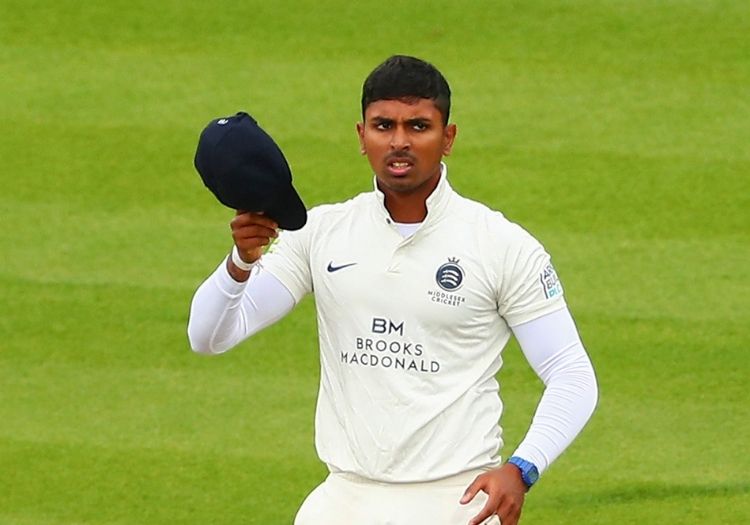
Thilan Walallawita is one of just two players of Asian heritage on Middlesex's first-team staff (Jacques Feeney/Getty Images)
That's an extreme example, but the game does need to look at its relationship with alcohol consumption, nonetheless. Dal Babu, an ex-chief-superintendent, is a fellow member of the EDI committee and has shared his experiences of sitting with his family at a limited-over game. He describes "a culture of pints" and "people being a bit inappropriate towards the end".
It is an intricate balance for counties, especially with the T20 Blast, which acts as a major revenue stream and consistently sells out – it was at the insistence of the counties that 99 out of 126 matches in the upcoming season are due to take place between Thursday and Sunday. The success of The Hundred, however, has at least shown that it is possible to sell tickets for the rest of the week as well – and without championing a boozy evening out (even if, anecdotally, many of the games descended into that regardless).
"So, how do we create family zones and areas where it is a safe environment and maybe there isn't alcohol, and also not being afraid to make those decisions? Some people will say: 'Oh, it's cricket – why are you not allowed to have a drink here? Why are you only selling seats to certain people?'
"It's not about selling seats to certain people. I've got two young boys: do I want to be sitting next to a bunch of guys who've come in for a boozy night out when I've got my five-year-old with me? No. I want a family area, where I can talk to my boy about cricket and let him enjoy it. I think that's something that the ECB and all the counties need to look at."
Which takes him to his main point, that these cannot only be ideas. That this, more than ever, must be about actions rather than words. He returns to his opening answer: "It's the one big thing I've said to everyone – perception is reality.
"I can do all the planning and talking that I want. But if people perceive you and your club to be a certain way, then that's what they'll believe, whether that's right or wrong. Everything we say is all well and good, but until perception around cricket and society changes, we're not going to necessarily achieve success."
And so, to that single word: success. Too often in the past, cricket has believed itself to have cracked it on matters of diversity, inclusion and anti-racism. The reality, of course, is that can never be true, no matter how many t-shirts are printed nor statements made.
Shah puts it well: "If I was to say that the ultimate goal is to achieve X, Y and Z in five years, then I would be fooling myself. I don't think that's the right answer. Perception is reality, so until that perception across the board changes – and is consistent – that's when we'll have got to where we want to get to.
"There's no endpoint for success in this because communities are going to continue to change and society is evolving. We will have to evolve with society.
"It's not an end-goal but an end-state, where we've got that inclusivity well and truly baked into everything we do and, no matter who you are or where you come from, you're going to have the opportunity to play cricket."

Welcome to www.thecricketer.com - the online home of the world’s oldest cricket magazine. Breaking news, interviews, opinion and cricket goodness from every corner of our beautiful sport, from village green to national arena.