
How different was the county grind in 1989? THOMAS BLOW speaks to Julian Wood, David Ripley, Simon Hughes and Darren Bicknell to find out...
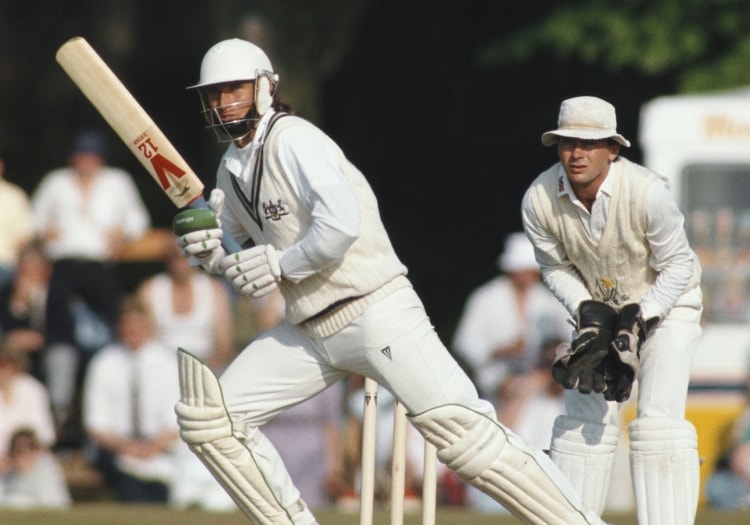

Cricket has changed a lot over the past 30 years.
Far more internationals, fewer first-class matches, new domestic tournaments, and, perhaps the biggest of all, the advent of T20.
But while the game may have switched direction, has the profession? To find out, The Cricketer asked four ex-professionals what it was like being a county cricketer in 1989.
When the 2018 season concluded, the majority of county cricketers remained active in the sport through either playing for their country, competing in franchise tournaments, or playing cricket abroad.
They will have attained additional income; adding to the wage they receive from their county.
But back in the late ‘80s, the situation was different. “Schedules between October and March varied,” explains Julian Wood – the former Hampshire batsman who now coaches across the world and is the cricket professional at Bradfield College.
“You either went and played abroad or stayed at home working on your game. You had to find ways of earning money as you only got paid for 6 months of the year.”
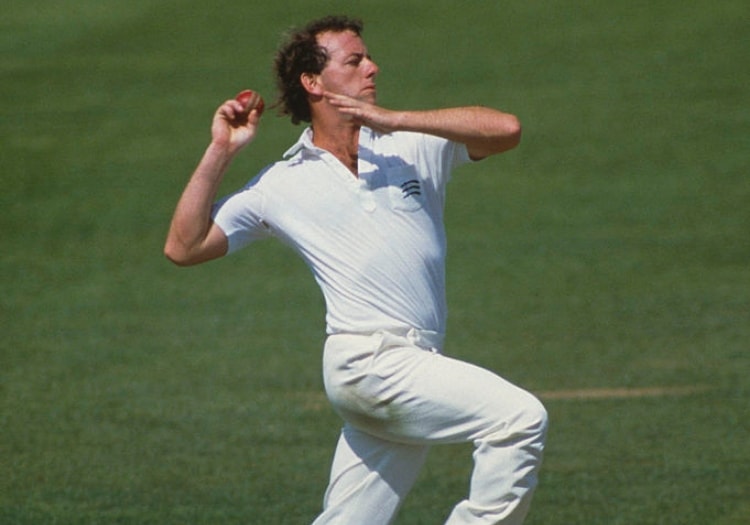
Simon Hughes in full flight
David Ripley, the former wicketkeeper who is now Northamptonshire’s first team coach, used to work in a sports shop, and Darren Bicknell, the former Surrey and Nottinghamshire player who is now the director of Belvoir Cricket & Countryside Trust, fulfilled a range of roles during winter.
“I used to work in a knitwear factory in the warehouse,” says Bicknell. “I mainly worked for Scottish Courage [Scottish & Newcastle] the brewery, where I probably did 12 years as an account manager. I also worked for Nottingham Forest for a season.”
Not having a 12-month contract could cause distress as players had to find work to survive financially. But as Bicknell reveals, this often helped them in their personal and professional development.
“We were able to do what we wanted to do, which was, in some ways, really good,” states Bicknell. “It gave you a break from cricket but also meant that you got to see the real world – not just the cricket world you got cocooned in.
“It’s probably something players miss – the chance to take a break from cricket and learn some skills for when they finish.”
VISIT THE COUNTY HUB: Your one-stop shop for English domestic cricket
Over the winter, those who weren’t playing T20 cricket reported back for pre-season. In March, many went on a warm-weather tour to acclimatise to summer conditions.
Because they are paid throughout the year, they returned to their counties in good health and primarily focused on improving match fitness ahead of the season opener in early April.
But back in 1989, pre-season was quite different.
“We didn’t report for work until April 1,” says Ripley. “The first week was generally a running and football week with the hope to get some outdoor practice week two. Friendly games week three, with the season starting at the end of April.”
It was a parallel routine for Simon Hughes, the former Middlesex bowler and editor of The Cricketer. “We did a week of pre-season training in April,” says Hughes. “[It was] a few shuttles and circuits. Hardly anything else the rest of the year. I got fit by bowling and playing football.”
Because players weren’t paid to train, some would return to their county club out of shape. As any professional who has attempted to regain fitness will confirm, that is no mean feat.
“At the beginning of April, we used to do two weeks of fitness training,” reveals Bicknell. “It would kill people because they hadn’t done anything for months!”
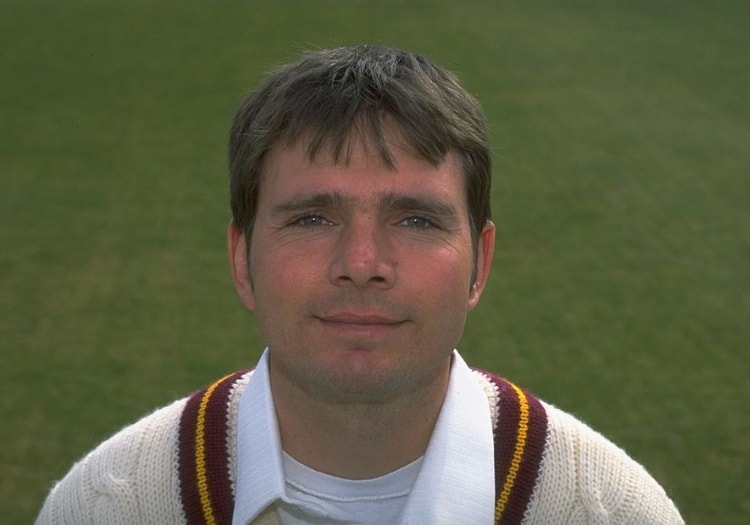
David Ripley during his Northants playing days
Once the season begins, the schedule is hectic. The whole campaign is squeezed into six months, and it coincides with the Caribbean Premier League, Indian Premier League and Global T20 Canada – three prominent T20 tournaments which operate during the English summer.
However, 30 years ago the calendar was just as testing, if not more. To fulfil all their fixtures, county players were constantly heading up and down the country to compete in the Benson & Hedges Cup, the NatWest Trophy, the Sunday League and the ever-present County Championship.
“The fixture list wasn’t always ideal,” says Wood. “You could be playing in Durham one day and down to Sussex the next.”
“We had 28 days playing out of 31 in August that year [1989],” says Hughes. “It was very gruelling, sometimes driving from Leeds at rush hour on a Friday night to play at Hove on Saturday morning.
To put Hughes’ testimony into context, Yorkshire only have 13 playing days in August this year.
“Generally, we probably played five days of eight,” Hughes continues. “A three- or four-dayer and one/two Sunday games.”
When travelling, many cricketers spend their time watching reality TV, binge-watching Netflix boxsets and playing video games. But in 1989, in an era before social media, players were able to relax much more on the road.
“We didn’t have to worry about social media,” says Bicknell. “When you wanted to let your hair down and go out for the evening, not everyone was on social media taking photographs of you. It’s hugely different today.”
While there are plenty of modern-day players who would love to adopt this lifestyle, it did have its pitfalls. In a year where David Boon drank 52 beers on a flight to London, alcohol was problematic.
“The late 80s were known as the ‘era of the drink’,” explains Wood. “Spare time was a very social affair. Looking back, I can see how problems could occur with both drinking and gambling. That was the culture.”
SIGN UP FOR OUR NEWSLETTER
Finally, in the modern game, it is crucial to have a professional attitude towards fitness, coaching and nutrition. Most county sides will have batting, bowling, and strength and conditioning coaches, multiple physiotherapists, nutritionists, a sports psychologist, and at least one performance analyst.
But 30 years ago, this aspect of the game was very limited. “The coaches were purely cricket people,” explains Bicknell. “They weren’t teaching you on fitness or nutrition or anything like that – it was all about the cricket. But those coaches were technically excellent. They knew the game inside out.”
“Coaching was non-existent,” claims Hughes. “I famously said that county coaches were only there to ‘carry round the bag of balls and take the cling film off the sandwiches at tea.’ I didn’t really have any coaching – it was learning by trial and error.”
Instead of being primarily guided by the qualified, they would learn from their colleagues. However, because top international players would sign on for entire seasons, this was arguably more beneficial.
“Personally, I got nothing out of the coaches we had,” says Wood. “I learnt more from chatting to the international players that were around.”

Darren Bicknell opened the batting at Notts
“There was a strong social element to our away trips, team spirit was tight,” claims Ripley. “I believe I did learn a lot about the game listening to the best players talking in the pub.”
The late twentieth century is fondly remembered as a golden era for county cricket. With the talents of Wasim Akram, Viv Richards and Courtney Walsh plying their trade in England, it’s no surprise that it’s remembered so vividly by the class of ’89.
Of all the changes to the profession since then, this has to be the biggest. Today, because of money and the global demand for players, top internationals rarely spend full seasons with county sides. Undoubtedly, their absence will have huge impact on the careers of county pros.
“When I played it was a fantastic era where you got to meet and play against some of the greatest players that ever played,” says Bicknell. “Everyone came and played county cricket. It was fantastic.”
If there’s one aspect of this profession that’s stayed the same over the years, it’s the fun and comradery shared among teammates.
“There is still plenty of banter within a cricket changing room as there was 30 years ago,” says Ripley, who is still right in the thick of it.
Attitudes towards culture, diet, training and salary will continuously change throughout time, but thankfully, the spirit and exuberance of the dressing room will always remain the same.

Welcome to www.thecricketer.com - the online home of the world’s oldest cricket magazine. Breaking news, interviews, opinion and cricket goodness from every corner of our beautiful sport, from village green to national arena.