
NICK FRIEND: Two semi-finals at the SCG and a final at the MCG – this was billed as a defining moment for the sport. But, one side has lost out because it rained on a Thursday afternoon. And on the biggest stage, that shouldn't be good enough
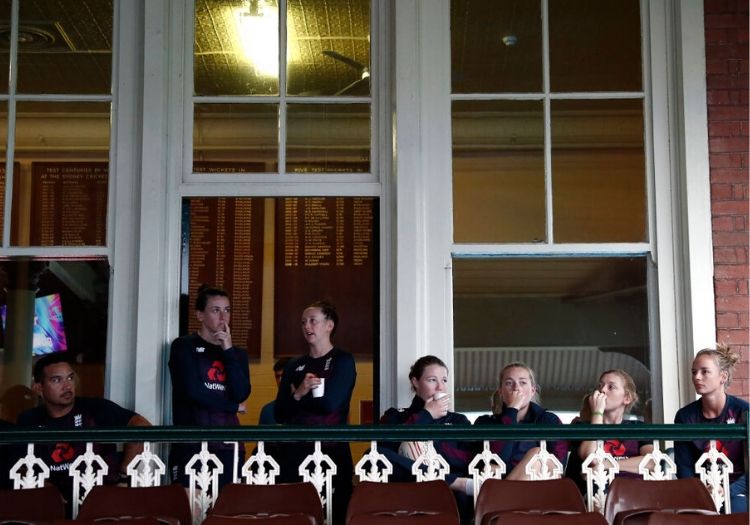
Under these playing conditions, New Zealand would never have reached last year’s World Cup final. They relied on a reserve day to sneak past India – a one-day international became a two-day international as Thursday became Friday at Old Trafford.
It meant that Kane Williamson’s side had 24 hours fewer to prepare for their Lord’s showpiece, but it also gave them an opportunity to be there. After a marathon round-robin group stage, cricket was being used to determine the two finalists.
And then when all was said and done, it came down to a boundary countback. While all of England celebrated, others were bemused – an arbitrary, obscure regulation settling a six-week contest.
The answer then was as straightforward as it is now eight months on, with England’s T20 World Cup campaign ending in wet, blustery farce.
Read the small print.
Because it should never have come to this. A completely avoidable sham, where a tournament with 76 spare hours between its first semi-final being called off and its final getting underway is unable to find a reserve day.
It found the time in 2019 to pencil in a precautionary afternoon for a 50-over affair that could, given other conditions, have taken close to eight hours to complete.
If it is true that reserve days do not exist in T20 World Cups because they are seen as short, snappy tournaments, then why are those nations who have come through a qualifying event for the men’s competition still having to face another pre-group stage round-robin? That, of course, is a rant for another day.
But, while we’re here, if the organisers had any desire to do so, then the six teams that qualified in the United Arab Emirates could easily have helped to fill four groups of four – far more efficient (and respectful of the qualifiers) than the post-qualifier-pre-qualifying phase that will begin in October.
And why, if you view T20 cricket as the global growth format – as Thailand so expertly demonstrated in their own qualification for this tournament, is a competition like this being shoehorned into the shortest possible timeframe? In the men’s game, yes, the international calendar is jam-packed and there are franchise tournaments to appease and co-exist alongside. The need to reduce congestion is profoundly necessary.
But in the case of the women’s game, we’re talking about a sport that – while growing exponentially – is crying out for more of the proper exposure that this competition has provided. Why would you even want to compress it, squeeze it, deflate it, just so it can fit in a three-week window? There is a responsibility to the development of the game – as a spectacle as much as anything else – to avoid situations like this. Not to guard against this, frankly, is a dereliction of duty.
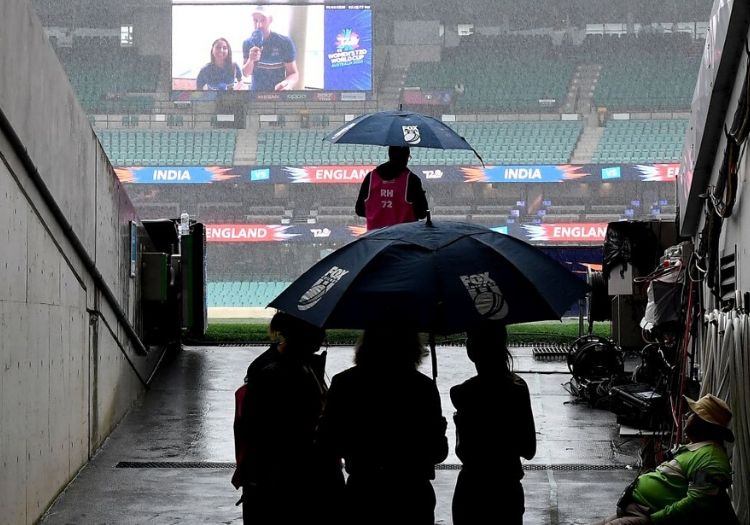
England were knocked out of the T20 World Cup due to their semi-final washout
“I do find it a bit bizarre how the ICC would sign something off like that,” England batsman Lauren Winfield admitted to The Cricketer on Wednesday, “when you consider that we’ve all spent two years building up to this tournament and then the weather could potentially interfere.”
She is right, of course, about the nonsense of where England and India found themselves today. Yet, this is not a rule that was simply pushed upon the competing teams by the governing body; the boards of the participating nations agreed to it. Whether any of them read – or gave any thought – to what they were approving is an altogether more pertinent question.
While the boundary countback was – at least in theory – a regulation in place for a farfetched scenario, the same cannot be said here. Heavy rain in Sydney on a late summer’s afternoon is hardly a tied super over.
The method to it appears to centre on the need for both a travel day and a training day. Do teams really need both?
During the ongoing Pakistan Super League, Quetta Gladiators had to fly from Islamabad to Multan on the morning of a match – by military cargo plane – after the weather had prevented them flying the previous night. Multan had played three games in four days going into it.
The finals day of both the T20 Blast and Kia Super League demand that one team plays back-to-back – literally ending one game, sharing a high-five or two, then tossing up for the next. The Hundred will require its successful semi-finalist to do the same.
Adelaide Strikers finished their Women’s Big Bash campaign with games in successive days, albeit at the same venue. In the men’s competition, Melbourne Stars won their challenger in Melbourne to qualify for the final, before facing Sydney Sixers in Sydney 48 hours later.
And then there is Sydney itself, a city that has seen more major matches rained off than any other in Australia. Just a month ago, the Big Bash survived a torrent of thunderstorms to play out a truncated final at the SCG, while the bushfire game – set up to raise vital funds through cricket – was moved to Melbourne’s Junction Oval to escape the weather.
The same playing conditions are in place for the men’s tournament later this year. No semi-final reserve days. Speaking ahead of the game that never was, England captain Heather Knight confirmed that she had checked that fact, perhaps to confirm its maddening illogic but possibly also to check that the women’s game was not being shortchanged.
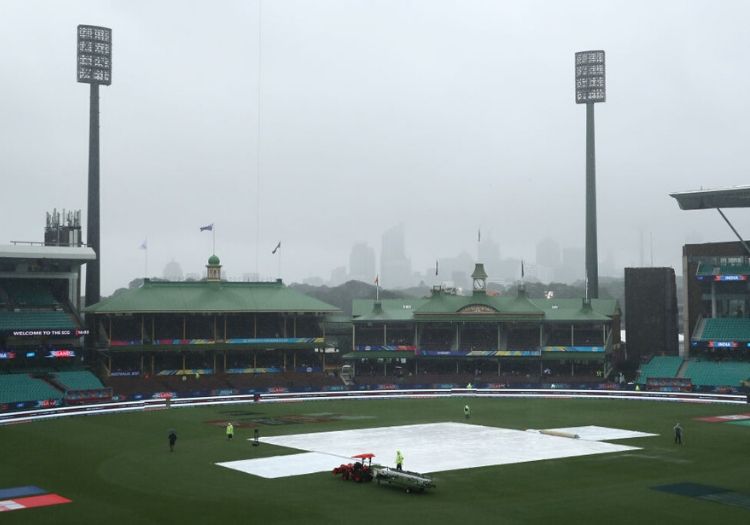
An ominous weather forecast came through, as threatened...
“That’s the way it is at the moment – that’s the rule,” Winfield added. “I know that the Australians asked about a reserve day and the organisers just simply said no – it’s not been laid out at the start of the tournament, so it’s not something that’s going to change. Maybe it’s something that will be reviewed in the future.”
That much is almost certain; just as the boundary countback is no more, you can be sure as anything that this affair will not be allowed to repeat itself. It would be no surprised to see the regulations for the autumn’s men’s event changed in light of this. Quite simply, it is an embarrassment that a major sport’s universal showcase event should be decided like this.
That said, organisers were right to immediately rebuff any last-ditch enquiries from the host nation about introducing a reserve (or reprieve) day late on – there’s no surer way of losing integrity than changing the rules once a tournament has begun.
It is certainly valid to suggest that India – in progressing – are merely benefiting from winning their games and doing what they had to do. Harmanpreet Kaur said as much after hands had been shaken. “Unfortunately, we didn’t get a game, but there are rules and we have to follow it,” she said. “Having reserve days in the future will be a great idea. From day one, we knew that we have to win all the games because, in case the semis don’t happen, this will be hard for us.”
Had England beaten South Africa in a match they ought to have won, then they too would have reaped the benefits of the rain.
In truth, the right answer probably lies somewhere in between: that it is entirely reasonable to be outraged and frustrated by an unsatisfactory ruling, while also acknowledging that rules are, indeed, rules.
Knight had earlier described the possibility of losing the games to rain as a “shame for the tournament” and “a sad time”. Former England spinner Laura Marsh called it “a travesty”.
After attempts to manufacture play were finally curtailed – surely among the most inevitable abandonments in the game’s recent history as the rain continued to hammer down, Knight spoke with enviable restraint as she was asked by the host broadcaster about her abiding memories of the last fortnight. She touched on her frustration at the lack of reserve days and rued a poor defeat that cost England 12 days down the line.
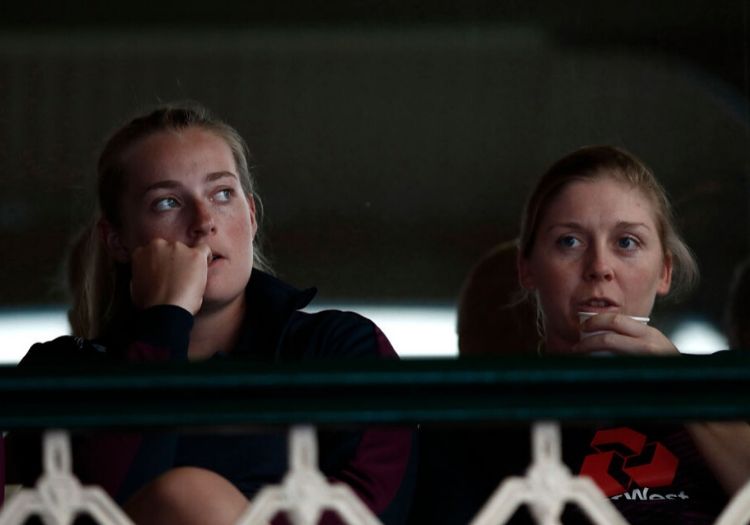
Heather Knight was left to rue England's defeat against South Africa
“You hope now there's going to be a rule change moving forward,” she said. “Obviously we're gutted. Not a lot we can do about it. Unfortunately, it is what it is. We'll have to rue that first game and move on. It's going to be bitter pill to swallow for a few of us a while.”
But there were also words of praise for Nat Sciver, and Knight confessed her disappointment that the allrounder wouldn’t have the opportunity to press forward her case for a player of the tournament gong that would have been richly deserved.
Ultimately, England will look back to their first game against the Proteas at the WACA – a game they lost in two stages, having appeared to have won it at one point in between. As throughout the competition, they began poorly with the bat, losing two wickets in the powerplay. They then struggled to accelerate through the middle overs, only reaching a paltry 123 for 8 thanks to Sciver’s half century.
For a long time in South Africa’s reply, that total seemed well short even of being competitive. Marizanne Kapp and van Niekerk put together a stand of 84 with total ease, before Knight’s side dragged it back to a point at which England were in command, defending 34 off just 23 balls, only for Mignon du Preez – in her 100th T20I – to come good at the end for her team.
Knight will look back on what her side might have done differently, but she shouldn’t have to. “Our aim was to get to the semi-finals, which we did, and you feel like you’re in a knockout,” she explained after her team’s fate had been confirmed. “But it wasn’t to be with the weather.”
The reality is that the competition has been let down. An MCG final was promised, a packed-out venue with a record-breaking crowd and a Katy Perry concert to top it all off. With a carrot like that dangled, reserve days should have been in place.
Two semi-finals at the SCG and a final at the MCG – three games at two of the world’s most iconic venues. This ending was billed as a defining moment for the sport in a nation that has promoted and grown the women’s game like nowhere else.
But as it is, one side has lost out because it rained on a Thursday afternoon. And on the biggest stage, that shouldn’t be good enough.

Welcome to www.thecricketer.com - the online home of the world’s oldest cricket magazine. Breaking news, interviews, opinion and cricket goodness from every corner of our beautiful sport, from village green to national arena.