
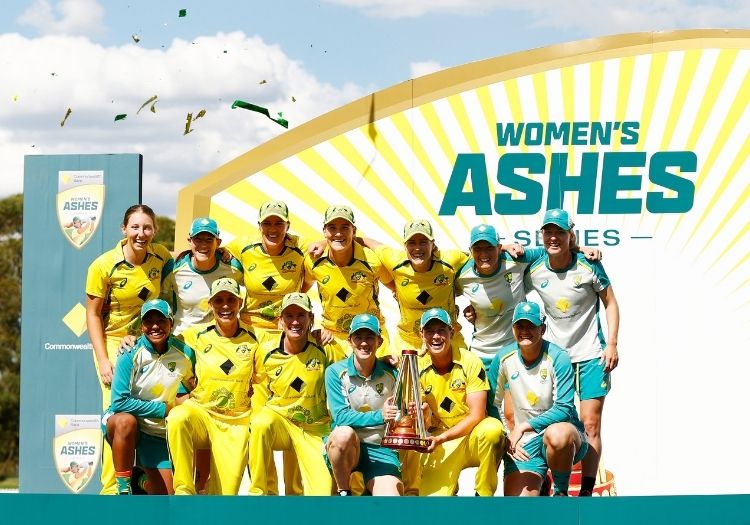
The Cricketer runs the rule over the performances of players on both sides through the Women's Ashes series, which Australia won by 12 points to four
AUSTRALIA
6 matches, 254 runs, 63.5 average, 3 fifties
Not completely infallible, as England discovered through Kate Cross, but still the leading run-scorer on either side – one clear of her opposite number, Heather Knight. Fifties in all three formats add weight to her tag as the best batter in the world. Still somehow without a Test hundred but that can't be far away. Marshalled her troops expertly. A-
6 matches, 225 runs, 56.25 average, 2 fifties, 11 wickets, 14 average
Stamped her authority on the contest in the very first game with an extraordinary assault on England's competitive total, which set the tone for all that followed. Deservedly named player of the series for her all-round contribution. The best sign yet of Australia's immense strength in depth, given she would not have been among the five batters about whom England were initially most worried. Nailed her yorkers with the ball. A
2 matches, 139 runs, 46.3 average, 2 fifties
A fractured jaw ruled the left-hander out of the T20 leg, but Mooney returned ahead of schedule for the Test, adopting a liquid-only diet. That sense of determination shone through with a second-innings half century, which she followed up with a fifty in the first ODI that was the difference between victory and defeat. Missed the second and third ODIs thereafter with tightness in her quad as Australia looked to safeguard one of their key players into the World Cup. B+
6 matches, 137 runs, 45.6 average, 1 fifty, 1 wicket, 65 average
Increasingly a bits-and-pieces player in this team, but that's no bad thing. Counterattacked well with the bat in both innings of the Test and put the finishing touches to the victory in the second ODI that secured an outright Ashes win. Hardly required with the ball, which shows just how many options Lanning has at her disposal. B-
4 matches, 130 runs, 32.5 average, 8 wickets, 16.37 average
Not quite the 2019 summer for Australia's star allrounder, whose series began inauspiciously as she was left out for the T20s, instead sent away to Australia A to get miles in her legs ahead of the longer formats. There was no better display of the home side's superiority in all departments than being able to dispense with an all-time great. She was tidy on her return, finding form in the ODIs, making scores of 31, 40 and 41 and improving with the ball as the series wore on. B
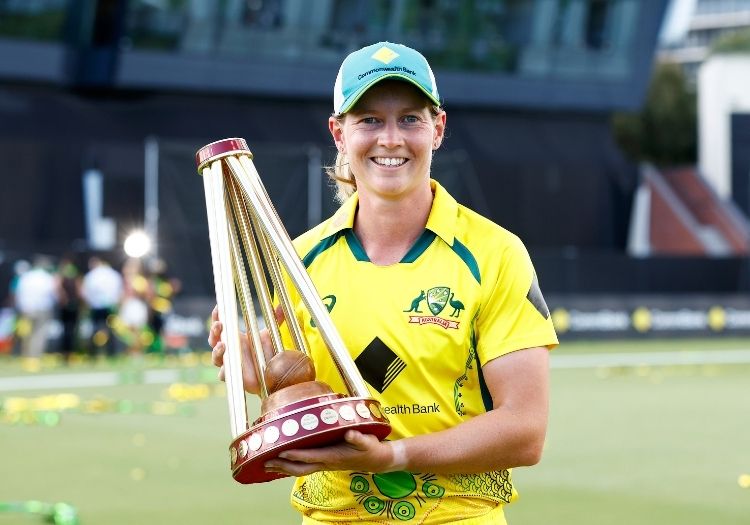
Meg Lanning was the leading run-scorer on either side (Mike Owen/Getty Images)
6 matches, 135 runs, 27 average, 1 fifty
Not a vintage series by any means for the left-hander, who England predominantly kept at bay. Terrific in the Test, steering Australia out of first-innings trouble alongside Lanning and would almost certainly have reached three figures but for a ripsnorter from Katherine Brunt that leapt off a length and took her outside edge. Australia's oldest player but still a terrific backward-point fielder. B-
6 matches, 98 runs, 16.3 average
England would have bitten your hand off if you'd told them ahead of the series that they would maintain such a hold on Australia's firecracker opener. Healy rarely got going, thanks in the main to Brunt whose record against the wicketkeeper around her off-stump is terrific. She bagged a pair in the Test and hit just 12 boundaries all series long. Took some excellent catches though – none better than one to dismiss Beaumont in the second ODI. C
6 matches, 25 runs, average 25, 6 wickets, 31.3 average
Solid start in international cricket for the leg-spinner, whose selection came somewhat from leftfield after Georgia Wareham's injury appeared to open the door for Amanda-Jade Wellington. Bowled nicely without ever threatening to run through England, unafraid to give the ball plenty of flight. No early evidence of a googly or much other variation, but rarely bowled a bad ball – perhaps apart from the final delivery of the Test, which was a rank full toss. B
3 matches, 17 runs, average 17, 10 wickets, 20.6 average
Only played three matches but comfortably the seamer most utilised by Lanning, getting through 52 overs as the workhorse in Australia's attack. Picked up 10 wickets for her efforts – the second-highest figure in the series. A useful batter but struggled for opportunities, such was her side's dominance. B
6 matches, 20 runs, average 10, 6 wickets, 25 average
Ever-present but a quiet series for the left-arm spinner, who was reliable throughout without ever catching fire. She bowled just 37.3 overs through the series as Lanning opted for King's wrist-spin more often. Like in Gardner's case, a lovely position for Australia to be in, where Jonassen was almost a spare part at times. Still wily enough when she did bowl to defeat Knight and Nat Sciver in the flight to take their wickets in the ODIs. C+
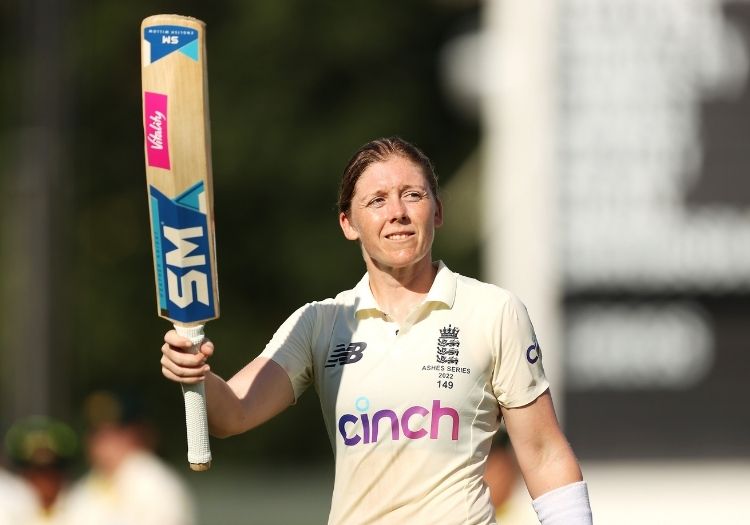
Heather Knight's unbeaten 168 was the innings of the series (Mark Kolbe/Getty Images)
5 matches, 1 run, n/a average, 4 wickets, 30 average
Classy operator who was left out of the Test as Australia continue to manage her workload after a bout of Covid and with a World Cup on the horizon. Only picked up four wickets, with England generally happy to sit on her threat – England have had plenty of practice against her in-swing, given the similarity in style to Anya Shrubsole. Schutt's leg-cutter came out occasionally to terrific effect. B-
3 matches, 6 wickets, average 15.6
A breakthrough series for the brilliant 18-year-old, who bowled with significant pace and took key wickets throughout. England were on their way to Test victory until Brown stepped in to dismiss Knight. A game later, she enticed Tammy Beaumont to edge behind and trapped Knight in front with the very next ball. A star of the future, to whom Lanning regularly looked when in need of a partnership-breaker. With Tayla Vlaeminck out of the World Cup, her role has taken on further significance. B+
4 matches, 0 wickets, average n/a
Hard to believe that Carey played four times, given her lack of tangible contribution. A terrific fielder, but didn't bat once and only bowled six overs. C
2 matches
Picked over Ellyse Perry as a sign of Australia's emphasis on strike rate but never got a chance in the middle. C
1 match, 0 wickets, average n/a
Desperately bad luck with injuries continued, sustaining a stress fracture in her foot after the series opener, in which she bowled quickly and planted a bouncer onto Beaumont's helmet. Some talent if Australia can keep her fit. C
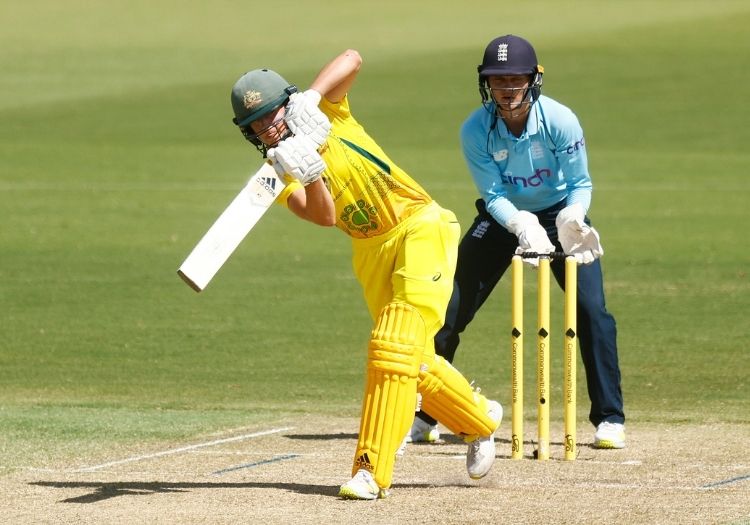
Ellyse Perry was left out of the T20 series, but she returned for the Test and ODIs (Mike Owen/Getty Images)
ENGLAND
6 matches, 253 runs, average 63.25, 1 hundred, 0 wickets, average n/a
Played the best innings of the series by a mile, a knock that deserved to win a game but, as it was, at least kept England in the series going into the ODIs. Curiously, given how imperious she was through the Test, she struggled for fluency otherwise, grinding to a halt during the 50-over games. Captained as well as could be hoped for in the field, given the lack of runs she had to play with. England must look after her, with such a big year ahead. B+
6 matches, 204 runs, average 34, 1 fifty, 5 wickets, average 34.6
Not at her most fluent other than in the second innings of the Test, but scores of 32, 45, 46 and 58 suggest she was hardly out of touch. Australia did well to restrain her though, given the expectation on England's gun allrounder heading into the series. Less effective with the ball, though was superb in the first innings of the Test to pick up three wickets. The tourists were managing her workload by the end, with Sciver picked solely to bat in the final ODI of the tour. B
5 matches, 113 runs, average 28.25, 1 fifty
Started the series in the best way possible and gave hope that England might just provide a proper challenge for Australia. That didn't transpire thereafter and Wyatt was more unfortunate than most to see two T20s washed out, meaning she effectively went 11 days without a game as the Test took place around her. As anticipated, she wasn't involved in the red-ball game, even if England might have been tempted to chuck her in, given her white-ball form in the lead-up. B
6 matches, 136 runs, 22.6 average, 1 fifty
An underwhelming series by Beaumont's high standards, which ended with her slowest ODI fifty. Began well enough in the T20s, providing England with the perfect start alongside Wyatt in the opening T20, while alongside Lauren Winfield-Hill she set the platform for the chase that nearly was in the one-off Test. Series strike rate of 56.43 was unusually low, albeit across all three formats and not helped by her first-innings effort in the Test, when she was tied down by Perry. C+
5 matches, 77 runs, average 19.25
A quiet winter after a breakthrough summer: Dunkley's only innings of note came in the second innings of the Test, when she came to the crease and smashed England within touching distance of a famous win, only to be caught at long on before watching from the sidelines as her side fell short. In the main, Australia bowled straight at Dunkley, exposing her tendency to play around her front pad early in her innings. C
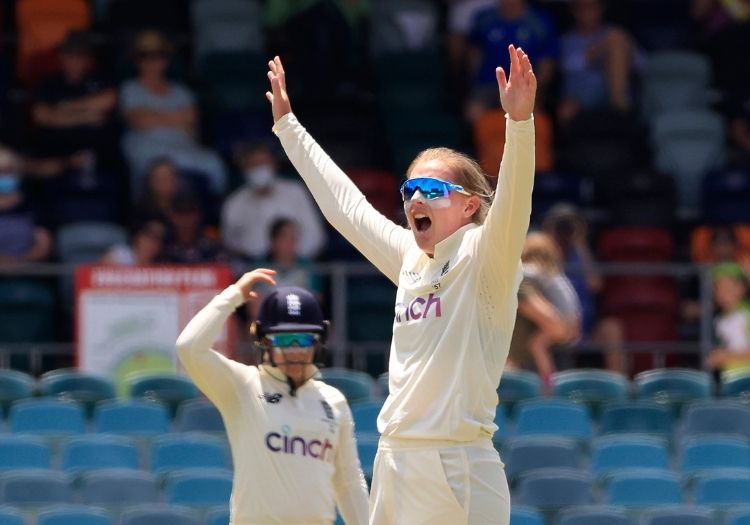
Sophie Ecclestone was economical with her left-arm spin but only took four wickets (Mark Evans/Getty Images)
3 matches, 74 runs, average 18.5
Hugely frustrating series for Winfield-Hill, who continues to look in fine touch before losing her wicket innocuously. Without an international half century in six years, England dropped her to give a chance to Emma Lamb in the final match of the series. Still in the box seat, one suspects, for a World Cup berth, with the consistency of England's selections having left them without much room for manoeuvre between now and March 5. C
6 matches, 71 runs, average 23.6, 4 wickets, average 61.25
A disappointing series for the champion left-arm spinner, who didn't bowl particularly badly – she was the most economical of England's bowlers across the tour – but wasn't rewarded with many wickets. In all, she picked up four at 61.25 apiece in 78 overs as Australia declared themselves happy simply to see off her threat. To be critical, her consistency was a weakness at times, rarely varying her pace which allowed the home batters to get used to her. Batted stoutly, playing a vital part in a ninth-wicket partnership alongside Knight in the Test and eventually worked her way up to No.7 in the order during the ODIs. B
4 matches, 37 runs, average 18.5, 11 wickets, average 13.45, 1 five-wicket haul
The best bowler on either side and still the leading seamer in the world, even at 36 years of age. Two years ago, Brunt hinted that she might retire following the Commonwealth Games. On this evidence, England can ill-afford for that to happen. Fabulous competitor, who changed the course of the Test on the first day, went past 50 Test wickets in the process and picked up a five-wicket haul. Fine series from a brilliant cricketer. A-
6 matches, 69 runs, average 11.5
Kept tidily but offered very little with the bat. Made her highest score against Australia – 28 – in the second ODI but never truly looked likely to bat for an extended period of time. Disappointing shot for her dismissal in the second innings of the Test, finding the fielder at long on when England didn't need such recklessness from their middle order. Looked in decent touch throughout, which made the manner of her dismissals all the more frustrating. C-
4 matches, 30 runs, average 10, 2 wickets, average 55
Found very little assistance off the pitch for her off-spin, which was scrutinised on commentary, with the suggestion that her high release point wasn't helping her to create much side-spin. Found plenty of bounce though and was sufficiently tidy for the most part, only really taken down in the last match of the series. There was never much sense that the 21-year-old – still in the embryonic phase of her international career – was likely to run through Australia's left-handers. C
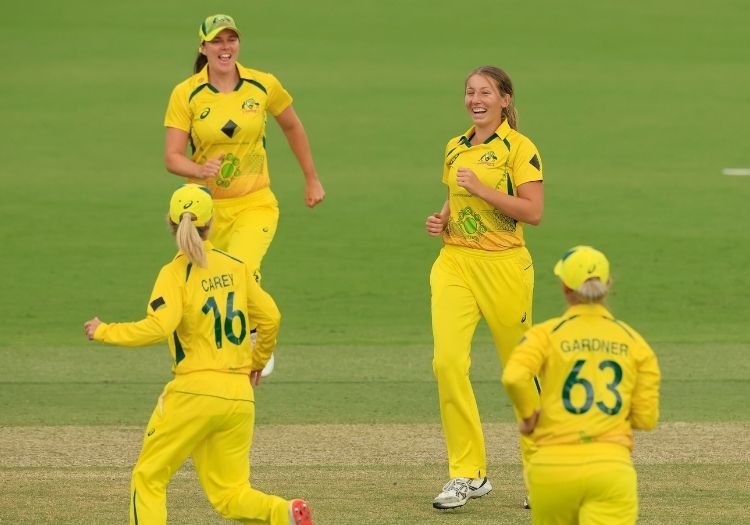
Darcie Brown impressed for Australia with her sharp, game-changing bursts (Mark Evans/Getty Images)
3 matches, 29 runs, average 9.6, 5 wickets, average 36.3
Cross' series figures do no justice to quite how well she bowled. Brunt apart, England's most threatening bowler by a distance, cleaning up Lanning in consecutive matches with two beauties, while another pearler forced the stumping of Healy. Went wicketless in the Test but had five catches shelled off her bowling. A key cog if England are to retain their World Cup crown next month. B+
4 matches, 19 runs, average 3.8, 3 wickets, average 53.3
Bowled better than her figures suggest but was mostly negotiated without much alarm by Australia's top order. Swung the ball prodigiously though might have come round the wicket to the left-handers to force them into playing more regularly. C-
1 match, 7 runs, average 7, 0 wickets
England's left-arm seamer only featured once – in the final game of the series – and was expensive with the ball. Once it stopped swinging, Lanning and Perry made hay – a difficult game to come into with the series already over as a contest. C-
3 matches, 1 run, average 1, 1 wicket, average 75
Bowled nicely in the final ODI and deserved her wicket when it eventually arrived. Expensive in the series opener, but was far from alone in that regard. C-
1 match, 0 runs, average 0
A poisoned chalice after being handed the keys to the top of the order for the last match of the series: go well and win a World Cup berth, anything else and England would have learnt nothing. For Lamb, it was the latter, cleaned up by Perry for nought. The Lancastrian has played twice for England and on neither occasion has she been given the best possible chance to succeed, having been shoehorned into the middle order for a T20I at Chelmsford last summer. C-
1 match
Played in the series opener but didn't bat and didn't bowl. Briefly looked as though she'd injured herself while diving on the boundary edge. An inconspicuous start to Ashes life. C
1 match, 0 wickets, average n/a
A brutal introduction to Ashes cricket: Australia targeted England's leg-spinner to the extent that she wasn't seen again after the series-opening T20I, in which she was taken at 13 runs per over by Lanning and McGrath. A problem going forward for England if opposition sides have worked out how to play Glenn, who predominantly bowls top-spinners, unlike King who imparts more side-spin on the ball. C-

Welcome to www.thecricketer.com - the online home of the world’s oldest cricket magazine. Breaking news, interviews, opinion and cricket goodness from every corner of our beautiful sport, from village green to national arena.