
NICK FRIEND: It is hard not to stare at a tournament handed its place mainly on IPL rest days and believe that it could – and should – offer more than it currently does
For weeks during this year’s Indian Premier League, the live coverage has flipped to occasional adverts for the Women’s T20 Challenge.
Only, if you were busy on Wednesday, you missed the first quarter of the tournament. Make the same mistake again on Thursday – an earlier start, by the way, ahead of Mumbai Indians’ clash with Delhi Capitals, and the entire first half will have passed you by, leaving just a group fixture and subsequent final remaining.
There is a philosophical question to be asked somewhere in among this: how many games should a competition need before it can be classed as such?
More than four, I would suggest. This is the event’s third year and, since its inaugural edition which saw just a single exhibition match, it has added a third team and a three-game round-robin phase. And somehow, that is deemed to be sufficient.
The four fixtures scheduled for this season represent a stagnation from last year despite swathes of evidence suggesting that there is an appetite for something more substantial and worthwhile.
March’s T20 World Cup displayed proof of an enormous Indian audience. During the final, the live average viewership in India was 9.02million, even as their side suffered a comprehensive defeat at the MCG.
That statistic topped off an overall tournament figure of 5.4billion viewing minutes in the country – a threefold increase on the 2018 edition in West Indies, when India crashed out to England at the semi-final stage.
And while the impact of the coronavirus pandemic has undoubtedly played its part in the organisation of this year’s competition – the BCCI had initially confirmed a four-team, seven-game event prior to Covid-19 - the simultaneous presence of the Women’s Big Bash cannot be ignored.
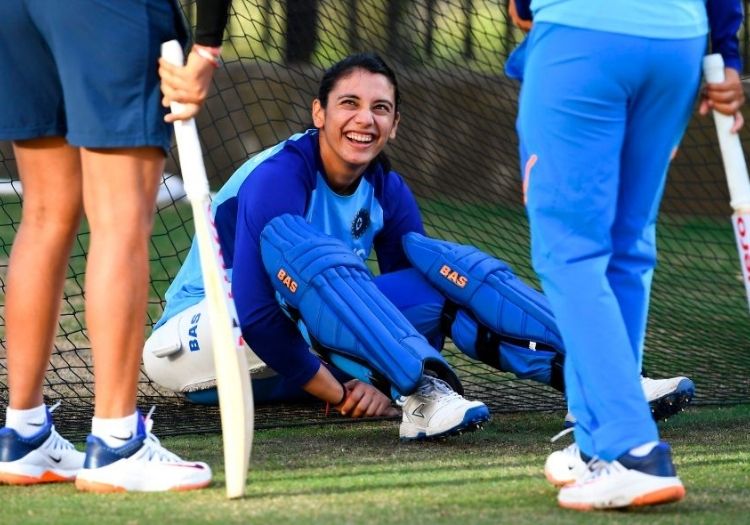
Smriti Mandhana captains the Trailblazers team
It was not supposed to be this way, of course, but enforced delays meant that the two would overlap. The result? Amelia Kerr, Suzie Bates, Stafanie Taylor, Hayley Matthews and Sophie Devine played in last year’s Women’s T20 Challenge but are absent this time, all instead featuring down under.
In Australia, eight sides have been squeezed into Sydney for a 59-match tournament – nothing watered down, no expense spared. It almost certainly threw up a raft of administrative nightmares in its foundation, but what matters is that it has ploughed on with no sense of diminished ambition.
It is difficult to say the same of events in the UAE, where since mid-September the IPL has been in full flow, with overseas players drafted in and 60 matches taking place across three venues. And yet, the women’s competition has remained a speck by comparison: one ground, four games, six days from beginning to end. In that context, stepping back on planned expansion doesn't quite feel right.
It would hardly have required a shifting of heaven and earth for something more absorbing to have been dreamt up. India have not played since March and their summer tour of England was cancelled.
It isn't new information that women’s sport has been hit hard by events of recent months; one suspects that some of the momentum built up by India’s T20 World Cup campaign will have dissipated by now. Surely, therefore, a four-team competition with all sides playing each other twice should have been possible? Perhaps, even with a playoff system at the end to determine its winner. The success of this year’s IPL has shown that the practicalities would have been eminently workable.
That said, there is no such thing as the Women's IPL, even if the Women's T20 Challenge is effectively branded as a spin-off of the men's tournament and takes place during its playoff phase. Dream11, Tata Altroz, Unacademy, Paytm and CEAT – all involved with the IPL as sponsors – have also signed on. And so, it is neither one thing nor another.
“It’s the IPL Women’s T20 Challenge, not the Women’s IPL,” former India international Snehal Pradhan, now a writer and broadcaster, wrote earlier this week.
“Right now we don’t have a Women’s IPL. We have an experimental, poorer cousin,” she added, before finishing with a straightforward, important statement.
“So, as we enjoy the Women’s T20 Challenge, let’s muster up the courage to ask for the right version of it.”
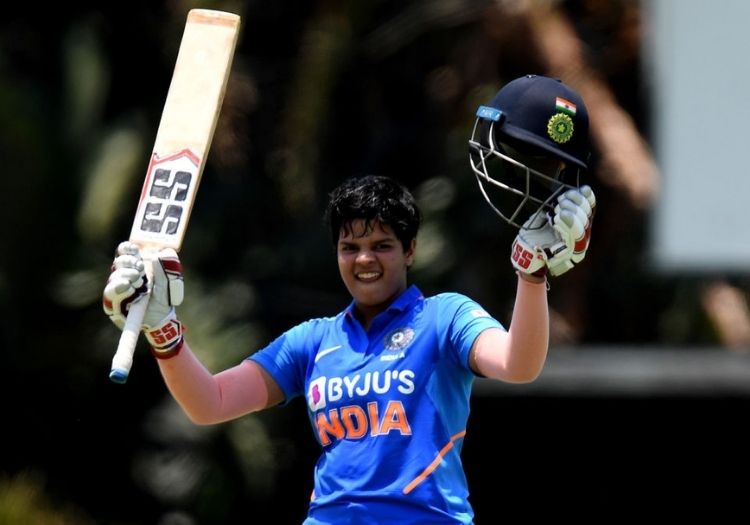
Shafali Verma has become a mainstay of India' T20 batting line-up
Because, in all honesty, those involved deserve a greater platform than what this commercial exercise provides. Smriti Mandhana, Harmanpreet Kaur, Shafali Verma, Poonam Yadav and Deepti Sharma are all among the world’s best players, but a four-match event – where one team will only play twice – can hardly be deemed a cause for any kind of significant development.
And, on a wider note, the speed of growth in the women's game is entirely disproportionate to that of a competition that has scheduled just nine games in three years.
There are positives – not least the fact that telecom giant Jio has come on board as a principal sponsor. BCCI treasurer Arun Dhumal has also stated that the event “is now financially independent”.
It also played a major role in Verma's development into the world's third-ranked WT20I batsman. Her tale, as a 16-year-old, highlights the competition's potential as much as any, while the IPL and Women's Big Bash have shown over the last decade the impact a leading franchise T20 competition can have on the national team and the depth of its talent pool.
The addition of Thai batsman Nattakan Chantam – the first player from her country to be involved in the tournament – is a terrific story and deserved reward for Thailand’s remarkable rise.
But even the team names leave much to be desired: Trailblazers, Supernovas, Velocity. Three abstract nouns of little meaning and even less affiliation.
Mithali Raj was right when she christened the tournament a “relief”, with India’s star names desperate for match action. And it is equally fair to suggest – as IPL chairman Brijesh Patel has done – that the competition is “a great testament to the growth of the women’s game and for cricket in India”.
But it is hard not to stare at a tournament handed its place mainly on IPL rest days and believe that it could – and should – be so much more.

Welcome to www.thecricketer.com - the online home of the world’s oldest cricket magazine. Breaking news, interviews, opinion and cricket goodness from every corner of our beautiful sport, from village green to national arena.