
HUW TURBERVILL: Watmore is different. He was a civil servant, working for three prime ministers. And importantly, he is an undisputed cricket fan. His credentials are undeniable. If you see him at a match, talk to him; I'm sure he'll be receptive
It still takes some getting used to. There, on The Cricketer’s world-famous annual wallchart, are new fixtures in a new colour – green, no less. A sort of turquoise for the women’s, and shamrock for the men’s.
Yes, The Hundred is coming, at last. After its delay last summer, it really does look as if it’s going to happen. A new exciting cricket competition that will lasso in all the unbelievers and agnostics… or an unnecessary, expensive vanity project (modern society doesn’t allow for fence-sitting, you know).
Strictly speaking, it was on last year’s wallchart, but that turned out to be a work of fiction, because Covid took hold and we were introduced to the interminable world of lockdowns.
I’ve been proof-reading the 2021 wallchart – free in our bumper centenary edition (April) coming out on March 25 – and let me tell you, I’m very excited indeed. I will appreciate going to grounds like never before.
Yes, I will go to a Hundred game or two, it would be journalistically negligent not to, but I’m also hoping to go to the County Championship, 50-over Royal London Cup and the Vitality Blast. I will hone in on Hove, be overjoyed at The Oval and count my lucky stars at Canterbury.
The ECB have had a tough job trying to get it all in, of course.
Now this isn’t a column about my views on The Hundred – I’ve written about it before and I will do so again (the upshot is that I think that they could have done something similar but new, much cheaper, and not alienated so many county fans).
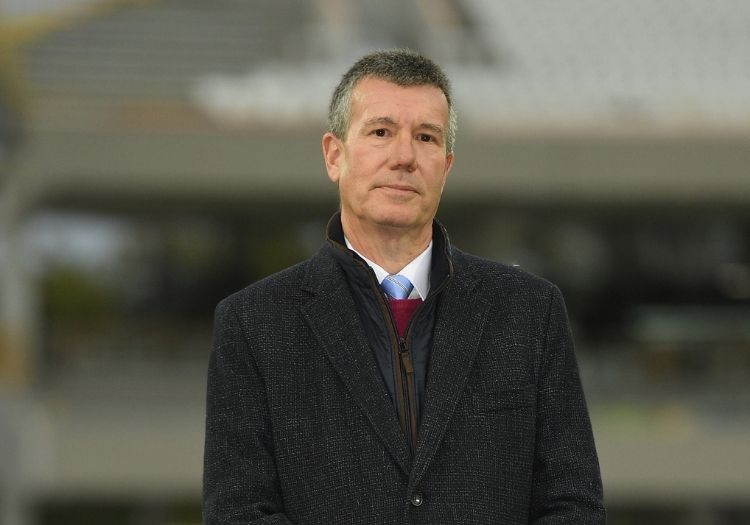
Instead it is about Ian Watmore, the England and Wales Cricket Board’s new chairman.
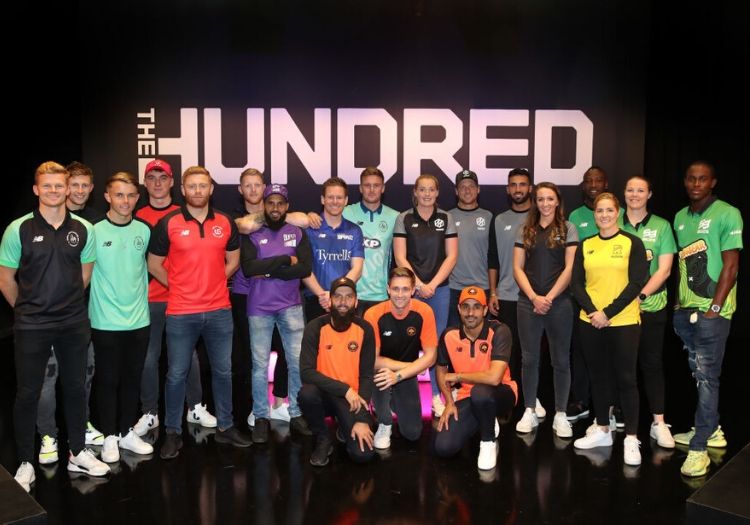
The Hundred will begin - a year later than planned - this season
He is going to give The Hundred a chance, as we revealed in our January issue, which must have come as a disappointment to its many opponents, who fear what effect it might have on their beloved counties.
But on the whole I think fans of England and Welsh cricket are going to like Mr Watmore.
He seems to be cut from different cloth to his predecessors, Giles Clarke and Colin Graves.
They were/are businessmen.
Clarke did some admirable things, of course, championing Pakistani cricket, for instance.
Many will never forgive him for awarding the exclusive rights to home cricket to Sky, however. The previous six years had seen a ‘mixed’ deal, with one Test a summer and white-ball matches on Sky, and most of the Tests on the terrestrial Channel 4.
Clarke’s companies included Pet City and Majestic Wines. He made a fair sum of money, I believe, and good luck to him. Some might say when it came to cricket, he knew the cost of everything and the value of nothing… but I couldn’t possibly comment.

Graves founded the Costcutter empire. He rescued Yorkshire CCC from financial woes. I don’t know him personally, but he was undeniably blunt: he had views on cricket that often had the ECB spin doctors pulling their hair out. He appeared to trash-talk the Blast, calling it mediocre, which was not a good idea: it was his Gerald Ratner moment.
Watmore, 62, has a more varied background. Despite a successful business career, he has spent most of the last 20 years in the Civil Service, working for three prime ministers. And importantly he is an undisputed fan, of cricket and football. His credentials are undeniable. If you see him at a cricket match, talk to him, I’m sure he will be receptive.
I had the pleasure of chatting to him for an hour decently – on Zoom, of course. I have promised not to quote him directly, as it was an off-the-record briefing, but he has had a fascinating life and career.
He went to school at Trinity, Croydon, and admits he was not a great player himself – was/is more of a watcher. As a Kent-supporting youngster he recalls going to Bob Woolmer’s first-class debut (he scored 50 not out against Essex at Mote Park, Maidstone in 1968). Watmore also remembers knocking on near-neighbour Derek Underwood’s door for an autograph.
For the last 30 years he has been based in the north-west, and he regularly takes in Tests at Old Trafford, Headingley, Trent Bridge and Edgbaston. He has also gone abroad to watch cricket – he was at India v Pakistan at Adelaide in the 2015 World Cup, which he describes as an amazing experience – and watched England humiliated at the MCG by Australia, despite James Taylor’s century.
He also recalls going to Queenstown for a New Zealand v Sri Lanka ODI, and seeing an Otago v Wellington four-dayer.
He has two sons who played at Lindow CC in Wilmslow, and he helped them fundraise for a new pavilion. It was in there that he watched the 2019 World Cup final.

Ian's son, Duncan, plays for Middlesbrough in the Championship
He also loves football. He grew up supporting Arsenal, and his father was a doctor at Highbury in the 1950s. These days he supports his local club Altrincham, even doing radio commentary on them. He also supports whoever his son plays for – Duncan is currently with Middlesbrough, after a good spell at Sunderland, where he won 13 England Under-21 caps. Neil Warnock has him a long-term contract after he proved he had recovered from knee surgery. He shares an agent with Mark Wood and they did rehab together.
Away from sport, Ian Watmore studied maths, then management science, at Cambridge.
As a civil servant he was a project manager/trouble-shooter for Tony Blair, ran the Department of Innovations, Universities and Skills for Gordon Brown, and also worked briefly for David Cameron.
He had a testing year as FA chairman, with Setanta going bust not long after he sat down at his desk for the first time. He started putting matches on the internet as a result, and the other things he says he is most proud of are kickstarting the St George’s Park training ground project, and helping the surge in women’s football. Talks with Fabio Capello were an interesting challenge because of the language barrier, and he also enjoyed working with Hope Powell.
One last fascinating fact about him – his wife is a vicar.
He started at the ECB last September, with the game obviously facing an uncertain time because of the pandemic.
He and the ECB are hoping to get things back on track this summer, and he feels that their document, Inspiring Generations, launched in October 2019, provides a solid framework.
He believes Tests are the “best sporting occasions full stop”, and will never forget the liberating effect of Botham’s Ashes on a depressed nation in 1981. He genuinely feels that The Hundred can draw people into Test cricket.
Mark Broadhurst is ready to talk
He also wants to attract a more diverse range of people into grounds, and improve the counties’ streaming services. He was watching the final round in the Bob Willis Trophy last summer, surfing between matches as Essex tried to clinch their place in the final, while Ian Bell played his last innings for Warwickshire against Glamorgan. A platform to make this easier would be welcome.
Covid has of course hit the game hard, and the ECB’s cash reserves have gone down, in part thanks to the money that they have had to give to counties to persuade them to green light The Hundred.
His task now is to ensure that that rest of the broadcast cycle (Sky and the BBC paid £1.1bn for the rights between 2020–24) is used to grow the game and help the counties to diversify their revenue streams and ensure their survival.
I wish him well..
Subscribe today and receive The Cricketer’s centenary issue – six issues for £19.21. Click here

Welcome to www.thecricketer.com - the online home of the world’s oldest cricket magazine. Breaking news, interviews, opinion and cricket goodness from every corner of our beautiful sport, from village green to national arena.