
NICK FRIEND travels forward in time to the 2023 World Cup in India to look at what the South African side might look like after a disappointing 2019 campaign
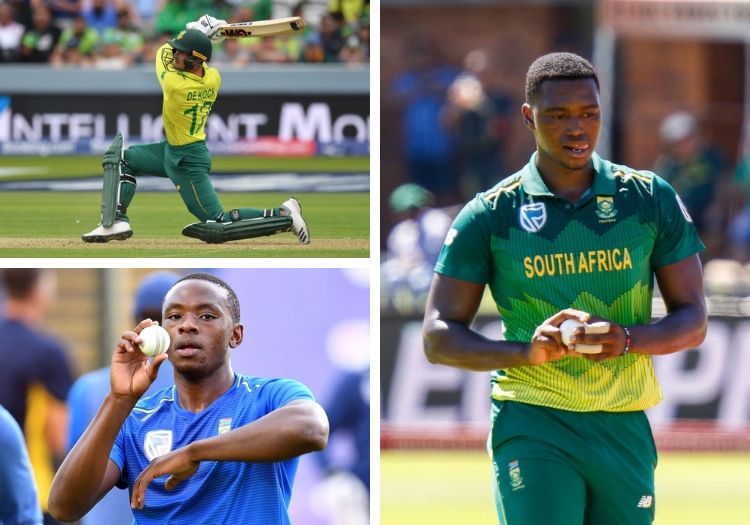

Cricket’s greatest palindrome and a fine player to match, Markram’s disappointing World Cup has been an outlier amid a mightily accomplished start to his international career.
The opening batsman led South Africa to World Cup glory in 2014 at Under-19 level – a triumph that was founded on his runs and the wickets of Kagiso Rabada and Andile Phehlukwayo.
A useful enough off-spinner, he has the ability to become a modern great of South African cricket; a Test average of 43.80 through 17 games is the start of an opener with the temperament to match the talent, while his ODI record will surely improve with time.
An average just north of 20 in this tournament is worlds away from a wider 50-over outlook – an average of 44.47 at a strike-rate of 99.24. That alone is evidence enough of a long-term fulcrum in a batting lineup that has flattered to deceive ever since touching down in the UK.
Markram has already skippered the Proteas in ODI cricket, taking over from Faf du Plessis when the regular captain injured a finger during last year’s series against India. At 23 years and 123 days old, he became his country’s second youngest captain – behind only Graeme Smith. A decent endorsement.
Perhaps, the biggest disappointment of this World Cup has been Quinton de Kock’s failure to fully assert himself on a tournament designed for talents such as his own.
World cricket has seen few cleaner ball-strikers, while even in the pantheon of elegant left-handers, De Kock’s fluid strokeplay places him among the game’s upper echelons.
Of course, when we speak of failure, it is in relative terms; twin scores of 68 are by no means meagre returns, but they are not what a man of this quality should be producing.
It is, however, easy to forget that, at 26, he remains a relative spring chicken. He will be better for this summer’s disappointment.
A younger brother of Andre and Pieter – two regulars on South Africa’s domestic circuit, Janneman Malan may be the most exciting of the trio.
The 23-year-old made his international debut in February 2019 against Pakistan and the right-hander is a batsman the world is likely to soon know far more of.
A first-class average just shy of 55 and a one-day record that includes 14 scores of above fifty inside just 40 innings marks an impressive start to what looks set to be a career at the top.
Of the five men to score more runs in the inaugural Mzansi Super League last year, three were Du Plessis, De Kock and Rassie van der Dussen.
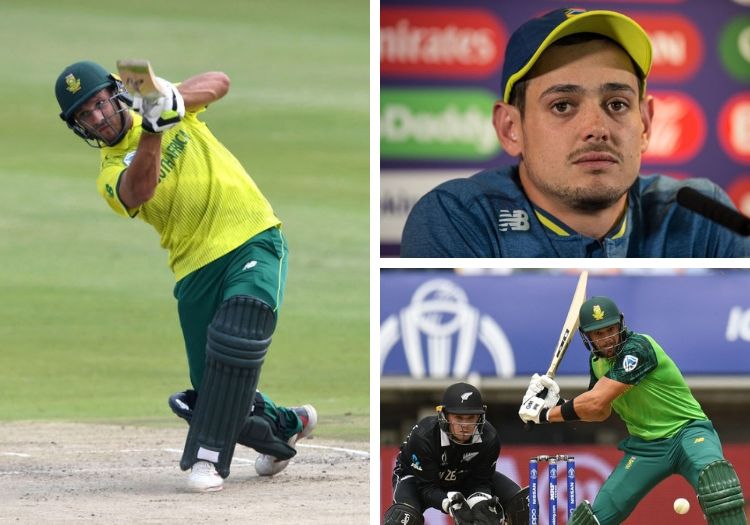
Malan, De Kock and Markram (clockwise from left)
A late bloomer on the global stage, Rassie van der Dussen will be 34 years old by the time the 2023 World Cup reaches India. Yet, if such a notion is possible, he will remain a young man by the barometer of international cricket.
Unlike Faf du Plessis and Hashim Amla – batsmen thrust into the limelight from an early age, Van der Dussen has been able to hone his skills and perfect his technique in the relative calm of the domestic game.
The early signs could scarcely have been better: an ODI average of 71.12 through 16 matches is an exemplary effort. More than anything, he appears to have simply found a way to score.
Everything about Theunis de Bruyn suggests that there should be a useful one-day cricketer in there. The batting all-rounder has flirted with international cricket before, but has struggled in nine Tests and a pair of international T20 clashes to fully assert his ability on the global stage.
A maiden Test hundred in Sri Lanka in 2018 suggested that the broad-shouldered operator might finally be getting to grips with the game’s highest levels but, once again, his progress has been stifled.
Even then, he has never played an ODI. That will surely change. He seems like the type for whom it is only a matter of time before it all just clicks. The 26-year-old has a List A average of 41.02 at a strike-rate of almost 87.
Temba Bavuma has only played two ODIs; he averages 80.50. On debut, he made a hundred against Ireland. A year later, he raced to 48 as an auxiliary opening batsman alongside De Kock.
And that, I’m afraid, has been that. For a man of immense talent, it represents a curious reluctance on Cricket South Africa’s part. Given his diminutive frame, the thought may well be that Bavuma does not possess the requisite power to dominate the latter overs of an innings.
Yet, even so, this World Cup has shown the value of traditional batsmanship – the kind that has served the 29-year-old so well. He is creeping up on 14,000 career runs in first-class cricket – a statistic that only highlights his run-getting propensity that this South Africa side desperately needs.
A man built for modern one-day cricket. While Wiaan Mulder made his Test debut earlier this year, he actually made his ODI bow back in 2017.
Still just 21, Mulder hits it hard and bowls a heavy ball. If all goes to plan – with a first-class batting average of 38.12 and a bowling average of 23.96 – he could well develop into his country’s next great allrounder.
The pressure that comes with Jacques Kallis comparisons is too great to even consider placing on one so young, but this South African outfit has looked unbalanced for some time. A hard-hitting all-round talent – as per Mulder – could go some way to correcting a lineup that looks a batsman short.
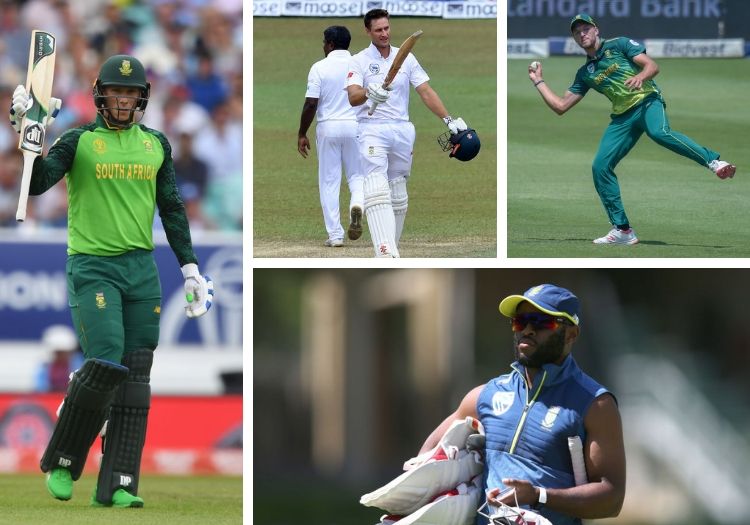
Van dder Dussen, De Bruyn, Mulder and Bavuma (clockwise from left)
One of South Africa’s brighter lights in a tournament of disappointment, if nothing else, Phehlukwayo has shown himself to be combative – a competitor with both bat and ball.
The 23-year-old will become a better bowler and his batting will continue to improve; indeed, he has looked a position high at number seven during a tournament that has seen other sides field Hardik Pandya, Chris Woakes, Alex Carey and Colin de Grandhomme in the position.
However, he has – at least – offered all he possibly can. His range of slower deliveries has proven effective on occasion although he leaked runs against New Zealand on an Edgbaston pitch that should have suited him.
The star of this team and the star of any South Africa side in the next four years. That he has had a poor tournament is as much down to his own management as anything else.
Rabada should, as Du Plessis suggested during a World Cup press conference, not have gone to the Indian Premier League. He has not looked like the fresh superstar seamer that cricket has known in recent years.
If it can even be called a blip, then it will only be a brief one. Rabada is, quite simply, far too talented to be kept down.
As South African cricket begins to say its goodbyes to one era – to Dale Steyn, to Du Plessis and to Amla, Rabada is the future. And what a future. There is no greater fast bowler currently in operation. His success will be South Africa’s success.
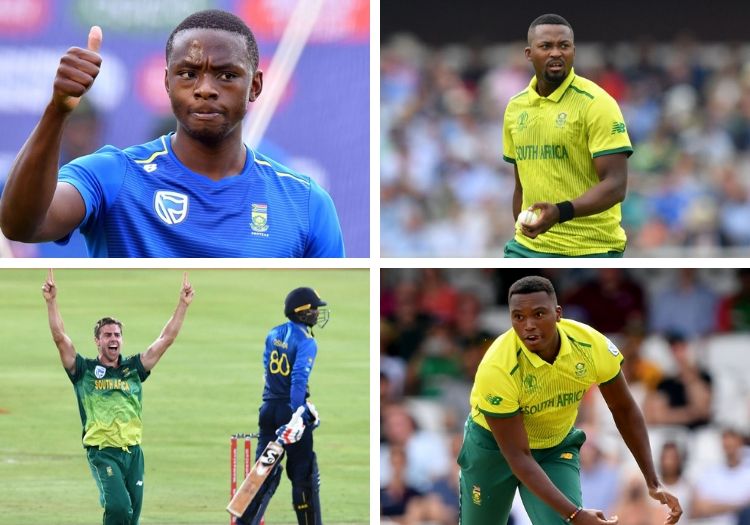
Rabada, Phehlukwayo, Ngidi and Nortje (clockwise from top left)
South Africa have missed Anrich Nortje. He may well not have featured from the outset of this World Cup, but he may well have come in when Lungi Ngidi went down injured during the defeat against Bangladesh.
Quick, fiery, fiercely talented, he is fairly new on the scene - he will still be a year shy of his 30th birthday by the time the 2023 tournament comes around.
Like so many fast bowlers, keeping him fit will be key - his hand injury on the eve of this competition was, if nothing else, an omen of how South Africa would go on to fare. It came on the back of a shoulder problem that ruled him out of a first IPL stint. As I say, injuries...
Alongside Rabada, this man is the jewel in South Africa's crown. A fearsomely skilled bowler - not as quick as Rabada, but a magnificent foil.
He took to Test cricket like a duck to water and has nabbed 41 ODI wickets in just 22 games. At just 23 years old, he will only improve and by the time 2023 comes around, Ngidi's magnificent frame will be entering its prime.
Like Nortje, keeping this gem wrapped in sufficient levels of cotton wool will be key. The injury he suffered against Bangladesh gave a poor South African start an even greater blow to its chances.
Our coverage of the ICC Cricket World Cup 2019 is brought to you in association with Cricket 19, the official video game of the Ashes. Order your copy now at Amazon.co.uk
Subscribe to The Cricketer for exclusive content every day: The inside track on England's Test tour with George Dobell in Pakistan, award-winning analysis, breaking news and interviews and the only place for in-depth county coverage all year round. Plus: An ad-free app experience at your fingertips. Subscribe to thecricketer.com today for just £1.

Welcome to www.thecricketer.com - the online home of the world’s oldest cricket magazine. Breaking news, interviews, opinion and cricket goodness from every corner of our beautiful sport, from village green to national arena.