
NICK FRIEND: Bad light will be bad light; rain will be rain. But in the periods in between, when nothing happened for no good reason, cricket must do more. And more importantly, it must want to do more


Ageas Bowl (fifth day of five): England 110-4 v Pakistan 236 - match drawn
Test cricket has seen more pointless sessions. You’ll have seen one, trust me. Only, you just can’t quite recall any off the top of your head.
By the time that both sides emerged from the bio-secure confines of their respective headquarters on the final day of this utterly bizarre Test match, it was 3.20pm – and not a second earlier. Cricket for cricket’s sake.
It is difficult at the end of a fiasco like this to know quite who to blame or, indeed, what to bemoan. For, there is no doubt that the weather was too poor for too long to ever force a result. And equally, while the notion of poor light exists as a bee in the bonnet of cricket fans worldwide, it exists with good reason.
On Friday, Stuart Broad stressed as much, the idea that there is a balance between cursing the regulations and considering the reality – a maroon rock of leather hurled down at great velocity.
“If bowlers are operating at 85mph-plus and it’s gloomy out there, it can be dangerous,” he said. “The officials were right to bring us off because it had fallen below the darkness we came off in earlier in the day. All our players came off saying: ‘I wouldn’t want to be batting in this,’ because it was quite dark.”
Likewise, it is important not to throw the match officials under the bus whenever this all-too-common quandary presents itself.
Don’t shoot the messenger. The lawmakers are above their paygrade; Richard Kettleborough and Michael Gough are there to preside over playing conditions. The pair effectively are in charge of a single decision: the first reading. Once they have determined the initial figure on the light-meter, their influence is locked at that number. They – and the game – become slaves to a benchmark.
And while that final point, many will argue, is irrational and absurd, there is little that the umpires can do. Their hands are tied; they exist to maintain order, so to flout rules they are present to implement is simply not as logical an option as it might sound from the outside, even if it is also true that among the criteria on which they are judged is their ability to get the game on.
The same is true of the need for run-ups to be suitably dry before the resumption of play. That was the cause of the fifty-minute delay between the successful inspection and long overdue action on the final day of this seemingly cursed event. In addition, it would be unfair as well not to mention the simple fact that drying takes time.
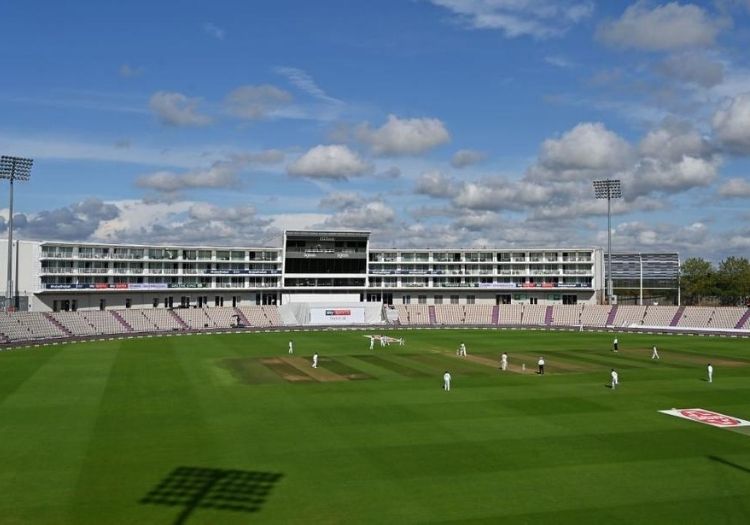
Only 96.2 overs were possible over the course of the first four and a half days of the Test
That is all written in mitigation and to suggest that, often in these situations, the scapegoats and fall-guys are not necessarily those responsible – or, at least, those with the power to instigate meaningful change.
Accountability lies higher up. Nasser Hussain spoke with an entirely typical blend of cutting logic and important context in his takedown of cricket’s own culture problem in this regard.
“Everyone has been in quarantine,” he said. “Countries have flown over and sacrificed a lot to go into quarantine. People have gone into bubbles for weeks. Jack Leach has been in a bubble for weeks without playing a game of cricket.
“And when you have an opportunity to play and the world is watching, do everything you can to stay on and not have the old mindset of everything you can to go off. It is time we changed our mindset as a sport. Millions are watching.
“The ECB, even if we put on all our cricket this summer, could be over £100m down. We can’t afford to lose the spectators that are desperate to watch cricket.”
Given the strength of a storm that swept over the Ageas Bowl through the night, a belated start seemed crushingly inevitable on Monday. But that is not to say each delay is quite so clear cut. The nadir came on the previous afternoon; by the time play had been abandoned on Sunday, the sun was out and the grey damp had been replaced by blue skies. Only, there was no visible urgency in setting out a clean-up operation, nor would any kind of U-turn have been given any hint of oxygen. That, though, is where the sport must improve and, quite frankly, put a stop to its own self-destruction.
Where poor light has intervened late in the day – hardly atypical in what is now the second half of August, why not display an element of creativity? One wonders whether there was any discussion – no matter how brief – of a couple of innings forfeitures and an intriguing manufactured chase. Unlikely, of course, in the midst of a three-match series, but not outrageous in the context of the World Test Championship.
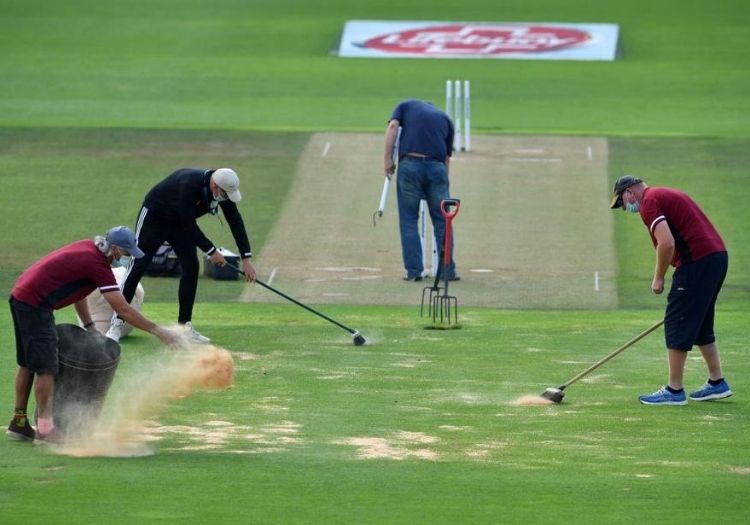
The groundstaff work tirelessly to lay down sawdust ahead of the final day
More likely – not to mention extremely sensible: how about an earlier start? Perhaps begin at 10am rather than 11am.
There is no need to wait in this era of pandemic and empty stadia, certainly no one to wait for. Everyone necessary is a stone’s throw away, no further than the pulling open of a hotel curtain at the ground’s on-site Hilton. Players have spoken openly about the mental strain of not being able to escape the game, so close are they to the pitch at all times. So, why not make use of that? The idea of an extended 7.30pm finish is a laughable, abject joke when everyone knows that neither will the light hold nor the rain abate.
In the build-up to the domestic season, counties faced each other in two-day pre-season fixtures. Only, when the forecasts suggested substantial washouts, the dates were shifted and modified to provide both teams with as much meaningful cricket as was possible. And while acknowledging that this is unrealistic on the scale of Test cricket, there remains no valid reason for why the notion of an 11am start in this country must remain so sacrosanct – particularly in a year when so little else is as it tends to be.
And that, then, is the crux of this. To return to Hussain’s words, this has been a summer of sacrifice. That we have Test cricket at all has been a triumph of meticulous planning and astounding ambition. Led by Steve Elworthy, the ECB has put on an industry-leading product, paving the way for others to follow suit across the entire sporting spectrum. The bar was set in getting these series across the dotted line. And having done all that, you’d think the cricket would be the easy bit.
Having gone to such lengths to create a game, that same urge was absent when this one began. This was far from an isolated incident and far from the fault solely of those in Southampton. By the time this torturous Test was coming to a close, ESPNcricinfo was reporting that the ICC are to review their bad light regulations.
The outfield might be damper than normal; conditions might be less than perfect. But that is where we’re at. Perfection in this world has rarely felt so distant.
Bad light will be bad light; rain will be rain. But in the periods in between, when nothing really happened, cricket must do more. And more importantly, it must want to do more.
Match drawn, by the way.
For unrivalled coverage of the county season, subscribe to The Cricketer and receive four issues for £15
Subscribe to The Cricketer for exclusive content every day: The inside track on England's Test tour with George Dobell in Pakistan, award-winning analysis, breaking news and interviews and the only place for in-depth county coverage all year round. Plus: An ad-free app experience at your fingertips. Subscribe to thecricketer.com today for just £1.

Welcome to www.thecricketer.com - the online home of the world’s oldest cricket magazine. Breaking news, interviews, opinion and cricket goodness from every corner of our beautiful sport, from village green to national arena.