
The Cricketer looks at the stand-out performers from the T20 World Cup in the USA and West Indies...
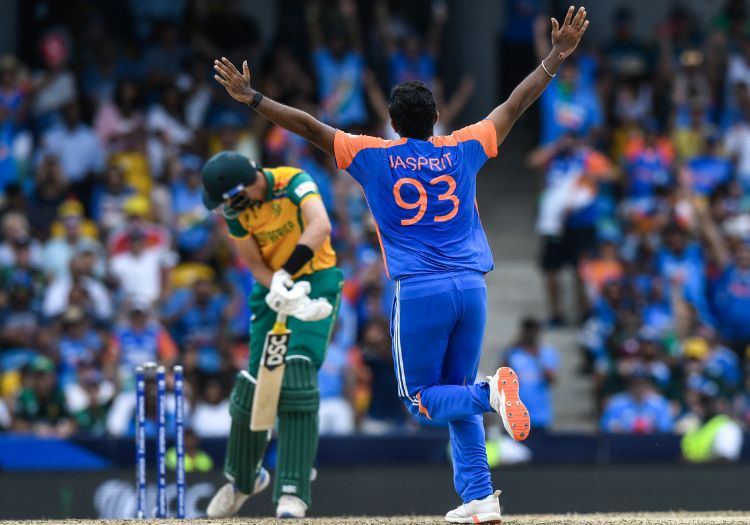
After India finally ended their World Cup drought with a thrilling victory over South Africa in Barbados, The Cricketer looks at the stand-out performers from the 2024 Men’s T20 World Cup...
Rahmanullah Gurbaz (Afghanistan)
(eight matches, 281 runs @ 35.12)
The top run scorer in the tournament, Gurbaz, is the obvious choice to open the batting. He started the tournament strongly with scores of 76 and 80 against Uganda and New Zealand respectively. His most important innings may have been the 60 off 49 balls which helped beat Australia in the Super 8s and qualify for the semi-finals. Behind the stumps, he is all-action with two catches including a diving effort and a run out against Papua New Guinea being the highlight.
Rohit Sharma (India, captain)
(eight matches, 257 runs @ 36.71)
The India skipper was the second-top run scorer but just pipped Travis Head, who scored his runs quicker and at a higher average, to a spot in the team of the tournament. This is mainly due to his captaincy as he marshalled his Indian side to World Cup glory and he led from the front by being full of intent. His strike rate of 156.70 is all the more impressive when you factor in that three of his innings were on an extremely difficult New York surface. When he was provided with a good track in St Lucia, he put Australia to the sword with a brutal 92 off 41 balls.
Related: England men's T20 World Cup 2024 player grades
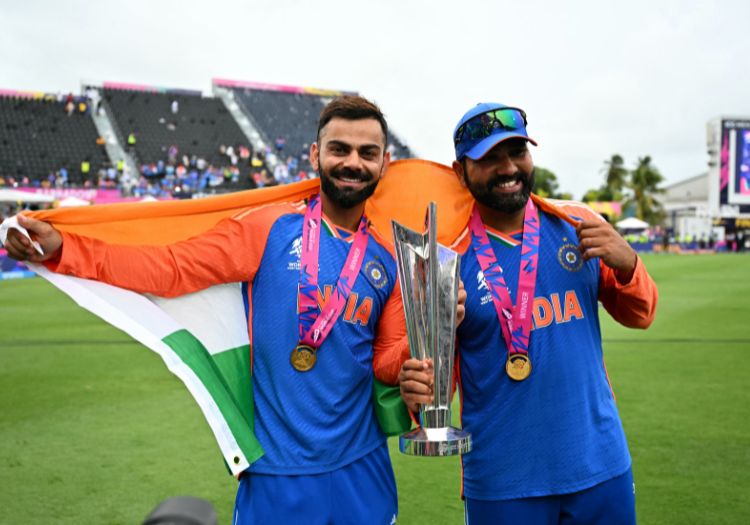
Rohit Sharma has changed the way India's top order plays T20 cricket (Getty Images)
Andries Gous (USA)
(six matches, 219 runs @ 43.80)
Gous was a major part of the USA's qualification for the Super 8s by scoring his runs at a healthy average. He played second fiddle to Aaron Jones' heroic innings in the tournament opener by scoring an important 65. His partnership with skipper Monank Patel, in which he scored 35, against Pakistan looked set to hand USA the win without the need for a Super Over. The highlight was an unbeaten 80 against South Africa, the country of his birth, when he almost pulled off another brilliant win for his side.
Nicholas Pooran (West Indies)
(seven matches, 228 runs @ 38)
One of the very best in the game when he gets going, Pooran's tournament was encapsulated in his 98 against Afghanistan. It was the tournament's highest score as no batter managed a century and came from just 53 balls. Freed from the shackles of captaincy but importantly not from the responsibility of batting higher up the order, Pooran plays an important role as West Indies's left-hander in the top order.
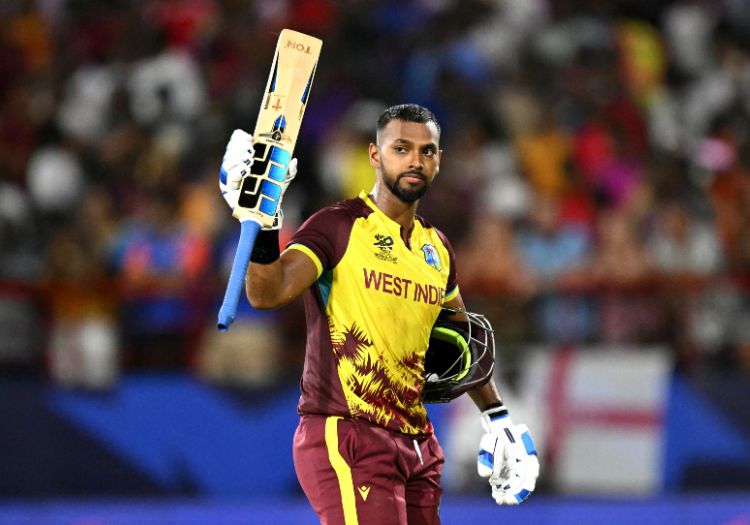
Nicholas Pooran smashed the highest score of the tournament (Timothy A. Clary/Getty Images)
Henrich Klaasen (South Africa)
(nine matches, 190 runs @ 31.66)
This was so close to being about World Cup-winning Klaasen, who steered his side home with a mix of brute force and smart match-up cricket. Instead, his wicket, caught behind off the bowling of Hardik Pandya, was a decisive moment on the way to India winning the World Cup. Like many batters in this tournament, he was limited by the tough pitches he played on so we only got a few moments to witness arguably the world's best T20 batter. He is breath-taking against spin as he showed by taking 24 runs off Axar Patel which looked to have all but delivered a first World Cup title to his nation.
Marcus Stoinis (Australia)
(seven matches, five innings 169 runs @ 42.25, 10 wickets - 8.88 economy)
At one point in the tournament, Stoinis was in the top three runs scorers and wicket takers and looked to be having a player of the tournament-worthy campaign. As Australia faltered he lost some of his momentum but provided cutters on the slow surfaces and two match-winning knocks against Oman and Scotland. The Oman innings was important as his side were reduced to 50 for 3 in the ninth over.
Hardik Pandya (India)
(eight matches, 144 runs @ 48, 11 wickets - 7.64 economy)
Pandya put a difficult few years behind him to bowl India to victory in the World Cup final. He took 3 for 20 in the final, including the dangerous David Miller in the final over. It was also a welcome return to death batting form with some valuable contributions throughout the tournament. When he was afforded more time at the crease, he smashed 50 off 27 balls against Bangladesh.
Related: India's brilliance rather than South Africa's choke delivers World Cup title
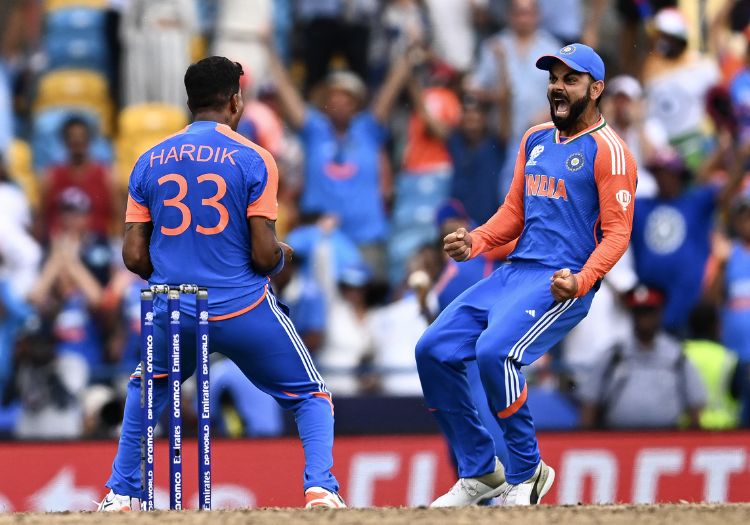
Hardik Pandya's celebrates the vital wicket of Henrich Klaasen (Getty Images)
Rashid Khan (Afghanistan)
(eight matches, 14 wickets - 6.17 economy, 57 runs)
The Afghanistan captain led his side to their first T20 World Cup semi-final. With 14 wickets, he showed his best form since an injury ruled him out of cricket earlier this year. There were two four-wicket hauls against Bangladesh and New Zealand as well as an impressive 3 for 26 against India. He was quiet with the bat, owing mostly to Afghnaistan's top order performing well, but did smash three sixes on the way to 19 not out against Bangladesh in the Super 8s.
Anrich Nortje (South Africa)
(nine matches, 15 wickets - 5.74 economy)
It feels like a common theme at this World Cup but Nortje was another who enjoyed a welcome return to post-injury form at this World Cup. Many doubted whether he would feature in the tournament after a dismal IPL and fellow pacer Gerald Coetzee in the squad. However, right from the first game in which he took 4 for 7 against Sri Lanka, at the time the most economical World Cup spell, he looked back to his accurate and quick best.
Jasprit Bumrah (India, Player of the Tournament)
(eight matches, 15 wickets - 4.17 economy)
What a bowler. He was utterly brilliant for almost the entire tournament as he was named the Player of the Tournament. His economy rate tells the story of opposition players being helpless to his brilliance and for the most part, it felt like he was bowling in a Test match. The final was no different and with South Africa needing 30 runs off 30 balls, India's only hope was that Bumrah would bowl 12 of those balls. Bumrah delivered and helped his side with the World Cup.
Fazalhaq Farooqi (Afghanistan)
(eight matches, 17 wickets - 6.13 economy)
The last spot was between two left-arm seamers and the joint-highest wicket-takers of the tournament, Farooqi and Arshdeep Singh. The former wins it as he was top of the wicket-takers for almost the entirety of the tournament, consistently breaking through in the powerplay with swing both ways. He was restricted to an IPL sat mostly on the bench but looked in complete rhythm throughout.
Honourable mentions: Travis Head, Arshdeep Singh, Suryakumar Yadav, Rishad Hossain, Jofra Archer, Akeal Hosein, Adil Rashid, Adam Zampa, Saurabh Netravalkar.
Join The Cricketer's brand new Whatsapp channel for the latest breaking news, comment and features - click here to become a member

Welcome to www.thecricketer.com - the online home of the world’s oldest cricket magazine. Breaking news, interviews, opinion and cricket goodness from every corner of our beautiful sport, from village green to national arena.