
Whoever takes the field for Australia will know what's at stake. A year on from winning this tournament in far less familiar surroundings, they are on the verge of being sent home prematurely from their own party

It felt cruelly appropriate in the context of the last few months of Aaron Finch's career that he should rediscover his form in the same game that he should suffer a hamstring twinge that would force him from the field and then leave him doubtful for his country's must-win game against Afghanistan.
Of course, even that might not be enough to reverse the damage done by the reigning champions' thrashing against New Zealand in their opening game.
Finch reckons he's likely but not certain – he pitched his chances at 70 per cent – to be part of the side looking to beat Mohammad Nabi's men in such a way that their net run rate shoots past England's.
"I'll test it out probably this afternoon to make sure that I'm not hindering the side at all leading into the game," he said, "because I think the worst possible scenario is that you leave the guys short out there with one player fewer."
You could never accuse Finch of playing for himself or putting personal glory above the team's, and there is a genuine sense that he is a highly respected leader in Australia's dressing room.
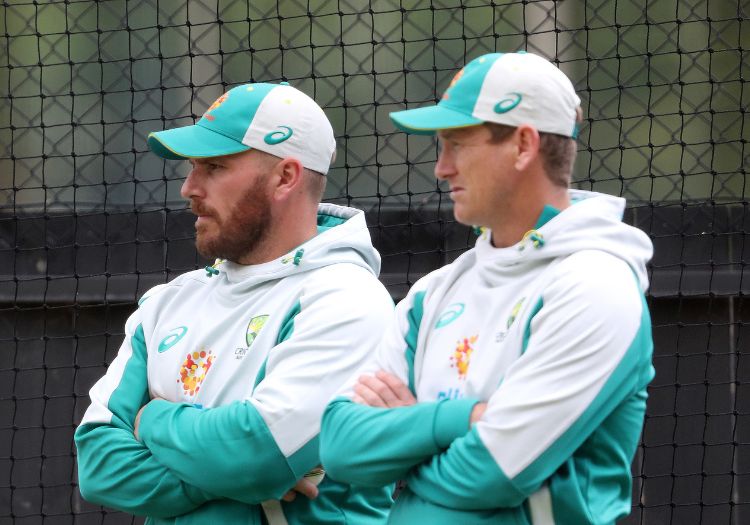
Aaron Finch believes he is 70 per cent certain to be fit for Australia's final group game (Sarah Reed/Getty Images)
Perhaps without a half century against Ireland in the bank, it might be more tempting to sit this one out – particularly given his history with dodgy hamstrings – and throw in Cameron Green alongside David Warner.
After all, one of the reasons for trying Green at the top of the innings during the pre-tournament warmup games was to be well stocked if the situation demanded that flexibility.
Whoever takes the field for Australia, though, will know what's at stake. A year on from winning this tournament in far less familiar surroundings, they are on the verge of being sent home prematurely from their own party. Even a fifty-run win on Friday against an Afghanistan side that will, according to assistant coach Raees Ahmadzai, feature Rashid Khan following his own injury scare might not be sufficient.
THE BIG MATCHWho: Australia v AfghanistanWhere: Adelaide Oval, AdelaideWhen: Friday, November 4 (6.30pm local time, 8am GMT)Prediction: Australia
To know one way or another, they will have to watch for how events play out in Sydney 24 hours later. That feels not only like a missed opportunity but also an issue of integrity; other sports do this better but there is a legitimate argument that Australia and England ought to be playing their final group matches simultaneously. Broadcasters' thirst for endless matchdays, though, make that a relative nonstarter in this age.
The alternative, which is this, means England will head into Saturday's clash against Sri Lanka knowing exactly what they need to do and – providing Australia beat Afghanistan – how comprehensive they must be in doing it.
Finch confirmed in his press conference that he has gone over the permutations with Andrew McDonald though not yet with his teammates.
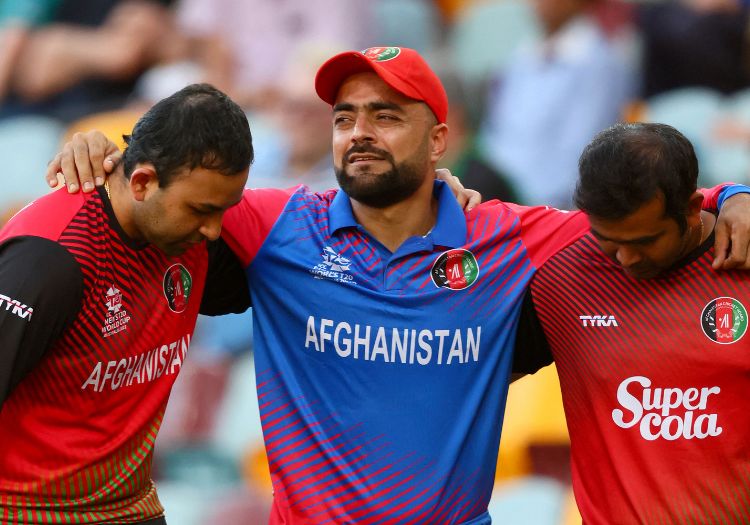
Rashid Khan is expected to be fit for Afghanistan (Patrick Hamilton/AFP via Getty Images)
"You still have to earn the right to be able to push for a net run rate because the last thing that you want to happen is you push too hard," he said. "You compromise the two points, and then potentially something happened in the Sri Lanka-England game and you leave yourself vulnerable.
"There's obviously some scenarios there that we need to keep an eye on throughout the game, that if we get in a good position that we can maximise it."
That might mean greater flexibility in a batting line-up, which includes an in-form Marcus Stoinis currently stationed at No.5, and perhaps even in the use of Mitchell Starc, who has hardly bowled with the new ball so far in this World Cup despite his historic potency. Like Finch, Tim David is a possible absentee with a similar muscle problem.
"If you bat first, if you walk out and think we need to get 250 and you go all guns blazing, you could leave yourself really vulnerable there," he added.
"Regardless of whether we bat first or bowl first, the foundation – the first three or four overs – is still key to being successful, I think, because that then allows guys on the back of that to play their natural game and maybe be overly aggressive at times with bat and ball searching for wickets or searching for quick runs."

Welcome to www.thecricketer.com - the online home of the world’s oldest cricket magazine. Breaking news, interviews, opinion and cricket goodness from every corner of our beautiful sport, from village green to national arena.