
NICK FRIEND: It was 2009 and the Indian Premier League, for political reasons, had found itself in South Africa. So, too, had Graham Napier. Essex’s Graham Napier. Colchester’s Graham Napier. And now, Mumbai Indians’ Graham Napier
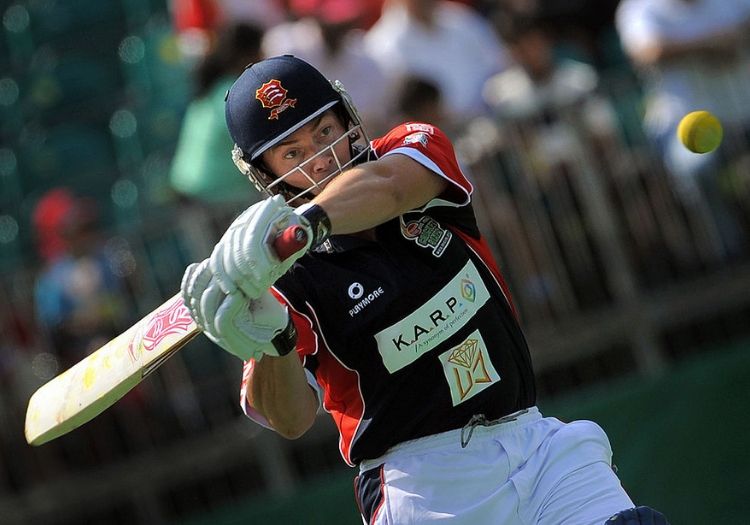
Before anything else, T20 cricket is a great leveller. It is about talent, but then it relies on self-belief, overt confidence, a puffed-out chest, an assured swagger, the capacity to hit the biggest six or bowl the fastest delivery, the ability to ramp and reverse ramp, sweep and reverse sweep.
Athletes who believed they had a ceiling cemented over the depth of their cricketing journeys have smashed their way through the game’s traditional norms.
It was 2009 and the Indian Premier League, for political reasons, had found itself in South Africa. So, too, had Graham Napier. Essex’s Graham Napier. Colchester’s Graham Napier. And now, Mumbai Indians’ Graham Napier.
There can be few precedents that better highlight T20 cricket’s power – especially in its early days, before total faith had been placed in analytics and statistics – than Napier’s rise.
“Initially when T20 was brought up, it was thought of as this unknown quantity of 20 overs,” the former Essex allrounder recalls.
“Some of the senior pros looked at it and just laughed. They said that this wasn’t really cricket, that cricket was 50 overs or 60 overs in one-day cricket, and then Championship cricket was the focus of all competitions.
“It wasn’t frowned upon, but it was looked at as a bit of a joke competition.
"But when the first round of matches came about and people realised instantly that the crowds were far bigger than what we had played in front of in the one-day competitions, it captured everyone’s imagination of what a competition it could be.”
Fast-forward six years and the joke was on the sceptics. Napier would only make a single IPL appearance – a more than respectable effort against Kolkata Knight Riders, making 15 runs and taking a solitary wicket.
Yet, here was a man who at the beginning of the previous season, was seriously considering his future in the sport. Napier was a 28-year-old second-teamer, worlds away from all the glittering razzmatazz that would fall his way.
“It was absolutely amazing,” he reflects of his IPL experience. “How do I sum it up? I arrived and you’ve got Sanath Jayasuriya, Lasith Malinga, Kieron Pollard, Dwayne Bravo, all as overseas players. So, it was going to be quite a tough team to break into!
“And then you look at the Indian icons we had within the side: Harbhajan Singh, Zaheer Khan and the biggest one of all, Sachin Tendulkar.
“To be suddenly thrown into this environment with these absolute superstars of the world game and I’m a Colchester-born lad who’s made his way through county cricket and then thrown into the cauldron that is the IPL and everything that goes with it, is just an amazing experience to be part of.
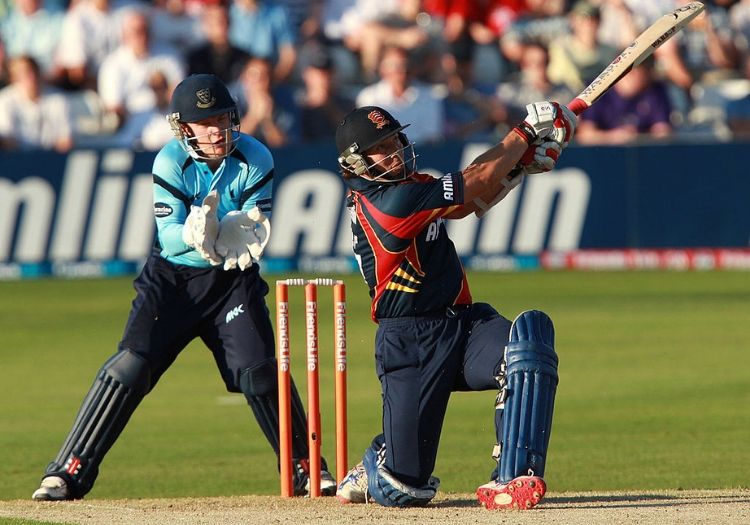
Graham Napier's form in 2008 led to an IPL deal in 2009
“To be out there and involved and experience it all was amazing. I loved every minute. To pick the brains of these players and watch them practice – watching the net practice was sometimes just an incredible thing to watch.”
It all circles back to T20 cricket’s unique power; Napier’s career changed on one Chelmsford evening. It is tough to think of another sport – or even another cricketing format – where his tale might be possible.
The year of 2008, for Napier, was a successful period in any case. He doesn’t believe he was ever more consistent than in that season: Essex would go on to win the Friends Provident Trophy.
However, it was a night of truly unrivaled ball-striking that altered the course of Napier’s cricketing existence. A pinch-hitting number three, his 58-ball 152 remains one of the game’s most brutal displays of hitting ever seen.
“I wouldn’t say that innings changed my career in terms of consistency, but it put my name in the headlines and people started looking at me,” he says. It is an apt summary - mention his name now and the images that flood back will be those of that extraordinary night.
That is just about the crux of it. It was the kind of one-off performance that raises eyebrows – 10 fours, 16 sixes. The kind of night that those present will never forget and have never forgotten.
The international trio of James Kirtley, Michael Yardy and Dwayne Smith were taken for 152 runs from their combined 10 overs as Napier went berserk.
It is the curious quirk of fandom that, even with 490 first-class wickets to his account, Napier’s name is forever attached to that night, that his career is almost defined by it.
It is also, of course, the effect of television cameras. They just happened to be at Chelmsford. “The stars aligned,” Napier chuckles.
In 96 T20 innings, it was the only time he ever passed 50. More than a fifth of his career sixes in the format came that night. Sometimes, as he says, it all just clicks. That, after all, is sport.
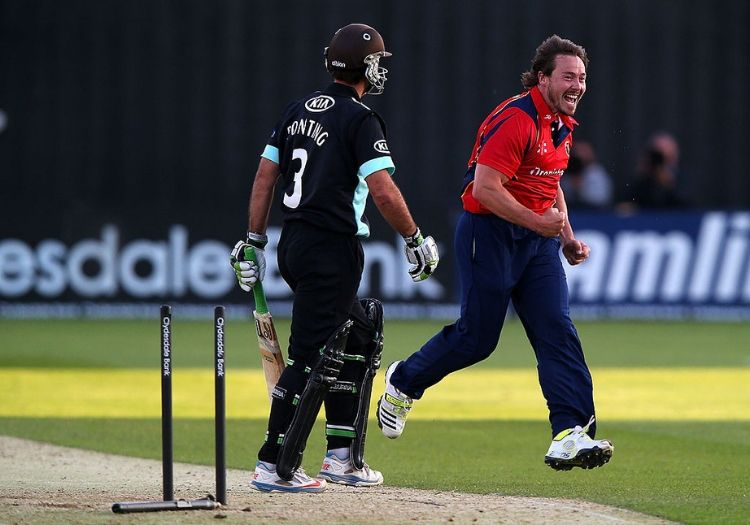
Graham Napier was in England's squad for the 2009 World T20
“We often joked that we’d have a TV game and suddenly you’d be in amongst the selectors’ thoughts,” Napier recalls. “And that was one of those games. Everything came out of the middle. I had no idea what was going on.
“I was so much in the zone that I had Ryan ten Doeschate coming out telling me I could get a record here. And I was like: ‘What do you mean? What record?’ I had absolutely no idea.
“If you go back to the buildup of that particular match, a couple of players had mentioned to the coach that I was hitting the ball quite well in the nets.
“I think it might have been James Middlebrook and Alex Tudor who turned around to Paul Grayson and said: ‘He’s hitting the ball well. Give him a go at number three.’ And I was happy to give it a go.
“It was just the momentum at the front of the innings that they wanted. But after a couple of quickfire innings, I had a couple where I didn’t score, and I felt that if I didn’t get any runs in this game then my chance of batting in the front of the order might be done.
“I didn’t expect to get 150-odd in 50 balls though! From that perspective, it was an opportunity taken.”
It remains the 10th highest score in T20 history – Chris Gayle, Aaron Finch and Brendon McCullum account for five of those above him.
That, to an extent, is why his fireworks have stood the test of time. It was – in quantity – a one-off, but it was its manner, its sheer scope that have held its memory together.
For six years, it was the highest score in English T20 cricket, only relinquishing that title when, ironically, Luke Wright returned the favour for Sussex against Essex at Chelmsford. It was Napier’s bowling in the firing line that night.
Indeed, it is easily forgotten amid the 152 that a career spanning almost two decades was dependent on the other side of the game; Napier’s searing reverse-swinging yorkers were a regular sight on the county circuit.
His all-round game was enough to earn an England call-up for the 2009 World T20, though he never made it onto the field. “A hard squad to be a part of,” he remembers as he looks back on the opening-night defeat against the Netherlands in front of a packed Lord’s house.
“To have a lifelong dream of playing for your country and getting so close, but all I got to do was carry the drinks, that is sport. I always hoped I would get a chance but it never came about.
“I was gutted, but to be part of an England squad for a World Cup – there are only a few players who get to do that.”
To celebrate England winning the World Cup you can subscribe to The Cricketer for just £20.19. Click here to learn more

Welcome to www.thecricketer.com - the online home of the world’s oldest cricket magazine. Breaking news, interviews, opinion and cricket goodness from every corner of our beautiful sport, from village green to national arena.