
SAM MORSHEAD AT LORD'S: It is difficult to look back on this innings and attribute it to a man who had never played a Test before, a man for whom opening the batting remained relatively unfamiliar
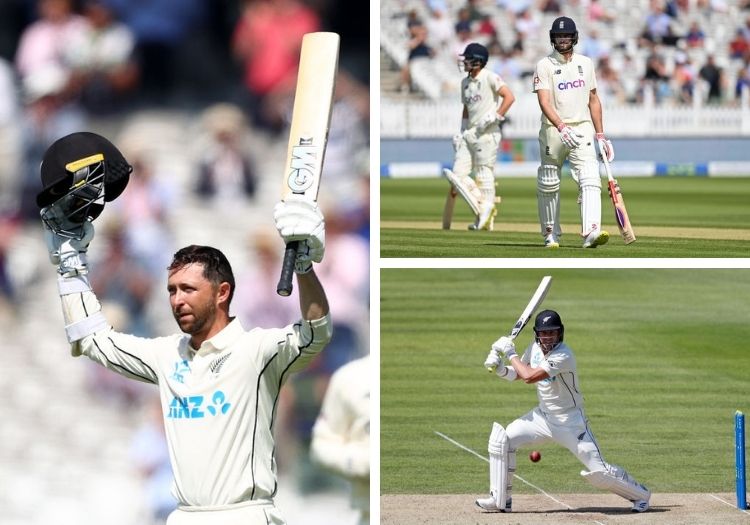

Lord's (day two of five): New Zealand, 378, England 111-2 - England trail by 267 runs with eight first-innings wickets remaining
Devonair Conway looks right at home
To watch Devon Conway go about his work across five sessions at Lord’s was to watch a man who knows he belongs in Test cricket.
There was not a hint of jittery uncertainty, no wobble at pressure-points when England’s seamers showed signs of superiority, no concern when the Kiwi middle order imploded. Instead, Conway just batted his way - just as he has throughout his flashbang introduction to the international game these past seven months, just as he has since packing his bags and swapping South Africa for Wellington.
So no, he did not look like a debutant; there was no suggestion of nerves.
Evidently, he has been waiting for Test cricket to catch up with him and, now that it has, he appears determined to make up for lost time.
Compact, blessed with a striking technique on the pull and elegant off his pads, Conway did not so much play the role of schoolyard bully to England’s bowlers as engage in intricate psychological torment. Whichever strategy the home attack tried - and given the meticulous nature of modern-day cricket analytics, there would no doubt have been many - New Zealand’s cool-headed opener had an answer. It must have been maddening.
As Mark Wood said on Thursday morning: “plans A, B, C, D and E didn’t really work yesterday. We’ll go back to plan A and see what happens.”
Insanity, as Albert Einstein is often misquoted as saying, is trying the same thing twice and expecting a different result.
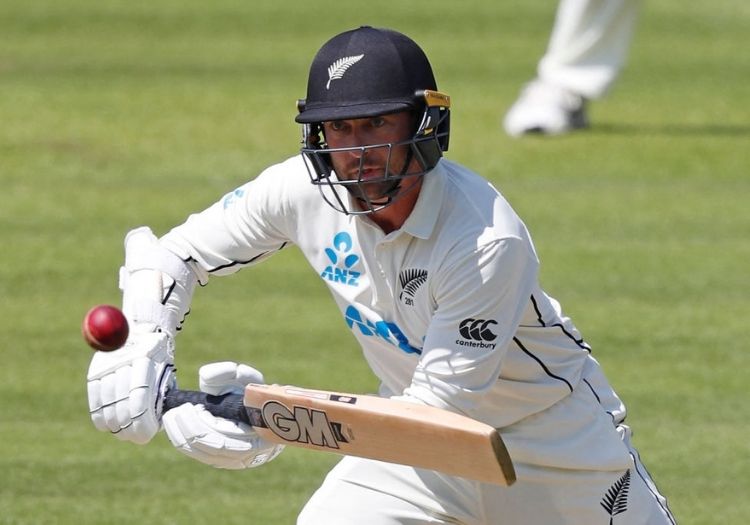
Devon Conway completed a double hundred on debut
While there were a couple of unconvincing pull shots to Wood’s bumpers, Conway was otherwise serene as he passed all bar Matthew Sinclair on the list of highest Test scores on debut for the Blackcaps, and registered his country’s highest individual effort in England.
When he pulled Wood for six over square leg to bring up his century - a shot executed with an arrogance that bordered on expectation - he became just the seventh man to have made a double-century in his first Test match.
Had he not been run out, thanks to a brilliant piece of outfielding by Ollie Pope in front of the Mound Stand, as the final wicket to fall in New Zealand’s innings, he may well have become the first person to ever carry his bat in his first Test knock.
And yet, it is difficult to look back on this innings and attribute it to a man who had never played a Test before, a man for whom opening the batting remains relatively unfamiliar.
As Conway celebrated reaching his double-hundred with an embrace of Neil Wagner, it seemed like Wagner was the more excitable. For Conway, it looked normal, like buying stamps or brushing his teeth. As if he had been doing it for years.
Maybe he should have been, perhaps that is a matter for South African cricket to consider.
Now Test cricket has caught up with Devon Conway, however, it seems unlikely that it is going to let him go in a hurry.
What a Wagnerwheel!
Everyone knows New Zealand bat long, they bat strong, and they bat big, but did anyone expect this innings from Neil Wagner?
The left-arm seamer - best known for destroying batsmen’s resolve rather than bowlers’ hearts - strode to the wicket with the Kiwis nine down for 338, having lost six wickets for 50 in little less than 90 minutes.
Wagner is not the type of No.11 who looks at a bat like an elephant might a Rubiks Cube - a Test average of 14 or so from 65 innings is enough to tell us that - but neither is he the sort of batsman you would anticipate straight driving Stuart Broad down the ground for six.
Or check-punching Mark Wood off the back foot for four through the covers.
Or leg-glancing to the square leg boundary off his pads.
At one point, it appeared as though England were happy to allow Wagner the single, preferring to bowl instead to Conway, the man a handful of runs away from a double ton.
It was audacious, entertaining, counter-attacking gold, and left the Blackcap with the best score by a No.10 in Tests at Lord’s since 2013.
Robinson’s missed chance
Ollie Robinson was the width of Stuart Broad’s right hand from making the honours board at Lord’s on debut.
Robinson had turned his overnight 2 for 50 into a four-wicket haul when Tim Southee drove aerially down the ground, giving Broad a relatively routine chance at mid-off.
Slow to get down to his right, England’s veteran seamer failed to take a clean catch, the ball bouncing off his wrist and away to safety.
Robinson, an emotional bowler, did well to contain himself on this particular occasion. Had roles been reversed, he might not have been treated so lightly.
And to make matters worse, the following over from the Nursery End, skipper Joe Root replaced Robinson in the attack with the man who had just spilled the chance to raise the matchball.
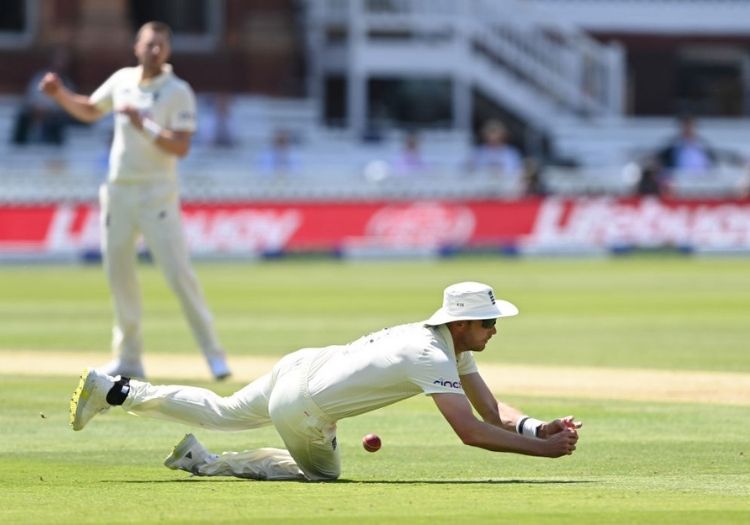
Stuart Broad drops Tim Southee, denying Ollie Robinson a maiden five-wicket haul
England’s opening ordeal
The age-old dilemma of England’s openers in the post-Strauss/Cook era is enough to dull even the most enthusiastic cricket fan, but once again the subject needs to be up for discussion.
Since the start of the Pakistan series just summer, England’s first-wicket partnership has managed just 178 runs from 17 innings together, at a paltry average of 10.5
There is context, of course - it is not an easy job at the best of times, let alone in English conditions and on Indian pitches which ragged from toss to trouncing - but that context can only account for a slight dip. And, really, this sort of form is pretty much cavernous.
England have tried two pairings at the top of the order in that time - Dom Sibley and Rory Burns, and Sibley and Zak Crawley - with the former faring a little better.
Sibley and Burns average 13.5 from nine innings together, Crawley and Sibley nine from eight.
Warwickshire’s Sibley is on a particularly rotten run - six consecutive single-digit scores in Tests and no return above 16 since the first innings in Chennai.
At Lord’s on Thursday he might have been a little unlucky with the marginal nature of the lbw decision against him, but the awkward position in which he found himself, head and shoulders out of line with his hips in front of off stump when he was struck on the back pad at the kneeroll, indicate there are issues of substance which need correcting.
Sibley’s is not a typical technique - much has been made of the influence of batting coach Gary Palmer on his development in recent years - so we cannot expect his stays at the crease to be watercolours. They need to at least be presentable, however.
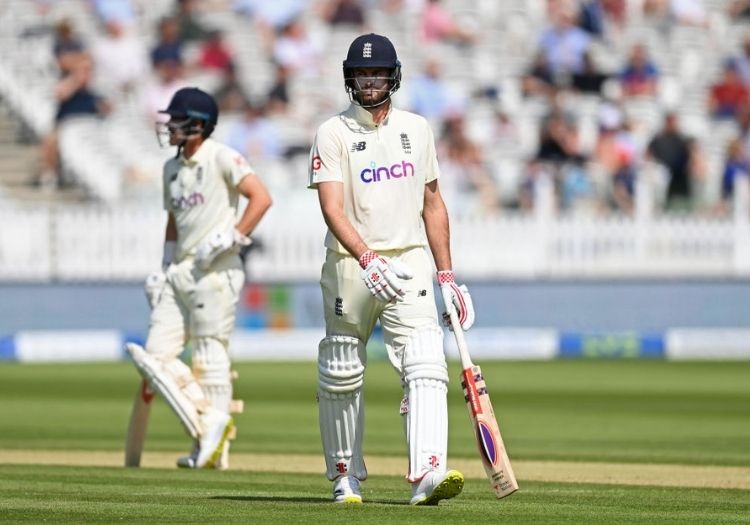
Dom Sibley departs after a sixth successive single-figure score in Tests
Subscribe to The Cricketer for exclusive content every day: The inside track on everything England - including leading coverage of England in India, award-winning analysis, breaking news and interviews and the only place for in-depth county coverage all year round. Plus: An ad-free app experience at your fingertips. Subscribe to thecricketer.com today for just £1.

Welcome to www.thecricketer.com - the online home of the world’s oldest cricket magazine. Breaking news, interviews, opinion and cricket goodness from every corner of our beautiful sport, from village green to national arena.