
HUW TURBERVILL: News that Crackerjack is returning has left me so excited I could crush a grape. Could cricket revive anything from earlier eras, including eight-ball overs, umpire power, stonewalling in Tests and the return of the amateur?

News that Crackerjack is returning has left me so excited I could crush a grape. And if you never watched the BBC show for youngsters when it was hosted by Stu Francis, you will not know what the heck I am talking about.
Cricket and the programme are not obvious bedfellows – although Mark Nicholas has been known to marvel at ‘crackerjack catches’ if I am not mistaken.
The programme was on between 1955 and 1984, and its comeback has me wondering if cricket could also revive some old favourites.
No thank you – it may have been the Swinging Sixties in terms of pop culture and fashion, but the longer game was ailing. The decade began with the enthralling Australia v West Indies series of 1960/61 (the first Test was tied at Brisbane before the hosts won 2-1), but it was not to last.
There was too much stonewalling and too many draws. Ken Barrington (for his 137 against New Zealand at Edgbaston in 1965) and Geoffrey Boycott (246 not out versus India at Headingley two years later) were dropped for slow scoring. EM Wellings wrote: “Test cricket had come to a sorry pass. England developed tight, restrictive tactics. Others followed their lead… hence the tedium of many, recent matches.”
A contrast to today's Test game, which sees matches end on days two, three and four, batsmen nicking off as if they need 23 in the final over, and so on...
Funnily enough, a form of this has been mooted. County squads are smaller now, with finances squeezed. There has been talk of line-ups being bolstered during the new 50-over competition from 2020, which will be played at the same time as The Hundred. With so many players drafted in to the ECB’s new competition, there will be opportunities for youngsters, and perhaps even leading club players.
There won’t be a return to the nonsense of yesteryear though. “Ladies and gentlemen, a correction to your scorecards: for FJ Titmus, read Titmus FJ” (for, you see, the legendary Middlesex offie was a professional, but the initials before the surname indicated an amateur). The amateurs changed in different dressing rooms, came on to the field through different gates, stayed at different hotels, and were given cars on tour. The distinction was abolished in 1962.
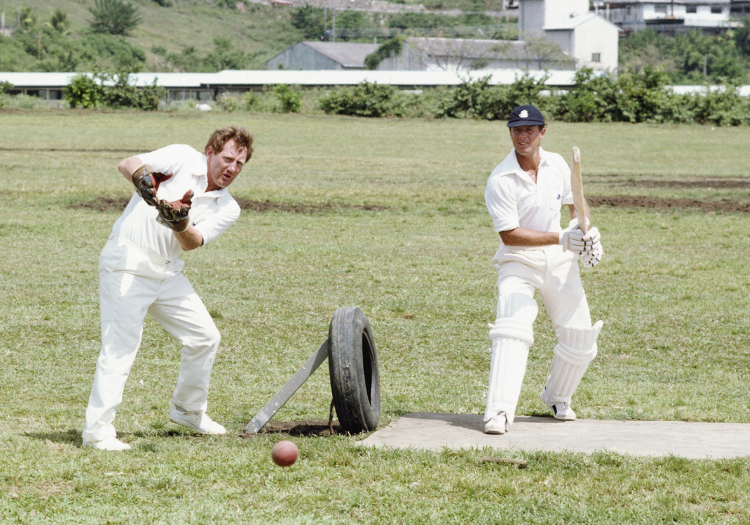
Bring back Boycs-style batting?
Impossible! Out of the mist of the Test tedium – and declining audience figures for domestic cricket – emerged the limited-overs game. The Gillette Cup was born in 1963. The Sunday League began in 1969. The first one-day international was played – by accident as it happens, after a Test was rained off – at Melbourne in 1970/71, between Australia and England (Ray Illingworth’s men did not take it very seriously, suspecting it was a fad).
For the next 35 years or so lots of people argued there was too much one-day cricket (whether it be 40, 45, 50, 55, 60 or 65 overs per side). Since 2003 traditionalists say there has been – and will be – too much T20. The T10 Cricket League began in the UAE in 2017. The genie is out of the bottle now – the shorter formats are here to stay, and first-class cricket faces a fight for survival.
Nah. Yes many say the 50-over version of the tournament is too long. There are too many group games, designed to prevent India making an embarrassing early exit perhaps. There is serious annoyance that the Associate nations are not being allowed their time in the sun this summer. But the World Cup has produced many great moments since its inauguration in 1975. That first final, with Viv Richards’ three run-outs. His 138 in the 1979 final.
The surprise wins for Zimbabwe (over Australia) and India (the tournament) in 1983. Pakistan and Sri Lanka’s thrilling triumphs in 1992 and 1996 respectively. The Edgbaston semi-final between Australia and South Africa in 1999. Kenya reaching the semi in 2003. Ireland beating England in 2011. Kumar Sangakkara’s four centuries in 2015. And so on. Cricket without the World Cup would be much less entertaining.
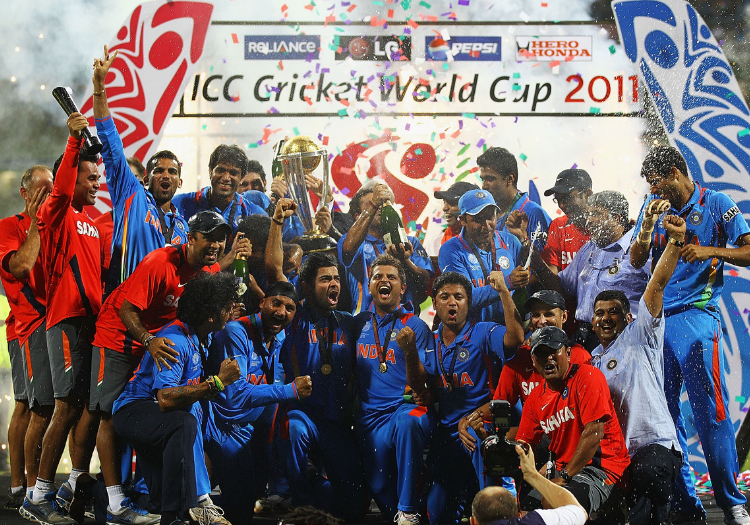
"Cricket without the World Cup would be much less entertaining"
Well we nearly had the 10-ball over, which would have concluded the innings in The Hundred, before 20 five-ball… err… batches (or something) were finally settled upon. Eight-ball overs were abolished in 1980, making the six-ball over universal. We probably don’t want to go back to eight. Too tiring for the quicks. Wasn’t it great to see proper fast bowling in the West Indies v England series? Shannon Gabriel (not his sledging), Kemar Roach, Ben Stokes and Mark Wood electrified the contest by bowling at the body.
Australia’s Graham Yallop was the first to wear one in a Test in 1978, against West Indies at Bridgetown. Dennis Amiss had introduced his unusual-looking (motorcycle?) model in Packer’s World Series. Viv Richards never wore one of course. We still receive letters at The Cricketer bemoaning helmets – that you cannot see who is batting.
And we had the beautiful sight of Shimron Hetmyer batting in a sunhat in the first Test. There are also those who say players dealt with the short ball more sensibly before helmets, when they were not wearing them – they knew their limitations. But they are here to stay and that is a good thing, especially for youngsters. Better safe than sorry.
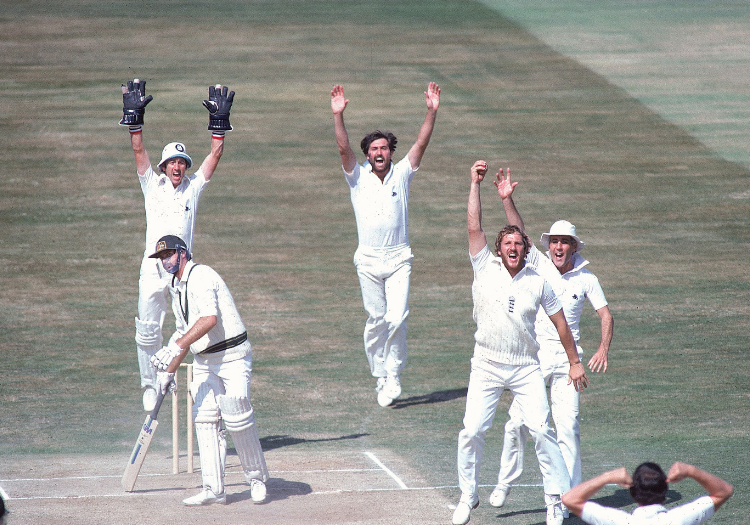
Australia’s Graham Yallop was the first to wear a helmet in a Test in 1978
It was not until 1976 that the first women's match was played at Lord's, when England faced Australia. Now we have 50-over and 20-over World Cups, the occasional Test and domestic contests. Also excitingly, there is a growth in recreational cricket. There are more women than ever playing, at a worrying time when fewer men are giving up their weekends. And pleasingly, rounders is being phased out in schools, replaced by our beloved game.
Look at footage of Jim Laker taking his 19 Test wickets for only 90 runs against Australia at Old Trafford in 1956. Since then we have had send-offs, dances, salutes and press-ups… it is a matter of taste, of course, but it is probably fair to say that modern fans, especially youngsters, who delight at things like the ‘Dab’, would not want a return to those more understated times.
I am indebted to Mike Selvey, our esteemed columnist, for pointing out this one: ridiculous journeys late at night from one game to the next. Yes, the days when England players could not celebrate a victory, or perhaps more pertinently drown their sorrows, for very long... as they had to hit the road to make the destination for the next day's county match. For instance, Graham Gooch left Edgbaston in 1985, where England had just beaten Australia by an innings, to go to Southampton. The next day there he made 93 for Essex against Hampshire in the NatWest Trophy semi-final (his side won by virtue of losing fewer wickets in a thriller). County players also had to dart from where a four-day game was being played in time to make the Sunday League encounter the next morning. Extraordinary times.
In 1992 TV replays were first used in a Test. In 2008 DRS was formally adopted. There will always be people who would like to see autonomy returned to the umpire. There would be more mistakes again, but they say that is part of the game’s charm. Mark Ramprakash’s famous quote to Darrell Hair rather summed things up though: “You're messing with my career, Darrell.” Yes there will still be players who do not trust Hawk-Eye and so on, but generally the system now works.
A player who once argued that the ball “would not even have hit a second set” has little comeback when the TV replay shows the ball hitting halfway up middle. Yes mistakes will still happen, once a side has accumulated two failed reviews. The system is not perfect. But it is probably better than the Crackerjack days.

Welcome to www.thecricketer.com - the online home of the world’s oldest cricket magazine. Breaking news, interviews, opinion and cricket goodness from every corner of our beautiful sport, from village green to national arena.