
As we approach 2020, The Cricketer looks back on some of the moments than have shaped the cricketing world over the course of the last 10 years

Then just 17 years old, Amelia Kerr made history in Dublin on June 13, 2018. The young batter recorded the highest individual score in women’s ODI history as New Zealand racked up 440 for 3 against an Irish side left brutally exposed by its ruthless visitors.
Kerr’s double hundred – still her only century at ODI level – included 31 fours and 2 sixes. No other female player has reached the landmark this millennium; Belinda Clark was the last to do so, for Australia against Denmark during the World Cup in 1997.
India’s Deepti Sharma almost managed it in 2017, making 188 – also against Ireland. Kerr’s knock, of course, was of added significance, given her age. If that was not enough, she capped an incredible performance with a five-wicket haul in reply.
In a cricketing landscape of bilateral series overkill, there can have been few contests more significant in the last decade than this. Brendon McCullum’s army of World Cup runners-up arrived on English shores just months after England – then a chaotic, outdated rabble – had been humbled in the same tournament.
Eoin Morgan was in charge, a firm friend of McCullum and a deep admirer of his approach to the sport. What followed was a remarkable series. England made scores of 408, 365, 302 and 350 for 3 – winning that game with six overs to spare.
It could all have been so different; Jason Roy was caught at point to the very first ball of it all. The revolution very nearly never left the ground. But from there, carnage. There were rapid hundreds for Joe Root and Jos Buttler, a quickfire fifty from Morgan, before Adil Rashid added a crucial 69. England had passed 400. Who'd have thought it?
It was a kind of cricket never before seen in a country that, for so long, had played ODI cricket so badly. As a fortnight, it sewed the seeds of belief into Morgan’s mind and into the heads of those he would be leading, ultimately, to World Cup glory.
When cricket looks back on itself in the future, the three-year period of dominance by the Big Three may well be gazed upon with a great deal of contempt. It was a shameful, narrow-minded, selfish time. India, England and Australia benefited; little else seemed to matter. Even when a collective alliance against the financially-driven agenda three years later finally saw necessary reform, the BCCI acted as the sole dissenter.
The process was drawn-out and protracted, but aided by the exit of N Srinivasan, who is widely viewed as the architect-in-chief of the original deal, which saw the BCCI take $440m as part of the Big Three model.
That was reduced to $293m in the reforms, while the ECB’s figures dropped from $150m to $143m. The arrival of Shashank Manohar as ICC chairman was fundamental in correcting the situation, fixing some of the trust that had been eroded by the Big Three era.
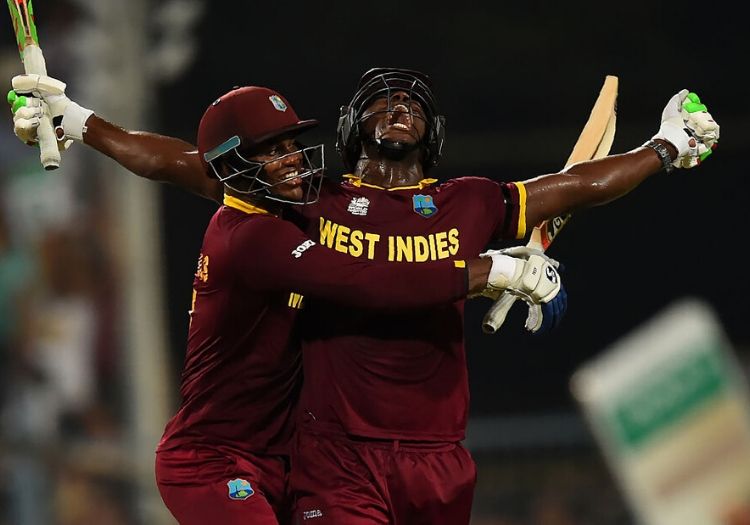
Carlos Brathwaite's four consecutive sixes won West Indies the 2016 World T20
“Carlos Brathwaite! Carlos Brathwaite! Remember the name! History for the West Indies” – the iconic words of Ian Bishop. They will forever haunt Ben Stokes and all those of an English persuasion who, with six balls to go of the 2016 World T20 final, would have believed a second title was on its way.
Stokes, with 19 runs to defend, had the hulking figure of Brathwaite staring him down, leaning on his bat. The Barbadian allrounder was not the household name he has since become – almost entirely on the back of what happened next. Six. Six. Six. Six. Four consecutive sixes. A remarkable victory with two deliveries to spare, his teammates sprinted onto the field.
Stokes – and England – lay crestfallen, flabbergasted, silenced. Each maximum was bigger than the last – the first the result of a desperately poor piece of bowling. From then on, there was a brutal inevitability. Carlos Brathwaite, remember the name.
When Rohit Sharma struck 264 against Sri Lanka at Kolkata in 2014, his individual total represented 45 more runs than anyone else in the history of the game had ever managed in a single ODI innings.
India hadn’t even begun at any great pace; at 59 for 2 after 12 overs, few could have seen what was to come. Sharma hit 33 fours and 9 sixes in his 173-ball stay. It only ended when he was finally dismissed by the final ball of India’s innings.
He is, quite simply, freakish. It was his second double century in the format – the first had come a year earlier against Australia. A third has since, inevitably, followed – once again, against the visiting Sri Lankans. There have been 24 further hundreds for one of white-ball cricket’s finest ever stroke-makers.
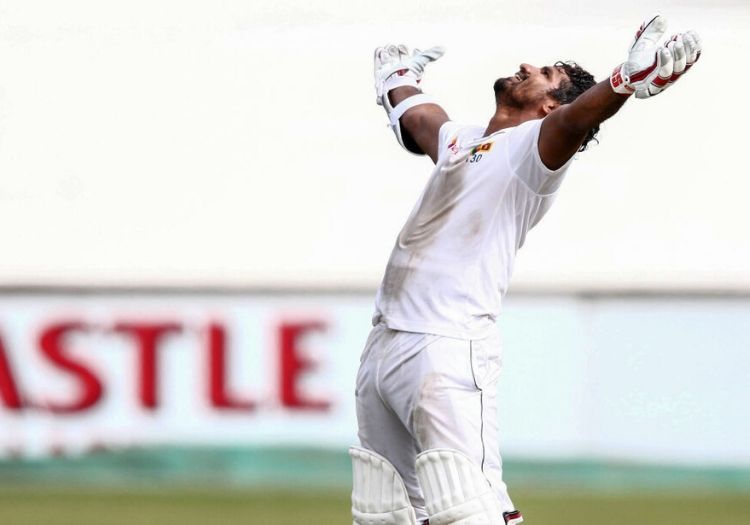
Kusal Perera led Sri Lanka to become the first Asian country to win a Test series in South Africa
Few will ever forget this year’s World Cup final. It was the day that saw England finally claim the prize that had forever eluded them. It was the coming together of a four-year plan concocted by the brains of Eoin Morgan and Trevor Bayliss. It was an occasion that brought about the most incredible of sporting dramas.
England, having found their very best form as the group stage came to a close, followed up with one off British sport’s most complete performances of all time in dismantling Australia at Edgbaston. It brought them to Lord’s – in recent history, their least favourite of home venues. For the first half, they dominated proceedings; New Zealand scraped to 241.
The rest, as they say, is history. It will never be beaten for its chaos, for its unprecedented bedlam. Cricket has never seen scenes quite like this on these shores. First, there was the recovery put together by Ben Stokes and Jos Buttler after an initial stumble with the bat.
Then, there was Stokes’ dive and the deflection that changed the game. Before that, Trent Boult – with the game at his mercy – had trodden on the boundary rope when anything else would have clinched glory for the Blackcaps.
And then, there was the Super Over and its conclusion that brought about a law change. England, world champions by virtue of a boundary countback. Madness.
The notion of day/night Test cricket was first mooted in October 2012, with the ICC searching for ways to breathe new life into the five-day game. Three years later, Australia faced New Zealand at the Adelaide Oval – 36 years to the day since the first ever ICC-sanctioned day/night game.
Since then, there have been a further 14 such Tests, including the drawn Women’s Ashes clash in 2017 at North Sydney Oval.
They have been reasonably successful, but have faced several issues. The state of the pink ball has caused some problems, while its tendency to swing prodigiously under lights has swayed – perhaps disproportionately – the importance of the evening session.
Temperatures in the English evening meant a lukewarm reception for the idea when England hosted West Indies at Edgbaston in 2017.
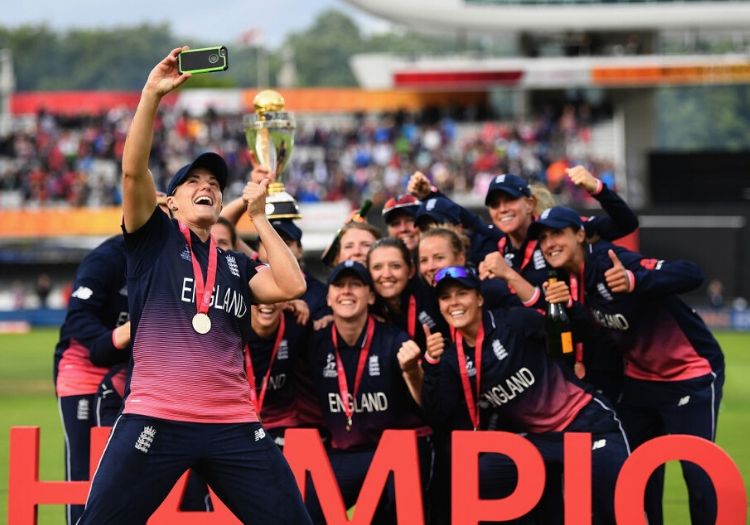
England won a thrilling Women's World Cup final in 2017
In the minds of all those present, this was a day like none other at the sport’s spiritual home. Yes, it was England against India. Yes, it was a World Cup final. But this was more; a huge step forward in the growth of the women’s game – in truth, the whole tournament represented enormous progress.
On and off the field, it was an unprecedented success for women’s international cricket. But then, on a Sunday afternoon in St John’s Wood, it peaked. A full house at Lord’s. An unrivaled atmosphere. A gateway to a new generation of players and supporters.
And then, the game to match. India seemed well in control of the run-chase, but pressure does funny things. For long periods, Mithali Raj’s side was in control; they had restricted England to 228 for 7.
When Punam Raut, who made 86, was the fourth player dismissed, India needed just 37 to win. But from then on, Anya Shrubsole took over. She finished with figures of 6 for 46. An encounter that the occasion deserved. The women’s game has only grown since.
One of the great Test innings of them all – an individual effort that clinched one of Test cricket’s biggest shocks: a first ever win for an Asian side in South Africa in the least likely of circumstances. With Sri Lanka 226 for 9 in pursuit of 304, their situation was hopeless.
And then Kusal Perera, a talented but inconsistent white-ball swashbuckler, flicked a switch. What ensued in the following 16 overs was extraordinary, unprecedented, unbelievable. Debate has risen since – Perera or Stokes? Two similar displays of remarkable defiance, a pair of one-man miracles.
At the other end, Vishwa Fernando battled away for the 27 deliveries with which he was entrusted. The pair put on an unbroken 78. Perera swung Dale Steyn over square leg for six – it was an otherworldly display.
When he guided a delivery from Kagiso Rabada through the vacant third man area to secure an improbable win, history had been made. A side that had arrived in South Africa in relative disarray left as history-makers. Perera, meanwhile, left with a claim to Test cricket’s greatest hundred of them all.
A hugely significant moment for the global game. For so long, full membership had appeared to exist as a closed shop – open only to the status quo. Ireland, however, had pushed for a long period of time to change all that.
They had impressed at World Cups, picking up notable scalps along the way. They had grown their own game and increased the depth in their domestic cricket; more and more Irishmen were becoming coveted by sides on the English county circuit.
Afghanistan’s rise has been well-documented – an incredible journey from nothing to everything. They have needed Ireland as much as Ireland have needed them in their fight for Test status. But their story has given hope to those beyond the main stage. The Afghans already have a pair of Test wins, while Ireland remain winless.
Subscribe to The Cricketer this Christmas and receive a £20 John Lewis voucher or Alastair Cook's autobiography. Claim your free gift here

Welcome to www.thecricketer.com - the online home of the world’s oldest cricket magazine. Breaking news, interviews, opinion and cricket goodness from every corner of our beautiful sport, from village green to national arena.