
NICK FRIEND sits down with the great Barbadian duo to reflect on the makings of a great player, the importance of encouraging individualism and why Gayle is a triumph of coaching
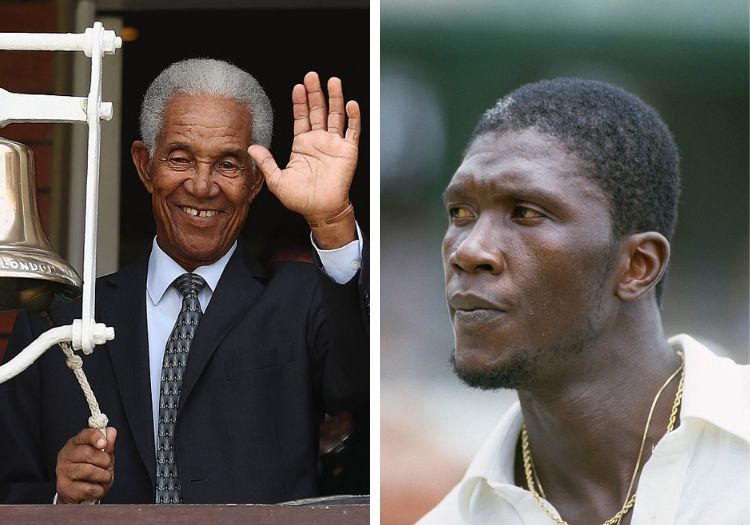

When Sir Garfield Sobers leans forward across the table of this penthouse conference room, it is an invitation into the mind of one of cricket’s all-time greats. He has been quietly reclining in his seat, for Joel Garner is sat next to him.
Conversation has turned from the 1979 World Cup final, where Garner took five wickets to decimate England, to Chris Gayle and onto the art of coaching. The latter two, the pair agree, are inextricably linked.
And then Sobers speaks. “The game of cricket is a glorious uncertainty,” he whispers, as if a higher being letting those around him in on his own secret.
“You can be on top of the world and then all of a sudden you can fall.”
It is needless to say, but when Sobers' thoughts are in motion, you listen. His voice carries a disarming authority, every word sprinkled with a wisdom that is unsurpassed. Now 82 – he will turn 83 in July, he is dressed smartly, complete with his distinctive Barbadian twang.
And then he begins to talk cricket. Age becomes ageless. It is not so much a juggernaut as the most peaceful journey imaginable. Occasionally, he pauses for breath. Garner continues – a deeper voice that befits the enormous frame of Big Joel. The duo bounce off one another as only two of cricket’s crown jewels possibly could.
They have a shared understanding of the game; the respect they hold for Gayle is framed by an almost unprecedented success across three formats, they hold a similar disdain for coaching’s increased robotism.
“It’s cloning, not coaching,” bemoans Garner of cricket's desire to swap mercurial individuality for manufactured mannequins, each built to a set template. “To get the best out of someone, you have to get the best out of what that person is doing.”
It is a straightforward theory – the notion of embracing the unorthodox rather than running from it.
“You look at the player, you see where his strengths and his weaknesses are,” Sobers adds. He portrays an uncomplicated process because, quite simply, cricket is a simple game.
“You look at them for a little while and you realise that where his strengths are is correct. They might not be perfect. But it’s correct for him.
“You might try to help him with other parts of his game, but never take that away from him. That is his natural game. They are his natural shots. They are his natural gifts. Give him some insight into other things.”
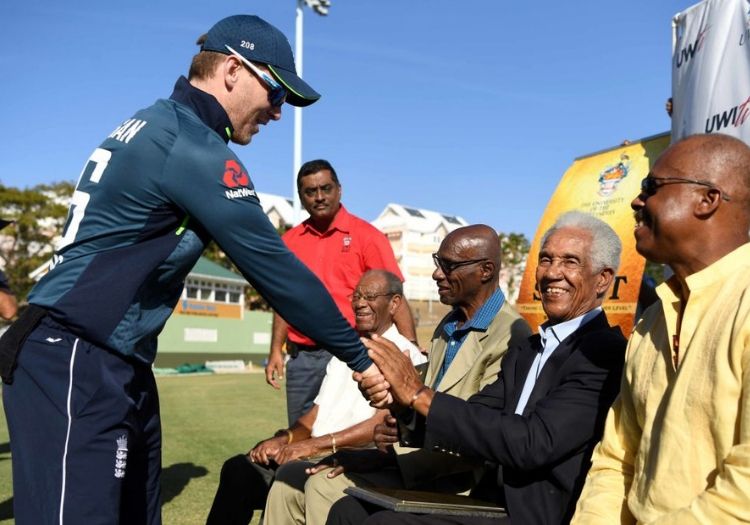
Sobers scored 8,032 runs during a glittering Test career.
He picks on Shimron Hetmyer as his example, the sparkling Guyana-born batsman – the kind of swashbuckler Sobers cannot help but admire. He might even recognise some of his own flamboyant aggression in the 22-year-old.
“It is a thinking game,” he stresses. “You can have all the best ability in the world, but if you don’t think right, that ability is no good.”
What was somewhat lost – and laughed off – in England’s ODI victory at St George’s in February, when Gayle made 162 in response to Jos Buttler’s 150 and England’s 418 for six, was Hetmyer’s contribution. He pulled his first ball for six. He pulled his second ball into the hands of Alex Hales at deep square leg. It is the kind of impetuousness that can be honed through coaching.
“Look at Hetmyer – he’s gone in to bat with Chris Gayle,” recalls Sobers, his voice shrieking with both incredulity and laughter. "Chris is on fire. He’s going boom, boom, boom. He’s on 70 or 80. Hetmyer goes in and goes: boom – six, boom – out.
“What is he thinking? What are the people behind doing, the guys who should be telling him? Give him some advice. He’s a new player.
“He is trying to show something because everyone is jumping and saying how good he is and all. That is not how you play the game. It doesn’t matter how good you are when you’re not playing the game. It’s about how good you are when you perform.”
VISIT THE WORLD CUP PORTAL
There is an overflowing passion to Sobers’ sermon. Even with age, his appetite for the game continues to flourish. The fire still burns inside him. There is a heat that radiates from his cricketing immortality.
The product of a poor family in Barbados, his upbringing was one without coaching. "Cricket was our chance to get overseas," he says. "It was the only sport in Barbados that could allow us to see the world for free."
He learnt his game by watching the top players at Wanderers Cricket Club, his local club in his youth, scoring for them on Saturdays. He lists Everton Weekes, Frank Worrell and Clyde Walcott among those he would analyse. “I tried to do what they did,” he says. “I tried to play as I saw.
It is a history that gives context to his thought process. Do as they do. See ball, hit ball. There are few adages better established, few more relevant to the way in which Sobers sees the game.
“I went down to talk to Shai Hope – a beautiful player,” he recalls next. “Everything looks beautiful. He had something that was his: he used to try to hit off-spinners through mid-off and cover. Don’t take that away from him.
"I watched him for three weeks. In the fourth week, I went to him: ‘Shai, I just want to talk to you a little bit. That same ball is turning into you. If you move a little bit inside it, you’ve only got two men over there (on the legside) and they can’t control that whole area behind square. If you just step inside, you have got a big wide-open gap. But practice it in the nets. See if you’re comfortable with it. If you’re not, don’t do it. Just go on playing the way you play.’”
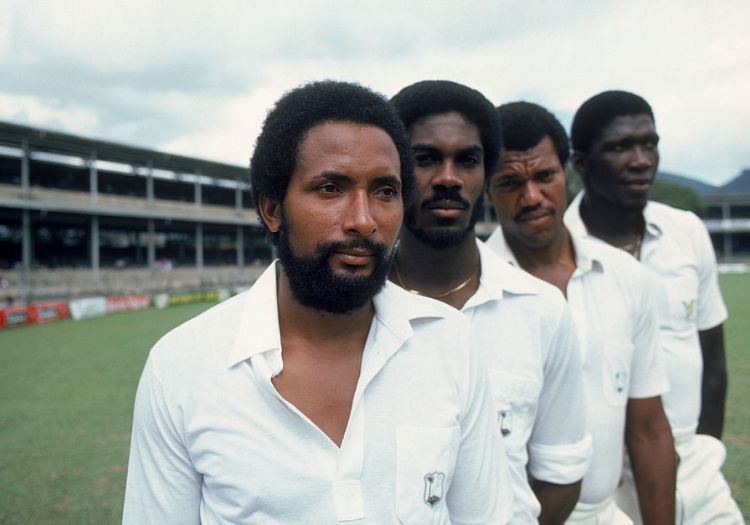
Garner (far right) was part of a fast bowling unit feared by batsmen worldwide.
He returns to his own childhood. “You played shots to get runs," he reflects. "You hit the off-spinner through cover. Somebody would see you doing that and they would say: ‘No, no, no. Hit it where the ball is going.’
“I would say: ‘What happened? If I hit it through there for four, is that not where it is going?’ You learnt to play your own game. But within your own game, you tried to learn the techniques of the game.
"There are a lot of coaches who make a mess of cricket. They want you to all look the same. Open up there. Straight bat there. I don’t believe in that.”
It is a tangent that leads to Gayle. When you talk of West Indian cricket these days, most paths end up at the feet of the self-proclaimed Universe Boss, a man enjoying the final embers of an international swansong.
Talk of Gayle and his legacy is as relevant now as it ever has been; following the conclusion of this World Cup, he will be retired as an international one-day cricketer. He played the last of his 103 Tests in 2014.
He is on the verge of joining a pantheon of retired West Indian legends; an honorary club forever topped by Sobers – a man worthy, perhaps, of his own list, with the hulking figure of Garner not far behind.
There will be, one assumes, more than a modicum of surprise to see Gayle’s name mentioned in such company – whether that is linked to the perception of the 39-year-old as a T20 slugger or of his off-field missteps and misdemeanours.
As Garner says, however: “His record will speak for itself.” Indeed, few in the sport’s history have dominated each of cricket’s three formats. Even fewer, one might argue, have done it with such stubbornness and so little change in style.
“When you look back at his career, you will look back at his statistics in Test matches, ODIs and T20, and you will see that he is right up there,” Garner adds. He won’t rank him among his Caribbean peers. That is not how it works. To be considered among that group is evidence enough of a sterling effort.
It is worth remembering of Gayle that, in among nearly 300 ODIs and 58 T20 internationals, existed a man who had first completed Test cricket.
This was not a man who sold his soul to franchise cricket, but rather one who soared through the game’s traditional pinnacles beforehand. Brian Lara, Virender Sehwag, Donald Bradman – the three other men to make two Test triple-hundreds.
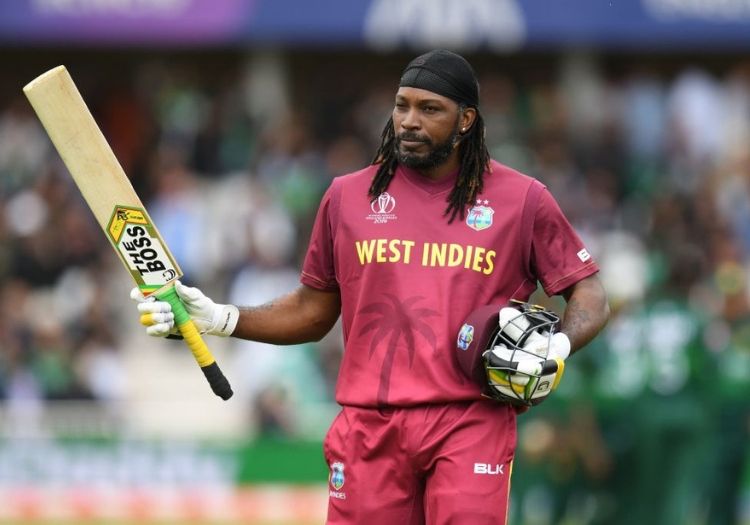
Gayle made 333 against Sri Lanka and 317 against South Africa.
An average of 42.18 across 182 Test innings at the top of the order is testament to far more than what the latter years of Gayle have projected as his everlasting image.
It certainly represents a finer output than what some believed might be possible for the giant left-hander.
“People talk so much about coaching and how coaches should do this or do that and, in my estimations, a lot of coaches don’t know what they are doing.
“They all coach from books and they have no thought of their own. I did some work with Chris when he was on his way up and I listened to them talking about him. They were saying: ‘He don’t move his feet, he don’t do this, he don’t do that.’
“I was asked to go and talk to him. I just said: ‘Chris, if you can move your feet it’s good. But you don’t have to.’
"You hit the ball with your bat, not with your foot.
“I said to him: ‘One of the most important things in batting is that if the ball is moving away from you, go with it. I don’t mind where your feet are, just go with it.’ If you go there, it doesn’t matter how much you move your feet or how good you are.”
It is a theory that has made Gayle one of the great forces of cricketing history. There is a subtle difference between clearing the front leg and being economical in its movement. Gayle veers towards the latter. It is why his hitting zone remains so vast – anywhere from cover to forward square leg.
“Coaches have got this idea that you have got to get close and you have got to get into all these positions. I don’t know what they’re talking about.
“If you look at someone like Steve Smith, Smith is a hell of a good player. Do you see anything about him that is orthodox?”
Sobers stops to laugh. It is an infectious cackle – the type that screams of resonance and appreciation. Smith, in many ways, is all that Sobers seeks to prove. His unusual setup is a litany of idiosyncrasies, a fascinating ballroom hopscotch.
“People don’t use their common sense when they are coaching. You coach the way you should coach, but you watch the player and you see how he plays. You coach him and you watch him. Don’t coach what the book says. Coach him. Let him use his ability.”
It is hard to argue with the greatest the sport has ever seen. Even in their advancing years, Sobers and Garner remain as sharp as ever. In Gayle, they possess an almost faultless case study into the importance of protecting natural talent.
His story, one might say, represents a victory for the art of coaching.
The Barbados cricket legends are touring to support Barbados Tourism Marketing Inc., promoting travel to Barbados to enjoy its rich cricket heritage which includes the famous Kensington Oval which hosts many local and major international tournaments and The Cricket Legends of Barbados Museum. For more information please visit: www.visitbarbados.org

Welcome to www.thecricketer.com - the online home of the world’s oldest cricket magazine. Breaking news, interviews, opinion and cricket goodness from every corner of our beautiful sport, from village green to national arena.