
SAM MORSHEAD - POWER LIST INTERVIEW: Adams saw first-hand just how powerful free-to-air TV exposure can be when a member of his family got caught up in the buzz of the World Cup final thanks to Sky Sports' deal with Channel 4
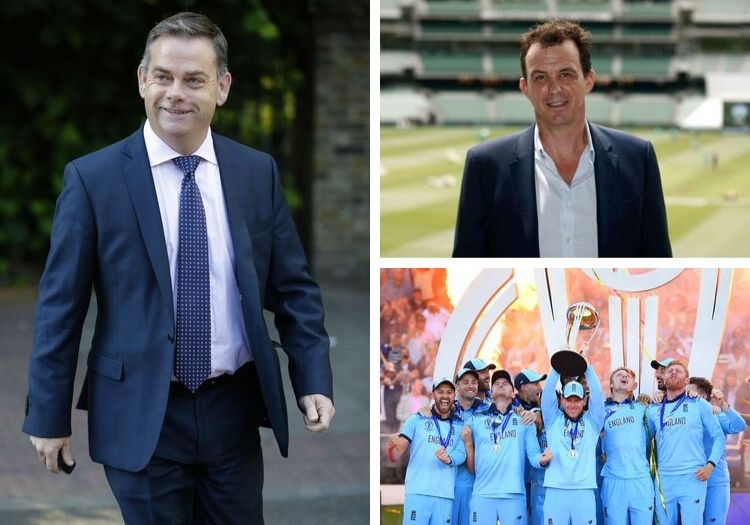

Sports minister Nigel Adams got a very personal glimpse of the impact free-to-air cricket can have this summer, but he remains adamant that the sport needs the revenue generated by subscription channels to survive and thrive.
Adams, the MP for Selby and Ainsty, is a recent appointment to the top job at the Department of Digital, Culture, Media and Sport but arrives with a long history in cricket, having played for more than 35 years.
The 52-year-old sat on the Yorkshire members’ committee before running for parliament, now regularly plays for the Lord’s and Commons XI, and considers himself a genuine lover of the game.
He knows as well as anyone, then, the debate surrounding cricket’s position among Ofcom’s Listed Events - otherwise known as sport’s free-to-air TV “crown jewels” - and how it has been reinvigorated by the recent World Cup and Ashes.
Furthermore, Adams saw first-hand just how powerful television exposure can be when a member of his family got caught up in the buzz of the World Cup final after a last-minute deal was struck between Sky Sports and Channel 4 for the latter to share the telecast of England’s victory over New Zealand.
“What Channel 4 did with Sky was fantastic,” Adams tells The Cricketer.
“One of my kids, who has never shown any interest in cricket throughout his life, rang me and said ‘are you watching this match’ - the World Cup final.
“I said ‘I’m at the match. What do you want?’
“He said ‘it’s the most exciting thing, I’m here with a bunch of fans watching it’. I almost cried. It was my son, who had never shown any interest in cricket despite Darren Gough, Darren Lehmann and all these people coming to our house for dinner.
“That World Cup final inspired him and he went out and played in the park afterwards.”
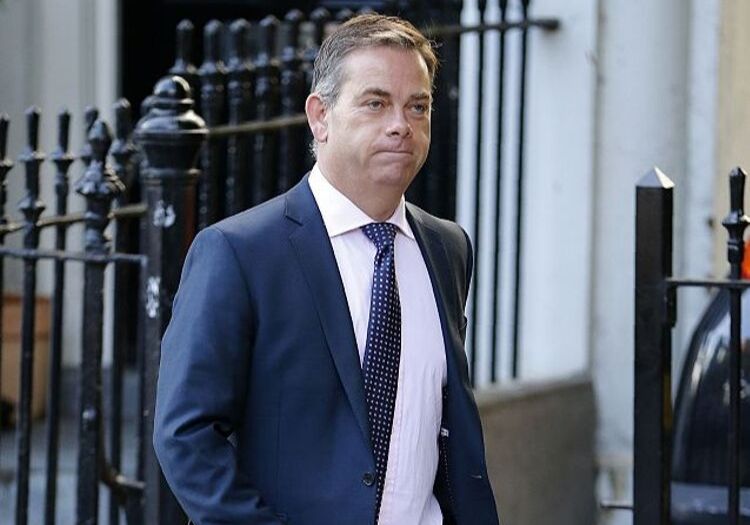
Sports minister Nigel Adams
That poignant moment, however, did not lead Adams to conclude that a radical overhaul is required of cricket’s relationship with pay TV.
The sport, he insists, needs to strike “a balance” over what is accessible to those unable to pay the considerable expense of monthly subscriptions - purchasing the Sky Sports Cricket channel will currently cost new subscribers £40 per month on an introductory offer, rising to £49 after 18 months.
Cricket does not sit in Category A of the Ofcom List, meaning it is not obligatory for free-to-air channels to broadcast its major events. It is in Category B, meaning home Tests and World Cup fixtures for men must at least have highlights on terrestrial television. The ECB successfully lobbied to have the sport downgraded before making a deal with Sky in the early part of the century; previously home Test matches had been part of the “crown jewels”.
“It’s only right that the biggest possible events can be seen by as many people as possible but there’s got to be a balance, and I think the current listed events regime does strike a balance between free-to-air events and the rightsholders being able to negotiate the best possible deal for their sport,” Adams says.
“You can’t ignore the impact that income has on funding sport. If you listen to what Ashley Giles says, he makes it very clear that the money from Sky that has gone into the game has helped us achieve that elite success.”
Sky recently struck a £1.1billion deal to screen England internationals, The Hundred and county cricket from 2020-2024, meaning any transfer of cricket to protected status would be some time away if it was introduced.
However, the 2023 World Cup rights have yet to be tendered, and there has been pressure of late from a handful of senior politicians to look at restructuring the Ofcom List to take that tournament into account.
Former sports minister Tracey Crouch told The Telegraph: "I really think that given the viewing figures for both the women’s football World Cup and men’s Cricket World Cup final, sport needs to reflect on whether broadcast deals should be about the money or the impact of more people watching."
Adams sees more nuance in the process.
Sky have become more than just a broadcast rightsholder for the ECB in recent years, and the board regard the media giant as a strategic ally.
SIGN UP TO OUR NEWSLETTER
The cash injection received from the broadcaster, they say, has allowed considerable investment in the recreational game, and is the pre-eminent source of funding for their Inspiring Generations project - a five-year plan to increase the popularity and reach of cricket in England and Wales, using the legacy of the World Cup as a catalyst.
“Of course there is nothing stopping the BBC and other broadcasters from bidding for the rights for these events,” Adams says, though at present the national broadcaster simply could not outbid Sky.
“It’s about ensuring that we’re able to see as much live sport as possible.
“We simply wouldn’t have won the World Cup, or won previous Ashes series, or competed in previous Ashes series had the ECB not been able to finance their contracts.
“There’s going to be a big increase in cricketers’ wages shortly - it’s still going to be well below what an Australian cricketer earns - but that’s been enabled by the rights revenue.
“Would we like everything to be free? Of course we would but that’s not the real world.”
So no immediate plans to relist cricket among the “crown jewels”. How else, then, will government and governing body grow the game?
Adams hinted that a major announcement from the governing body about funding for recreational cricket is imminent, but declined to give further details.
“I know the ECB have some imminent, exciting plans in terms of increasing access to cricket in areas of the country which ordinarily have such facilities,” he said.
“I know what’s coming up in terms of investment from the ECB - it’s not my job to pre-empt that - and if it’s done by (the time of the ECB board’s appearance in front of the Culture, Media and Sport select committee), it will be a very positive reaction.”
The ECB remain tight-lipped about the finer details of the initiative mentioned by Adams, though it falls within the Inspiring Generations project.
The investment will be allocated into various aspects of that medium-term blueprint, including the South Asian Action Plan, growing cricket in schools and the women’s and girls’ strategy.
In their Inspiring Generations plans, the governing body have already pledged £67million in “strategic investments” in these three sectors over the 2020-2021 period.
The ECB will launch the women’s and girls’ programme at a major event on October 8, to which a number of prominent women in sport have been invited.
Not long after, on October 23, chairman Colin Graves and chief executive Tom Harrison will appear in front of the CMS select committee, with MPs set to quiz the ECB supremos on their plans to make the most of the successes and high public profile of the cricketing summer.
Adams, a previous member of the committee, expects his former colleagues to give the pair a full and forensic examination.
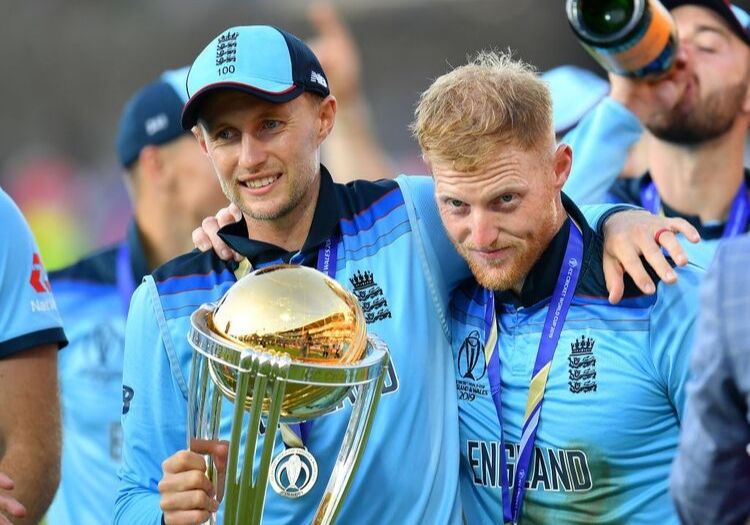
Joe Root and Ben Stokes celebrate World Cup victory
“They will be very rigorous in questioning Colin and Tom on how we’re going to capitalise and ensure that participation increases, and where the new money that is coming in from the television rights is being invested.
“Colin and Tom will be in for a difficult ride. Nobody appears before a select committee and gets an easy ride. They’ll have to be on their mettle and I’m sure they’ll have the relevant responses.
“The key is to make sure we capitalise on the moment, school sport and getting more variations of cricket into more schools is essential. They need to go prepared with some answers to that.”
Cricket in schools. The age-old problem.
A study by the Sutton Trust earlier this year stated that 43 per cent of those playing cricket for England’s men’s side and 35 per cent of the women’s team are privately educated, as compared to just 7 per cent of the national population.
The disparity can be attributed to a number of factors, including the availability of open space, the willingness or lack of financial incentive of staff to organise sessions and their own knowledge of the game, the expense of kit and the perception of cricket as an elitist sport.
Adams, who hails from a working class family in Yorkshire - his mother was a cleaner and father a school caretaker, did not get involved in cricket until his mid-teens for similar reasons.
He tells a familiar tale of kit being inaccessible - for his first game for Drax Cricket Club he tried, and miserably failed, to bleach a pair of dark trousers to turn them into whites - and how he much sooner saw football as the sport applicable to his background.
Adams believes cricket can attract participants from all walks of life, however, and he buys into the ECB’s objective to get young people across the country saying “cricket is a game for me”.
“We have a School Sport Action Plan, which we had already published before I got the job,” he says. “The ECB are very supportive of that.
“I’ve had conversations with Tom (Harrison) and Mike Gatting - who has worked with Lord’s Taverners - and they are extremely excited that this government wants to take that aspiration of sport in schools further.
“Cricket can play a very important part in it, on the basis that you don’t need a very big cricket pitch to play a version of cricket. With the All Stars-type Kwik Cricket approach, you don’t have to have hundreds and thousands of pounds worth of kit. There’s an opportunity now for all schools.
“Some schools are more fortunate than others with space and pitches but it is a game that can easily be done during break time, after school. We’re very keen to have that minimum hour of sport within the curriculum.
“This is something I’m working on very closely with colleagues in the department of education and with No.10.
“Increased sport and team sport on the curriculum is an absolute passion of mine.
“Team games are about fun, enjoyment and increasing confidence as well. We can’t underestimate the importance of team sport. With cricket you’ve got the opportunity to be involved in every aspect of the game.”
Is there still a perception problem when it comes to cricket, The Cricketer asks.
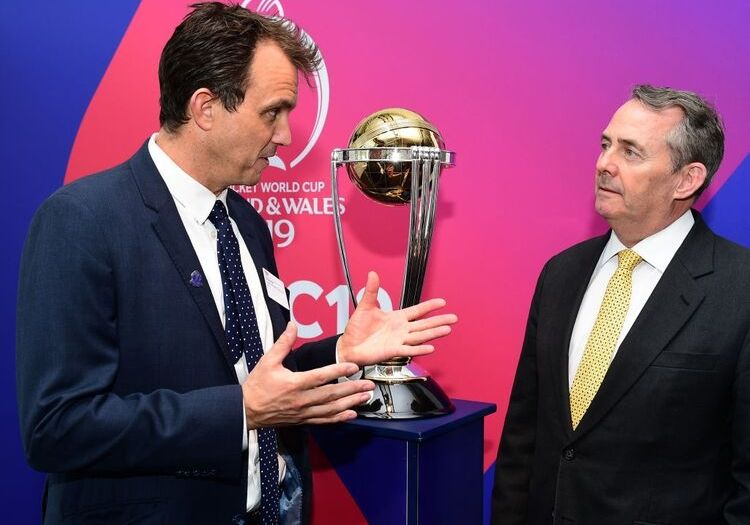
ECB chief executive Tom Harrison, left
“The ECB are incredibly conscious of that, that’s why a lot of the programmes are focusing on a lot of the areas which aren’t necessarily traditional cricket areas,” Adams says.
“The Chance to Shine project is incredible in terms of the number of kids who wouldn’t ordinarily be given access to cricket and now have.
“There is absolute awareness in the cricket world that it needs to change. It was different when I was a kid. I felt more disconnected because it felt like more middle-class kids had the gear and were allied to clubs.
“Things have come on enormously since then.”
Given the turbulence of British politics, there is no guarantee that Adams will enjoy a long run in his current ministerial position, with a general election on the not-so-distant horizon.
While he is in the role, then, he wants to aid the facilitatation of change.
Adams has an existing relationship with Graves - he was appointed to the Yorkshire members’ committee by the ECB chairman, and the pair also played for the same local club - and that could be seen as a help or hindrance.
“It’s our role to work with the governing bodies like the ECB to ensure as many people as possible are participating in sport at every level, and cricket is a key element,” the minister says.
“It has fantastic leadership at the moment, in Colin Graves and Tom Harrison, and we will work closely with them to ensure - whether it’s through schools, the All Stars programme, whatever it takes - to reach children, to get them involved and enjoy the game to the best of our ability.
Sport England injects £9.2million of taxpayer funding into cricket each year, which Adams wants to see properly spent.
“It’s not an insignificant amount of money that goes into these projects and we expect to see delivery in areas where there hasn’t necessarily been access previously,” he says.
“We have a pivotal role to play, as government, in assisting the governing bodies and I think our relationship with the ECB in particular is a very positive one.
“What we’ve just witnessed is an absolutely pivotal moment for cricket and we have the opportunity to use genuine superstars like (Ben) Stokes and (Jofra) Archer. I’m confident the ECB will use their marketing power and the vast sums of money they get from broadcasters for good.”
Nigel Adams is ranked at No.36 on The Cricketer's 2019 Power List: a breakdown of the most influential people in English cricket. The full list is available in the September issue of the magazine, out on Friday. Click here to subscribe

Welcome to www.thecricketer.com - the online home of the world’s oldest cricket magazine. Breaking news, interviews, opinion and cricket goodness from every corner of our beautiful sport, from village green to national arena.