
JAMES COYNE AT TRENT BRIDGE: England scrapped hard with ball and bat on a squally, changeable Nottingham day in which tempers were already beginning to fray between the two teams
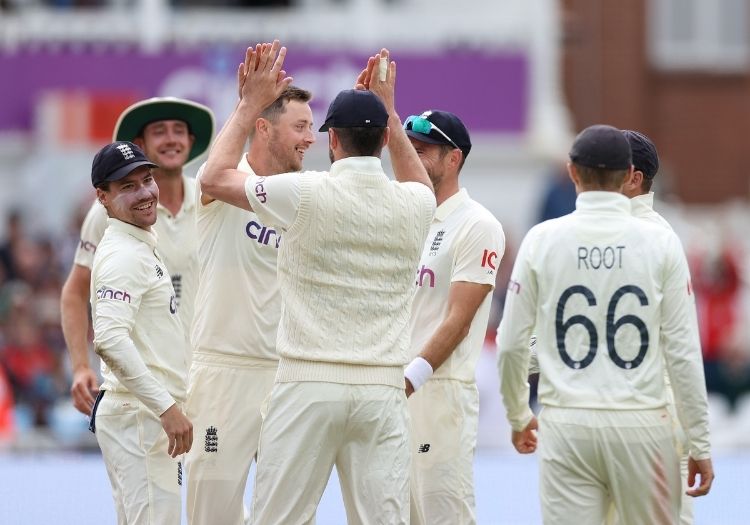
Trent Bridge (third day of five): England 183 & 25-0, India 278 - England trail by 70 runs with 10 second-innings wickets remaining
The ECB’s PR machine is for the most part otherwise engaged, dealing in fetching fluorescent colours rather than statelier white on green – but this cricket didn’t need any gloss putting on it. This was rich, engrossing Test cricket.
Such is the inherent variety of the modern Test game, at least when played in England with a Dukes ball – and with players liberated by modern white-ball approaches – we have a cracker of a first LV= Insurance Test match on our hands here at Trent Bridge.
The only problem is the pesky weather, which could well stand between the teams and a definitive result.
India are still in the box seat, having earned a first-innings advantage of 95. That’s the second-biggest lead India have claimed in a Test in England when batting second – and a reflection of how below-par the home team were on day one, even when taking into account this very fine attack.
But, helped by a new ball which didn’t swing for India today as the previous balls did – not just in this match, but all summer – England’s low-on-confidence openers were able to steer them to 25 without loss by the time rain and gloom brought a premature end to the third day.
Some of the reason for the excitement is England’s own fallibility – both with the bat but also in the field. If they weren’t making so many mistakes, you’d expect them to be well on top at home. They missed two more catches today, a couple of run-out chances, plus some misfields.
Maybe we should be adjusting our expectations, in the sense that the unpredictable movement of the Dukes ball off greenish, indented wickets means more chances are created, and therefore more chances shelved.
If, as the ball alternately takes off or dips, it causes problems for batsmen and wicketkeepers, then it stands to reason that it causes problems for the slips too, who don’t quite know where to stand.
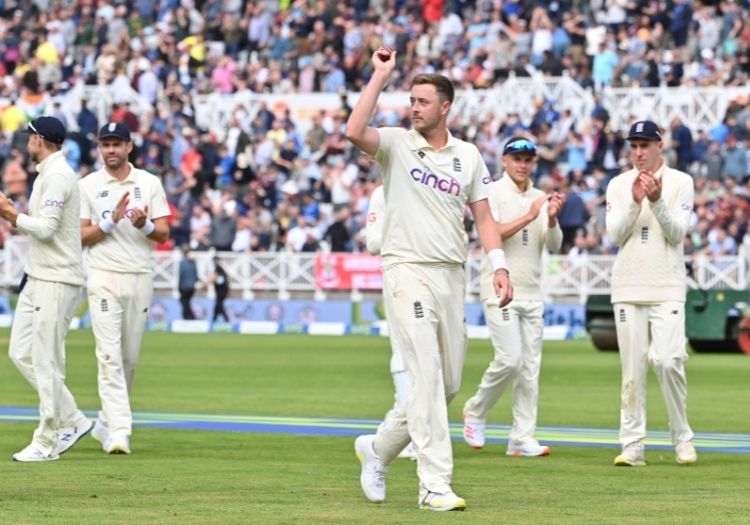
Ollie Robinson took five wickets in just his second Test
Dom Sibley’s drop yesterday off KL Rahul came to him quite low; Joe Root’s off him burst through his high hands. Both should still have been caught. There’s also the possibility that Root’s mind was elsewhere, such are the cares of the job.
This is in keeping with a trend: England’s acceptance of slip-catching chances since the start of 2019 was then at 76 per cent – one of the lowest among the World Test Championship nations.
James Anderson alone has seen 22 catches dropped off his bowling in all positions since the start of 2018, several of which have been off India batsmen this series and the last. Had this been the younger Anderson he would have blown a gasket by now. He himself was not blameless today: he did shelve a catch himself down on the boundary.
If England don’t get on top of the problem, surely they will not win this series, or the Ashes either.
Anderson’s continued potency was needed, because Stuart Broad – on the sixth anniversary of his 8 for 15 against Australia – was finding it tough from the Pavilion End as the breeze buffeted across from the west. He was passed over a couple of times by Root for Ollie Robinson, who looked perfectly happy taking the new ball in his second Test match.
At one stage Broad had resigned himself to bouncing out Ravindra Jadeja, with three men stationed out on the hook.
Rahul was impressive in a position where he struggled three years ago, and his improvement was testament to the enduring orthodoxy in Indian batsmanship, certainly compared to England’s top order now.
Though Rahul gave those chances on 52 and 78, before finally succumbing to Anderson on 84, these was the kind of conditions that you could hardly blame him for nicking one or missing one at any time.
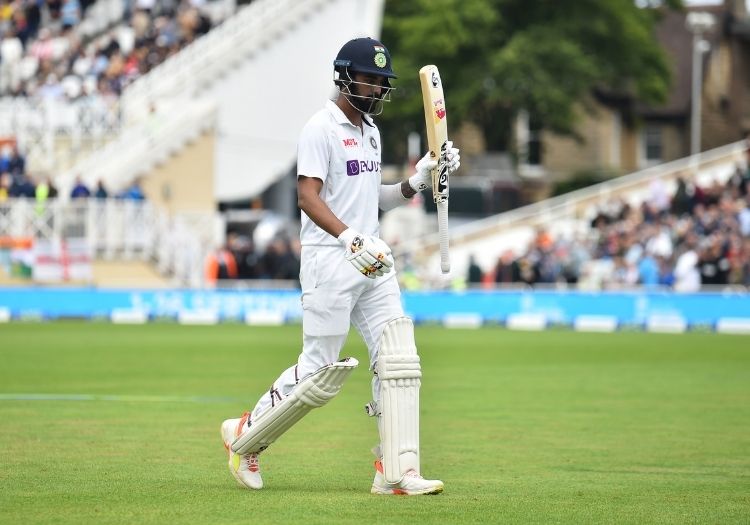
KL Rahul made 84 for India
In fact he almost gave himself out in the morning, when a very small grey cloud deposited its contents over the field. Having already been off almost an hour for rain, the umpires were prepared to let the shower blow through, though Rahul – after a bit of gardening – began walking towards the dressing room trying to force the issue. Cue Michael Gough, and a few of the England players, informing him that it wasn’t his decision to make.
This was the first real indication of the potential for a bit of feistiness between the teams – the kind that just never seems to happen between England and New Zealand, for example.
Jadeja is hewn from a different rock, swinging merrily when given the chance. He decided that India’s best way of growing their lead was to slog as many runs from the old ball as possible, an approach copied by the tailenders beneath him.
What ensued was a period of slogging transported from a bygone age, much to the frustration of Anderson and Robinson, who each found themselves in close quarters with the batsmen at various points.
Marcus Trescothick: England preparation for India Test series "probably not" acceptable
Today Robinson claimed his first five-wicket haul for England – he would have had one in that tarnished debut, were it not for a drop by Broad – and looks inked in to England’s Test plans.
England’s Test cricket is so shaky right now that they could do with a bit of the grizzle which Robinson has in his locker. When Jadeja went after Robinson, but then holed out off him to the sixth ball, Robinson gave him the ‘hush’ finger to the lips gesture. Hardly a heinous crime, I know.
Then again, it’s mighty early in the series for there to be narkiness between the players; remember, it always gets worse as time wears on.
What they can all do without is a repeat of the grim Anderson v Jadeja contretemps of the Trent Bridge Test seven years ago, a pathetic scrap which reached the corridors of the ICC, and goodness knows, maybe even the United Nations. Please, no – not after all Robinson’s embroiled himself in over the past few months.

Welcome to www.thecricketer.com - the online home of the world’s oldest cricket magazine. Breaking news, interviews, opinion and cricket goodness from every corner of our beautiful sport, from village green to national arena.