
NICK FRIEND: In a series as one-sided as this, England’s mantra has long been to play against their own standards, rather than concerning themselves with the level of opposition
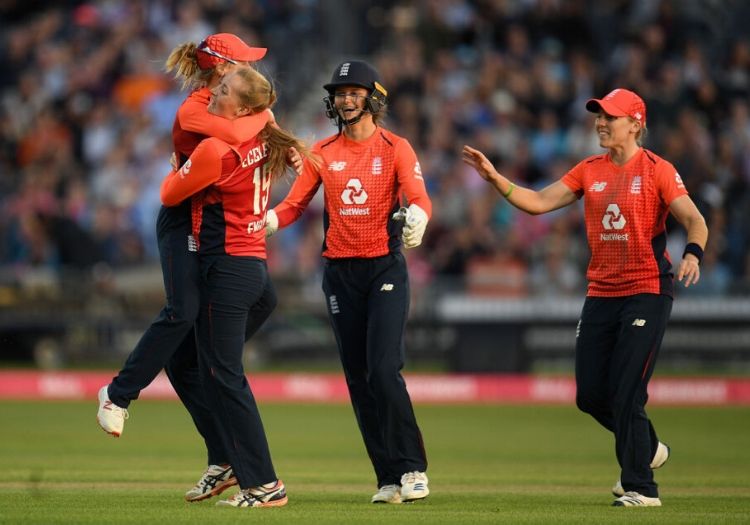

Three games, three exceedingly comfortable wins for England. In truth, it is hard to fully understand what Ali Maiden's charges will have learnt from a series played out on entirely different surfaces to those they will be faced with come next year’s T20 World Cup.
Pakistan provided the gentlest of tests; talented but inconsistent with the ball, committed but ragged in the field, buccaneering but outwitted with the bat.
In a series as one-sided as this, England’s mantra has long been to play against their own standards, rather than concerning themselves with the level of opposition. That, they did here, with plenty of success. With Lisa Keightley present on a watching brief before taking control in the new year, they were professional at all times; when catches went down and balls were fumbled, there were scowls of both encouragement and frustration. Every batsman – whether in the T20Is or ODIs – passed fifty at some stage.
In Bismah Maroof, the nominal hosts out in Malaysia have one of the world’s finest players – a languid left-hander with a sound cricket brain and a quite admirable resilience. It often felt as though she was carrying her side on her shoulders.
Ayesha Zafar, who came in only for the final game of the tour, played – very possibly – the best shot on either side, check-punching Anya Shrubsole through mid-on for a boundary, before Shrubsole would get her own back soon afterwards. Javeria Khan, shifted down to No.3 in this game, rediscovered some of the form she displayed in the ODI series, reaching a tenacious half century.
Yet, Nida Dar, back from a Women’s Big Bash stint with Sydney Thunder, was left out for this last clash, having struggled for runs in the first two instalments.
Sidra Nawaz, therefore, looked Bismah’s best hope of a support act. Busy, technically correct with the bat, her every mannerism was that of a wicketkeeper. With the game already gone and her captain back in the hutch, Nawaz took Mady Villiers for four consecutive boundaries from four of the first five balls she faced.
Iram Javed was another to show her courage at the crease; with the second T20I well and truly beyond her team, she hung around for 35 balls, hitting 4 sixes in the process.
With the ball, Diana Baig’s strong action and natural swing has all the potential to cause problems in more conducive conditions than these, while teenage leg-spinner Syeda Aroob Shah looks a fine prospect. Just what is it about Pakistan and wrist-spinners?
After England struggled to score against her in the first game – Aroob’s T20I debut, they worked out a method against her and stuck to it. Where they had initially looked to sweep and flick against the spin, they began to hit straight.
It was a strategy that paid dividends; England hit 14 sixes across the three games, with 53 fours. In the third match, on a tacky pitch – it had been used the previous day in England’s second win, all five batsmen made starts. Tammy Beaumont looked busy and had a point to prove, having not faced a single ball in England's middle victory as Knight opted to experiment with their options, while Fran Wilson was typically skittish and excitable in her movements around the crease.
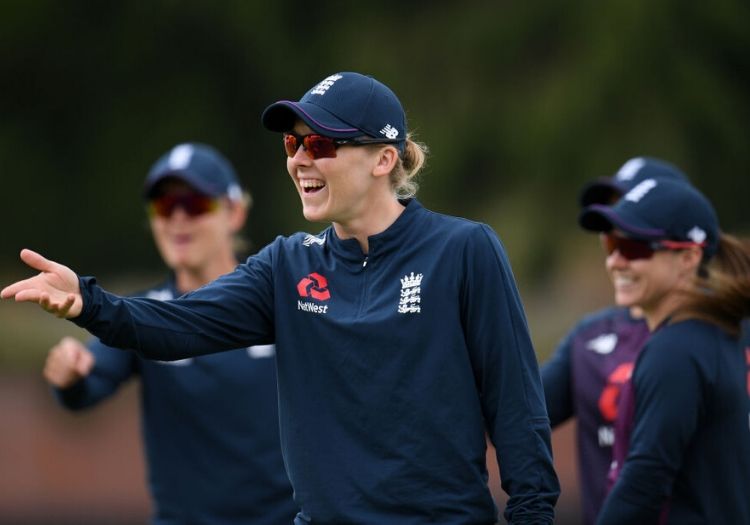
Heather Knight top-scored for England
Both, of course, played in the Big Bash. And it showed. Danni Wyatt and Amy Jones, who enjoyed profitable spells in Australia, have carried all that form into this tour. Nat Sciver, rested for this final encounter, was a teammate of Jones at Perth Scorchers, where they played under Keightley.
If nothing else, their WBBL stints have shown the value of regular cricket. Despite the difference in conditions from country to country, the benefit of a busy winter has been clear.
Even Heather Knight, who was not at her best for Hobart Hurricanes, has looked better for that spell. She top-scored for England with 43, her highest T20I score since 2017 and her second-highest of all time. That, in itself, seems a maddening statistic.
The England captain has only ever passed fifty once in the shortest format, though her malleability has seen her shuffle up and down the batting order. Given the dominance of those above her in the line-up, she can rarely have entered the fray with time on her side in the recent past. She looked in terrific order here, however, hammering three of England’s seven maximums.
She had watched an initially pedestrian start, with Jones and Wyatt finding their way on a two-paced pitch. Jones was far less fluent than in her rapid 89 of 24 hours earlier; she only truly broke free from the shackles once, sweeping and caressing Bismah for three successive boundaries.
England’s first fifty took 41 balls, before they moved to 100 29 deliveries later. The visitors’ ability to score quickly during the middle overs – with a softer ball on slow pitches – has been one of the big positives from this series. Over-reliant on dainty flicks and deflections during the Women’s Ashes, here England were happy to back themselves to clear the ropes.
As well as representing a humbling defeat that saw the end of Mark Robinson’s tenure in charge, the summer also highlighted the disparity in hitting power between England and Australia.
One everlasting memory of that series came in a T20I at Chelmsford; Aussie off-spinner Ashleigh Gardner struck an enormous six that almost flew through the press box window at long-on. Later in the same game, Wyatt danced down the track and replicated Gardner’s stroke. Only, it was easily caught well short of the rope. There was no such tentativeness here, though.
If England leave with any new concerns, they will come in the shape of their seam attack, which struggled for potency. Conditions, of course, have played a considerable role in that regard; although these games have taken place in Malaysia rather than Pakistan, the wickets have had hallmarks of the subcontinent.
Until Villiers’ final over was taken apart by Nawaz for 23, she, Sophie Ecclestone and Sarah Glenn had all conceded their runs at under six runs per over during the series, taking 12 wickets in the process. Both Villiers and Glenn, still in the embryonic phase of their international careers, looked well at home in England colours. Meanwhile, the principal quartet of Katherine Brunt, Kate Cross, Freya Davies and Anya Shrubsole have shared five wickets at a far higher economy rate, though there were three scalps for Nat Sciver who, while mainly in the side for her batting, offers a more than useful all-round option.
That will be an issue for Keightley to consider come the new year when she officially takes charge.
In the meantime, however, after a turbulent summer, an autumn of change and a trio of retirements, a series whitewash means a job well done.
Subscribe to The Cricketer this Christmas and receive a £20 John Lewis voucher or Alastair Cook's autobiography. Claim your free gift here

Welcome to www.thecricketer.com - the online home of the world’s oldest cricket magazine. Breaking news, interviews, opinion and cricket goodness from every corner of our beautiful sport, from village green to national arena.