
XAVIER VOIGT-HILL: Jack Leach may be the England opener with the highest average since the summer of 2012, but the old Surrey partners demonstrated last night that things could be about to change
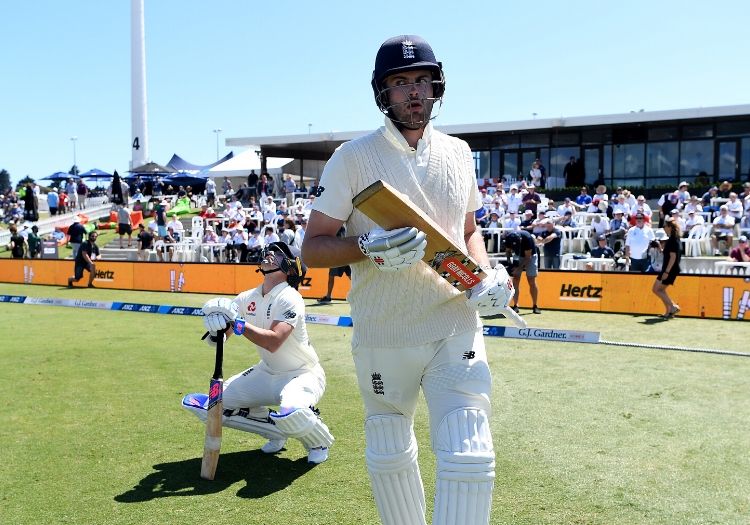

In recent years, England's ever-erratic selection of opening batsmen has become one of the game's most tiresome punchlines. A telling statistic floating around this week illustrates the trend rather succinctly: upon Warwickshire's Dom Sibley making his bow in the Test arena, Rory Burns has now been paired with as many different partners in 13 matches as Andrew Strauss was in his eight years and 97 Tests up top.
In the wake of Strauss calling time on his playing career in 2012 – just days after Kevin Pietersen's "provocative texts" plunged the national setup into one unwelcome farce – no fewer than 19 different players have stepped up for at least one knock against the new ball. Discard Alastair Cook, who finished his career by playing a record 159 consecutive Tests, and the pretenders now average just 26.85.
With Jason Roy swiftly exiled after just once passing 10 in seven attempts at the top of the order during the home summer, Sibley has – like his old Surrey colleague Burns before him – forced his way into contention through sheer volume of runs, demonstrating that finishing a season more than 250 Division One runs clear of the man in second place is a fairly decent way of pleading your case to Ed Smith and his selection panel.
That said, we've been right here countless times before, where a top-order batsman waltzes in with a glittering domestic repertoire, tallies a big score in their first Test or two, and then fizzles out into the abyss as soon as opponents get the hang of them.
For some, this decline is more rapid than others. Take 2016's anointed saviours Keaton Jennings and Haseeb Hameed: one last featured in an England shirt as recently as February's tour of the West Indies despite never quite replicating his Durham form once he crossed the Pennines to Old Trafford; the other is well and truly hoping to salvage his professional career after three seasons of struggle.
Mentioning names like Sam Robson or Adam Lyth or Alex Hales is not designed to fuel the darkest of nightmares, but the English opener currently with the highest post-Strauss average (46.50) in the role – Cook included – is none other than Jack Leach, a nightwatchman whose most notable contribution with the bat remains that 1 not out from 17 balls at Headingley.
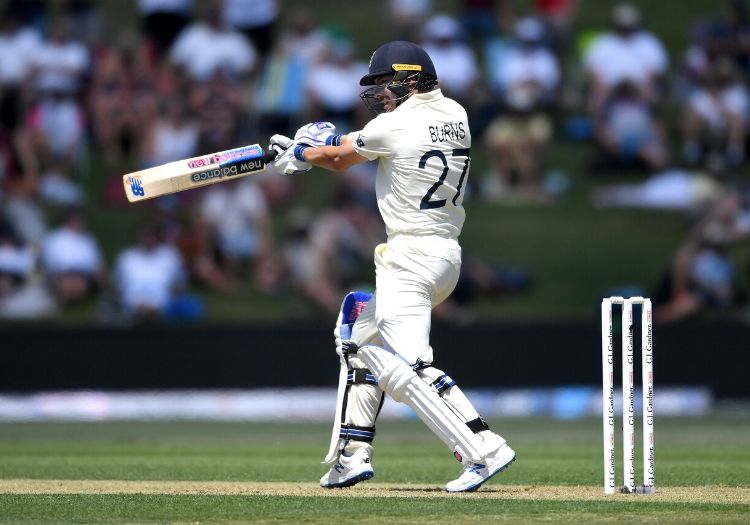
Rory Burns has quickly become England's senior opener after coming into the side to replace the retiring Sir Alastair Cook
Yet, for 90-something enthralling minutes last night, as England's latest hopes kicked off a Test series in New Zealand by putting 50 on the scoreboard with a zero in the wickets column rather than the unceremonious nine of last March, it began to feel as if a switch might have just been flicked, sowing the first seeds of an opening partnership that could just possibly dare to be serviceable for a bit more than the next three weeks.
It's not that either Burns or Sibley particularly look the part – the last thing you could ever accuse them of is going about their work with Vincely elegance or Straussish sophistication, what with Sibley's flailing elbow and Burns' twitching head – but, like a phoenix rising from a drawn Ashes, there was enough on show over 20-odd overs in Mount Maunganui to suggest there's more innate promise in this nascent partnership than England have been able to boast since the bygone era of two left-handers so prolific that they now hold knighthoods.
Sibley could barely have made a bolder first impression, reaching the middle with a determined stride and, as The Cricketer's columnist Andrew Samson pointed out, in clipping his very first ball in Test cricket to the midwicket boundary he secured his place in perpetuity alongside the illustrious company of Gower, Stewart and Lamb. An hour or so later – after firmly passing on runs against all but one ball heading even as far off as to be considered Umpire's Call, as Wisden illustrated – his innings had seen England to only their third first-innings opening stand of 50 or more in the last five winters.
As the County Championship is squeezed further towards the fringes of the domestic calendar, Burns and Sibley have a golden opportunity to demonstrate its worth on the most prestigious stage of all. These are batsmen who have not only delivered all that could feasibly be asked of them on county duty, but they have found ways to stay at the crease and (unfashionably) get the job done despite seaming tracks, inclement weather and the alluring distractions of the white-ball circus.
At county level, both have played more than twice as many innings in first-class games as they have in List A and T20 combined, building healthy portfolios as all-too-rare exponents of unerring patience and pragmatism as being fundamental to run-scoring. This is in stark contrast to the likes of longtime county teammate Roy, whose belligerence in the short-form game is yet to quite translate into anything of substance against the nagging movement of the red ball.
Sibley in particular appears to have a penchant for the most challenging conditions, averaging above 56 in his career during the gruesome months of March, April and September, and making a name real name for himself by compiling seven centuries in the seven innings he played to end 2018 and start 2019.
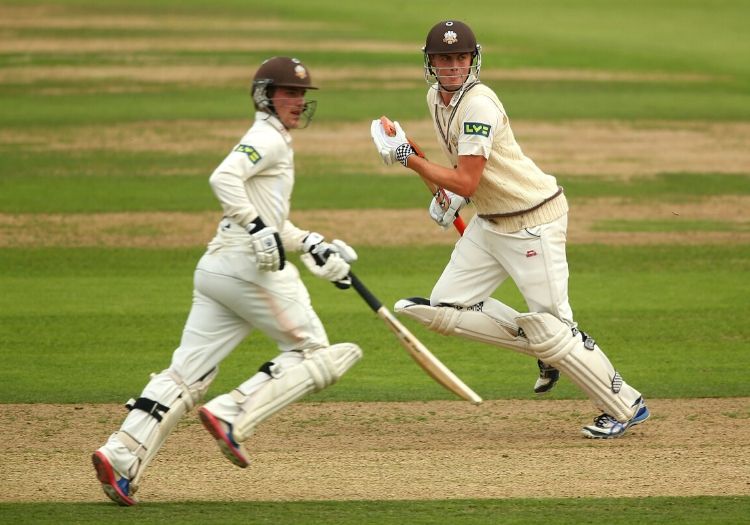
Opening with Burns in 2013, Dom Sibley scored 242 in just his third first-class game, but left Surrey four years later after failing to hold a regular place in the side
The wealth of talent in The Oval pecking order was such that Sibley realistically had no choice but to move away – not only did Burns exist, but at various stages he had to contend with obstacles like Graeme Smith, Mark Stoneman, Zafar Ansari and Scott Borthwick routinely figuring in the top three.
Ultimately this meant Sibley only joined Burns up top in 17 County Championship innings between his 2013 debut and 2017 departure for pastures new, despite the duo enjoying a fruitful record in tandem. On average, their stands would end after 21 overs had yielded 55.94 runs, and that last night's first attempt at Test level differed by merely four runs and four balls provoked such vigorous déjà vu that it's hard to imagine that Sibley wasn't acutely aware of it as he fatally pushed a Colin de Grandhomme fourth-stump wobbler towards the diving mitts of first slip.
Certainly, it must be emphasised that a solitary 63-ball haul of 22 runs scored exclusively through the legside in a picturesque batting environment is not necessarily the most surefire way to determine whether Sibley and his partnership with Burns can go on to set the batting foundations for new coach Chris Silverwood, whose evident mission is to win back the Ashes urn in two winters' time.
But, after never-ending turmoil and a string of haphazard combinations at the top of the order since they last led the world in the oldest form of the game, for once England appear to have stumbled into something that simultaneously makes sense on paper and bears the signs of promise to actually deliver.
Subscribe to The Cricketer this Christmas and receive a £20 John Lewis voucher or Alastair Cook's autobiography. Claim your free gift here

Welcome to www.thecricketer.com - the online home of the world’s oldest cricket magazine. Breaking news, interviews, opinion and cricket goodness from every corner of our beautiful sport, from village green to national arena.