
The Cricketer looks at where the three-match ODI series in Amstelveen could be won and lost...
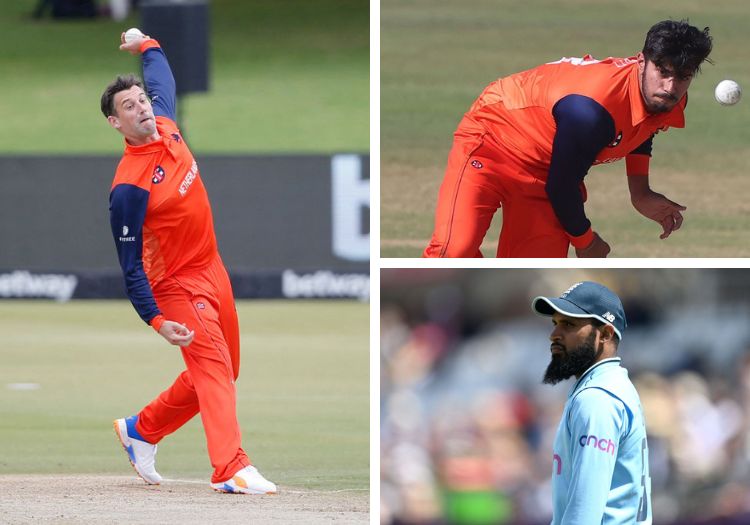

Back in November, prior to injury ending his T20 World Cup campaign, Roy had seemingly found his feet against left-arm spin.
A match-winning 61 from 38 balls against Bangladesh was punctuated by getting the better of Nasum Ahmed and Shakib Al Hasan to secure an easy win for England in Abu Dhabi.
Indeed, before that innings Roy had got out 19 times to left-arm spinners in international white-ball cricket. It seemed as though a constant weakness had been overcome.
That was reaffirmed by a CricViz stat from during that World Cup, in which Roy had played a false shot just 12 per cent of the time in T20s during 2021.
Central to his improvement was working with reserve Liam Dawson in the nets during that World Cup. There was some irony, therefore, when Dawson took the new ball in the recent T20 Blast match between Surrey and Hampshire and bowled Roy in the first over.
It remains to be seen whether Netherlands opt to take the plunge and deploy one of their most reliable bowlers up top, but it is clearly a match-up worth exploring if nothing else to spook one of England's premier batters.
The challenge of taking the game to Roy will certainly be an attractive one to Seelaar, who prefers to operate as a neat and tidy spinner in the middle overs rather than a strike-bowler with the new ball.
He's taken one wicket in his last 11 ODIs - Colin de Grandhomme top-edged one through to Scott Edwards - and just five since June 2019. But white-ball cricket is as much about match-ups as it is previous records and reputations.
Speaking of which, Seelaar is the only survivor from both of the T20 World Cup victories over England in 2009 and 2014 and in preparation for more important tasks later in the year he would love to land another.
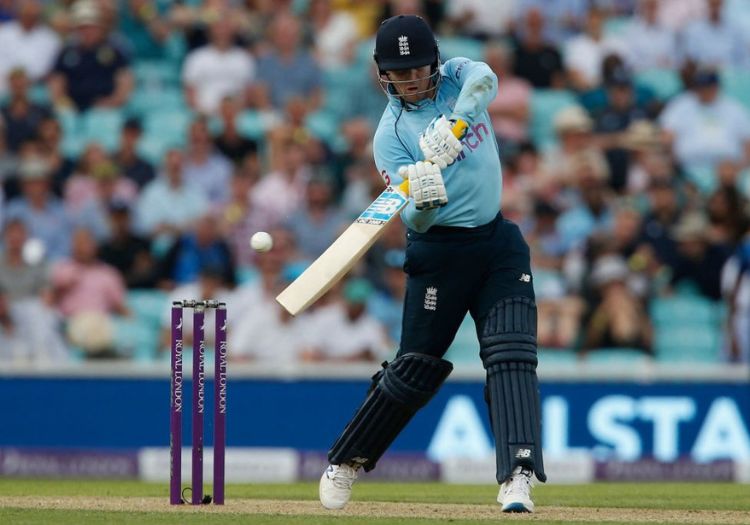
Jason Roy will lead the England batting (Ian Kingston/AFP/Getty Images)
Took his time to get back into the swing of things, struggling against New Zealand, but O'Dowd's form returned against West Indies with two fifties and a 39 across the series.
That run of form provides substance to an ODI record which sees his average a touch below 45 - largely formed in matches against Zimbabwe, Scotland and Ireland.
The New Zealander navigated his way onto the Dutch team via spells at Reading and Nottinghamshire seconds before his international debut in 2015. He has an admirable record, not to mention a T20 century, mostly against nations on the second rung of the ladder.
While Willey leads a second-string England attack, he cannot be underestimated or simply dismissed as below par. He remains the nearly-man of England white-ball cricket, missing the 2019 World Cup and going to the T20 equivalent last year only to not play a game.
His last two home series have been fruitful. Willey was player of the series against Ireland and claimed nine wickets in the Sri Lanka ODIs last summer.
He was part of the Multan Sultans side that reached the PSL final and got a handful of outings in the Indian Premier League. Upon returning to his county for the T20 Blast, he's been more effective as a top-order pinch-hitter but he's likely to have more responsibility in the other powerplay in Amstelveen.
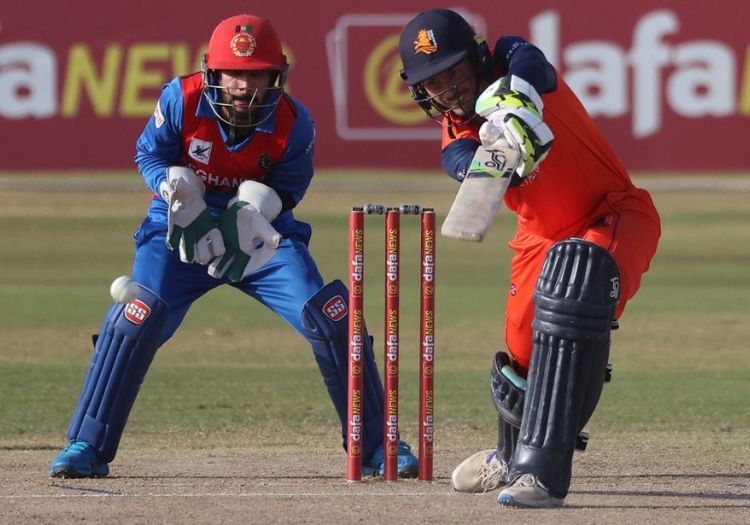
Scott Edwards has his work cut out in the middle overs (Karim Jafaar/Getty Images)
Though the questions over a possible Test return won't go away, there is no doubting who has been England's best spinner across formats since the retirement of Graeme Swann.
Eoin Morgan's side hasn't always been prolific in the powerplay so there may be a lot of onus on Rashid to both keep things tight and control the run rate - skills he is both adept at.
He is the seventh-highest wicket-taker in ODI history between the 15th and 40th overs on 116, ahead of the likes of Abdul Razzaq and Ravichandran Ashwin
A career economy rate below a run a ball comes thanks to his variations - the leg-spinner, the wrong'un or the googly - which deceive batters and ensure England can squeeze opponents into mistakes.
After shuffling up and down the order in ODI cricket, Edwards is back down at No.5 (he batted at No.3 in the second ODI against West Indies to help build on a century opening stand).
He was another who struggled against the Kiwis but found a bit of form against the Windies, hitting a fifth ODI fifty in that second match in Amstelveen.
The Australian will throw more caution to the window than most of his teammates but he'll need to improve on an average at No.5 of just 15.28. Indeed, it mightn't take much for Netherlands to move Edwards back up the line-up if their top-order fails.
Facing the likes of Rashid will be a new challenge for Edwards, who has made a successful transition from an electrician into an international cricketer.
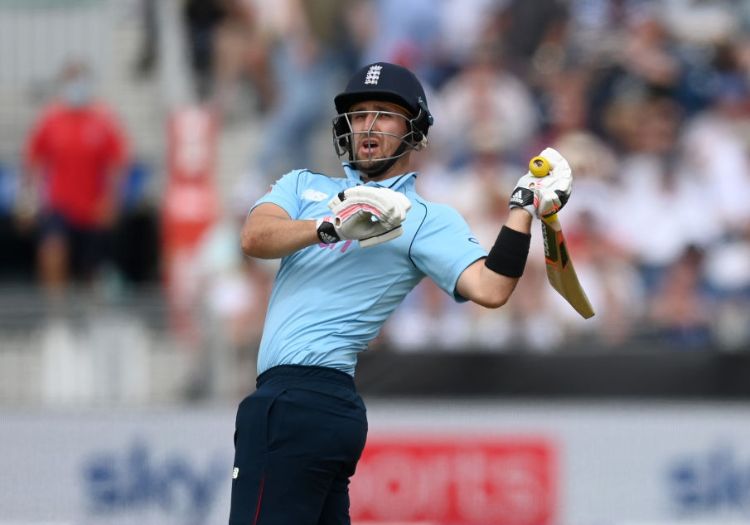
Liam Livingstone's ODI career hasn't yet gone to plan (Gareth Copley/Getty Images)
A 19-year-old spinner is a dozen matches into his international career but has already shown signs of being among a new exciting batch of Dutch youngsters.
As Ryan ten Doeschate and Ben Cooper exit stage left, the new era is in the hands of Dutt, fellow-teen Vikramjit Singh and Bas de Leede.
And things have started well. Dutt's success was among the main takeaways from the Windies series, as he dismissed Nicholas Pooran in all three matches.
He'll be looking to at least partly repeat the trick up against another batter who will go hard at the ball. Regardless of his success, it will undoubtedly be a key learning experience
Livingstone was England's white-ball player of the summer in 2021, unleashing the ball to all parts. Perversely, he's only played three ODIs, leaving his fireworks for the T20s.
With the World Cup in India on the horizon and with the berth for the third spinner alongside Rashid and Moeen Ali available, this summer is a good chance for Livingstone to prove he can be a reliable scorer in the 50-over format, while still being a wreaking ball in the second half of the innings.

Welcome to www.thecricketer.com - the online home of the world’s oldest cricket magazine. Breaking news, interviews, opinion and cricket goodness from every corner of our beautiful sport, from village green to national arena.