
NICK FRIEND looks back on the third day of the deciding Test between England and West Indies

As part of a long read during lockdown on the art of wicketkeeping, I spoke to 17 different glovemen. Every single one reported back with the same information. The toughest challenge? Wobble.
Shane Dowrich is far from the first international wicketkeeper to arrive on these shores and struggle. MS Dhoni’s experiences spring to mind immediately – one of the finest keepers of his generation, but utterly flummoxed whenever he toured.
Perhaps the most difficult aspect is this: there is no rhyme nor reason, no logic nor warning. If the consequences of wobble are straightforward, then its premise is more confusing. In effect, it is the random movement of the ball – up or down, left or right – between the point of passing the bat and reaching the keeper.
“The problem is that it’s not in a trackable trajectory,” explained Michael Richardson, the former Durham wicketkeeper. “Because it’s happening so close to you, it feels like there’s no indication of which way it’s going to go. It could hover up at you, it could dip, it could move left or right.”
“If a ball’s wobbling and you tense, you can’t go with the ball with your arms and your hands will be quite hard,” Ben Foakes added.
Worcestershire wicketkeeper Ben Cox said: “Typically, as soon as a wicketkeeper has the slightest inkling that the ball has stopped rotating in the air and is about to wobble, the first thing you do is panic. At that point, you’re already in crisis because you’ve now tensed up. What happens as a result of that is that you come out of posture so you’re not in a position to be able to let your hands do the hard work.”
This is why it feels slightly unjust to criticise Dowrich – or even to pass comment. For those whose only previous recollection of him is a poor personal tour in 2017, then it is more understandable. Yet, in 2018 and 2019, he averaged 36.46 and 49.20 with the bat.
Overall, his wicketkeeping seems less an issue of actual glovework and more a specific problem with wobble, a curious movement of the ball unique to England.
On that last trip, he sought the advice of James Foster, one of the very best, to help him with his posture.
He is a much improved cricketer to the player of three years ago. Don't let his struggle against the wobble fool you – just as it has fooled so many before.
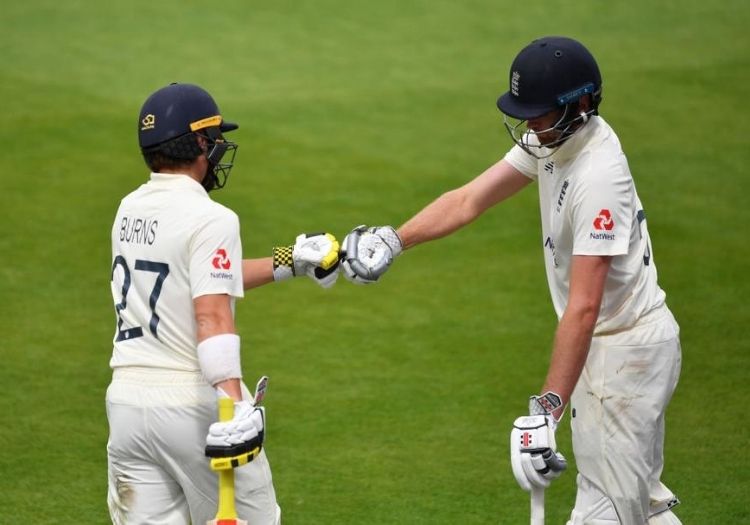
Rory Burns made 90 before he was caught by Joshua da Silva
Before today, England’s last 100-run opening stand in a home Test came back in 2016 – between Alastair Cook and Alex Hales. Since then, Cook has retired, Hales been left in the international wilderness and 25 men have made their debuts for England, with eight of them opening the batting.
And now, a new partnership: Dom Sibley and Rory Burns. In every way, it is a pairing that remains in its embryonic stage: at times, it has felt one-paced and cumbersome. On days like this, with England looking to press the game on amid the threat of a heinous Monday forecast, it seemed limited to the point almost of feeling counterintuitive. Against off-spin, both struggled to tick the scoring along – at least until Burns began to unfurl his slog-sweep. That particular difference between the pair highlighted the value in possessing a release shot.
Yet, after so many combinations and such a long, meandering search, England do appear at long last to have settled upon some staying power. At present, it remains a work in progress. Burns – five years and almost twice the first-class games – understandably looks closer to the happy medium that England will be looking for, somewhere between stoicism and fluency.
And for Sibley’s limitations, his record at this point in his Test career is not to be sniffed at: two centuries and a pair of fifties in just nine matches. For a man still learning his trade and looking to expand his repertoire, he has shown himself to have an abundance of raw materials – not least a sheer love of batting.
There remains a certain fascination in watching him at the crease: in this era of white-ball stroke-play, it feels like something of a throwback to watch a batsman with total respect for his own constraints. Not once has he displayed any desperation to outdo his partner nor shown any rush of blood. He has been content to do as he does, comfortable in his quirks.
England – and Sibley – will want him to develop his run-scoring options but, in a series where ball has dominated bat for the most part, the ending of a four-year hoodoo must be taken at face value as progress.
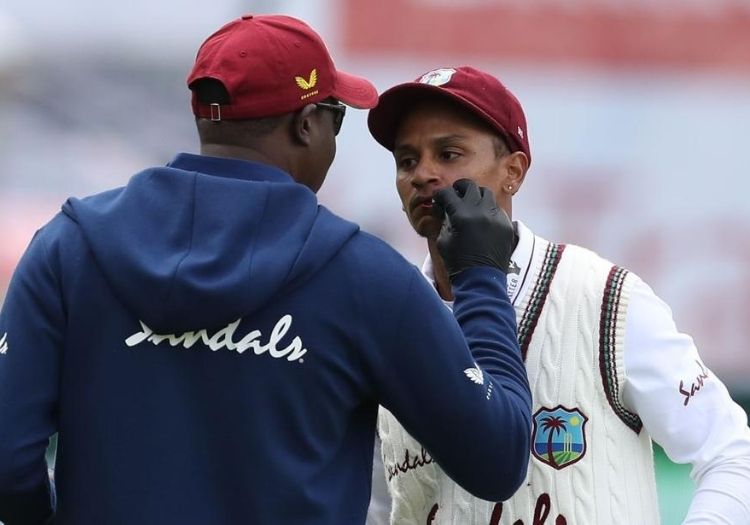
Shane Dowrich left the field after being struck above the lip by a delivery from Shannon Gabriel that burst through his gloves
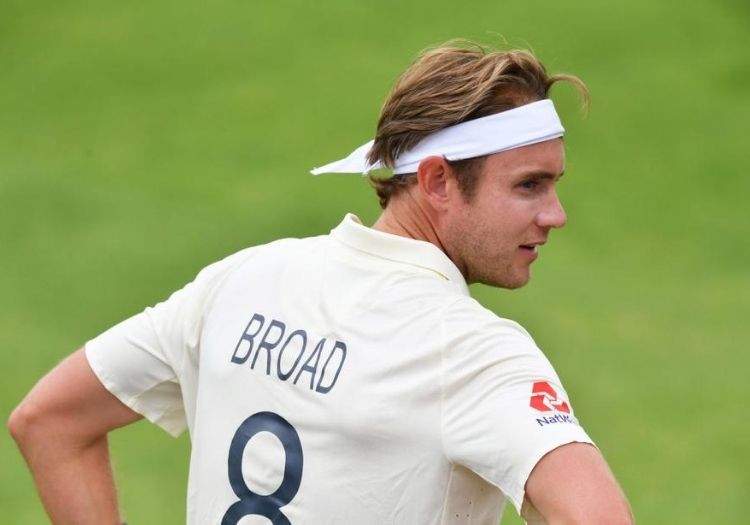
Despite being left out for the first Test at the Ageas Bowl, no one has taken more wickets in the series than Stuart Broad. Drink it in. He felt he had a point to make. Point made.
Today was a case of prime Broad. England, for the first hour of the day, were lacklustre and careless. Chris Woakes took a wicket with a no ball – just his second in Test cricket, apparently. Dowrich, despite a weakness against the short ball, had made up his mind to take it on.
Enter Broad. Overnight, he had figures of 2 for 17. By the time he had finished with West Indies’ lower order, he had taken 6 for 31 – 4 for 14 in one spell of knee-pumping. Jason Holder and Rahkeem Cornwall fell to an almost identical dismissal, both trapped in front by a trademark nip-backer, while Kemar Roach edged an out-swinger to slip.
And then in the day's dying embers: sun setting, shadows stretching, West Indies tiring. Broad flying. Since taking his first wicket of the series, he has taken 14 for 83 in 36 overs.
499 Test wickets. And counting…
In ordinary circumstances, this game would be all but done. Three days down, two to go. In an ideal world, Joe Root would still be batting come tomorrow afternoon. Instead, they face a race against time.
If you take the Met Office at its word, then make other plans for Monday – indoors, I’d advise. Heavy rain with a chance of thunder hardly sounds like cricket weather.
It means that England effectively have three sessions – a game that would otherwise meander towards an inevitable victory could well reach a fascinating conclusion on Tuesday.

Welcome to www.thecricketer.com - the online home of the world’s oldest cricket magazine. Breaking news, interviews, opinion and cricket goodness from every corner of our beautiful sport, from village green to national arena.