
Analyst Nathan Leamon provided assistance direct from the dressing room during the South Africa T20s and the skipper is happy for the help
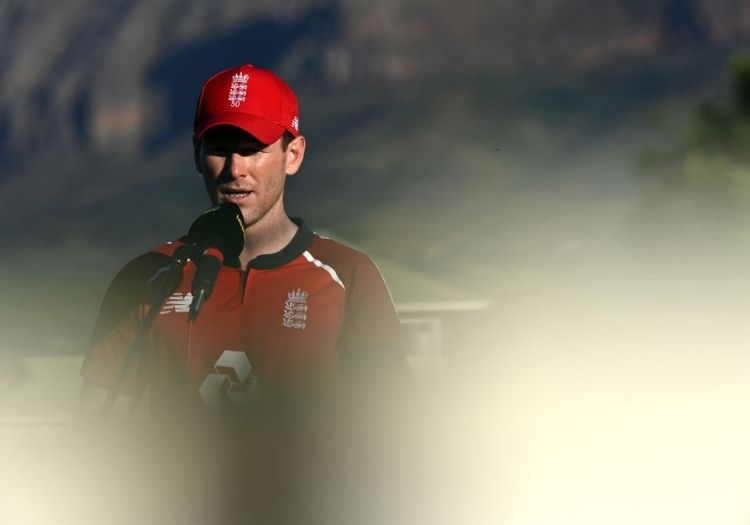

Eoin Morgan welcomes any future help from analysts even if it dilutes his responsibility as captain.
The England skipper took on data-driven advice from the dressing room, led by Nathan Leamon, during the South Africa T20s.
Leamon, who adopted a similar strategy with Multan Sultans during the Pakistan Super League, used a combination of letters and numbers to provide advice to the on-field leadership group.
England ended-up strolling to a 3-0 series win after three dominant run-chases.
Morgan is receptive to the instructions - he acted upon three of them in the first T20, and a handful thereafter - and believes the innovation will split captains into two distinct camps.
"Captains are different," Morgan said ahead of the start of the three-match ODI series against The Proteas on Friday (November 4). "Some enjoy the title, the power and the accolades that go with it and you have others who continue to be push and go on to learn for the benefit of the team.
"This is a system that we're going to use to help the leaders within the side to take a little bit of the emotion and decision-making on the field and compare it to the hard data that is continuing to feed data into us on the field.

Nathan Leamon will continue to provide advice from the dressing room
"For me captaincy has changed a little bit. As leaders within a group, you continue to change with trends of younger players coming through, trends of the game and what is needed at that moment in time."
Use of the signals was cleared with the ICC and the match referee, but they were not unanimously accepted. Former England captain Michael Vaughan questioned the tactic and insisted he would not make use of the information if in the same position.
"There is a place for data and statistical analysis but it is not during the match," he wrote for The Daily Telegraph.
Morgan, also captain of Kolkata Knight Riders, added: [It is] 100 per cent in the spirit of the game. There is nothing untoward about it. It is about maximising the information that we're taking in and measuring it against things, recommendations, the data and what is going on.
"We're definitely going to continue with it and give it enough sample size to see if it makes a difference or improves our decision-making on the field or our performance, or tells us more about how we understand information that we're taking in during a game."
Gift a subscription to The Cricketer this Christmas and choose your free gift (a £20 John Lewis gift card or copy of Bob Willis: A Cricketer & A Gentleman). Subscribe here

Welcome to www.thecricketer.com - the online home of the world’s oldest cricket magazine. Breaking news, interviews, opinion and cricket goodness from every corner of our beautiful sport, from village green to national arena.