
NICK HOWSON: The hosts continue their confusing selection policy and an 11-year wait for a Test return ends at The Ageas Bowl

Forty UK No.1 singles for X-Factor artists, 16 iPhones, four UK Prime Ministers, and two Popes have come and gone since Fawad Alam last made a Test appearance. It had been a rather forgettable 3,911 days, 128 months, or 10-and-a-half years.
Misbah-ul-Haq finally caved to outside pressure from the Pakistan public and recalled the 34-year-old, more than five years after his last international outing in any form. That came against Bangladesh in Dhaka in 2015. He made just four.
His first-class form in the Quaid-a-Azam trophy in recent years has been impossible to ignore. He averages 70.45 in his last 26 innings, with seven centuries. Albeit on vastly different surfaces and amid alternative conditions to the ones he will encounter in England, it is still a notable record.
Eighty-eight Pakistan Tests have passed since Alam last pulled on a shirt for an international red-ball match. He sits eighth on the all-time list. Gareth Batty is top of the table, with 142 matches coming between outings against Bangladesh in 2005 and then 2016. You can guess the rest of the top 23 via our quiz.
Following a long route back into the international pressure-cooker, Alam looked all at sea. Maybe he is now a product of an environment certainly a rung below this level. His side-on stance at the crease was rather peculiar but his spell was ended after four scoreless deliveries, as Chris Woakes trapped him lbw, a decision finally confirmed after a DRS review.
Welcome back, Fawad.
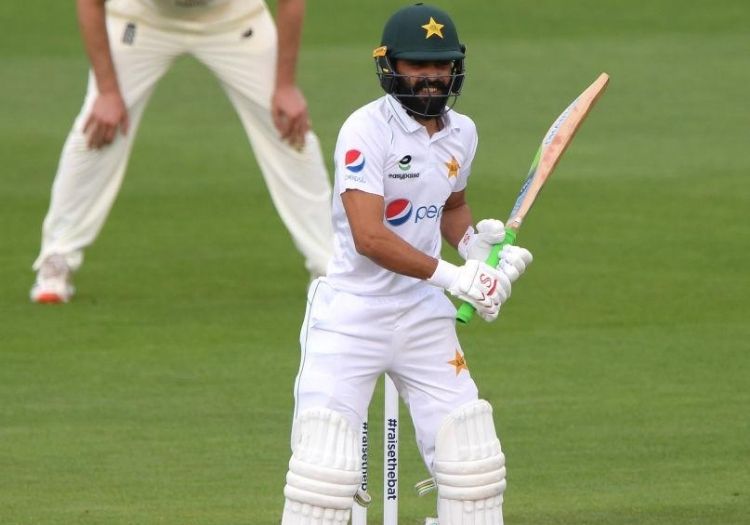
Fawad Alam's Test return lasted four balls
England have made no secret of wanting to build a solid battery of quicks, with a view to unleashing them during the 2021-22 Ashes series, with pace seen as the key to regaining the urn. Australia have been handed their tactical blueprint for the tour in 15 months time.
To assist in that aim - ahead of heading to the sub-continent this winter where seamers will be on the periphery - England have opted for a rotation policy this summer. James Anderson and Stuart Broad have been moved in and out, something that has been virtually unheard of at home.
For this Test, however, their selection has gone against their planning for the Ashes. Anderson and Broad have been joined by Sam Curran and Chris Woakes. There isn't a rapid seamer in sight, with Jofra Archer and Mark Wood not selected. Olly Stone hasn't featured this summer and is now out of the red-ball season with a side strain.
"As a captain, I would want a bit more firepower in my attack," former England captain Mike Atherton told Sky Sports. "There is no right call. Sometimes another captain sees it a completely different way and you can win with all kinds of combinations in your team. In cricket, there is more one way to skin a cat."
Nasser Hussain added: "Do you just go horses for courses, we'll win under lights at The Ageas Bowl, and worry about the future when the future happens?"
Perhaps the nature of having six Tests (which you want to win) in seven weeks, doesn't always allow you to look to the long term, with rotation necessary to ensure you don't ruin players. But having made it abundantly clear over what the plan is going forward, to seemingly abandon that after four completed Tests is difficult to digest.
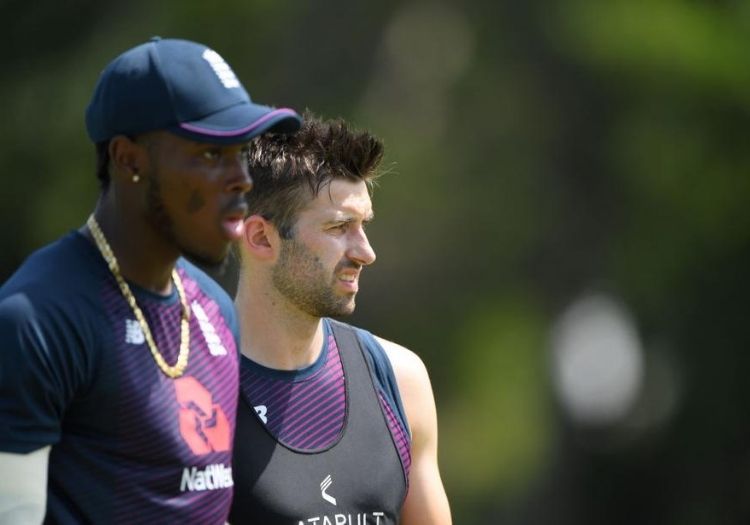
Jofra Archer and Mark Wood have a watching brief this week
The ECB cannot be criticised for the bio-secure environment they have developed at Emirates Old Trafford and The Ageas Bowl in order to get international cricket on this summer. While other sports have been slow to resume, the operation in Manchester and Southampton has been an example to the world that sport at this level is possible, amid the current crisis.
The intense nature of the schedule means there is little downtime between matches. And if during those breaks players are not limited to their hotel rooms, they are travelling between venues.
With just days between Tests, you wonder how much time players have had to properly work on idiosyncrasies in their technique. If you factor in rest time and media commitments, there has been scant time available to make any tangible changes. We have seen players, tinker while in the middle, with varying degrees of success, but there won't have been much of an opportunity for some focused training.
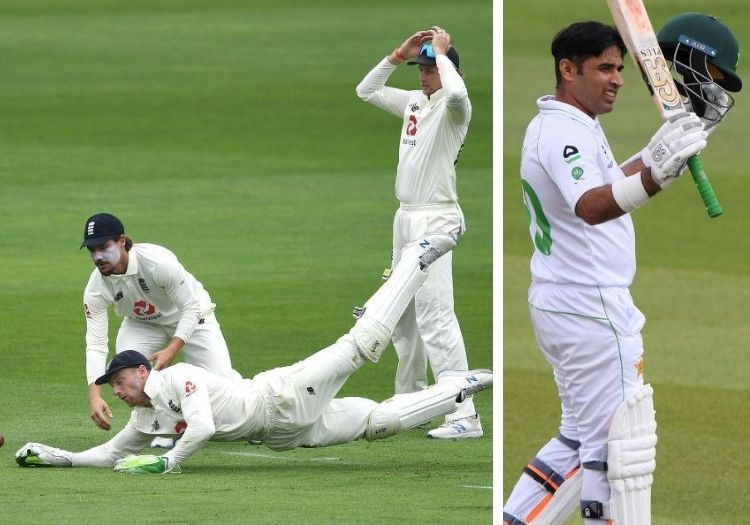
England could certainly do with some work on their catching after two went down in the first hour - bringing their total for the summer to 15. Both were shelled in the slip cordon, with opening pair Dom Sibley and Rory Burns the guilty parties, as Abid Ali was given two additional lives.
According to CricViz, only Bangladesh have a poorer success rate for slip catches since the start of 2018. England only gather 73 per cent of edges, with Pakistan top of the tree on 89 per cent.
Though recent history tells us that England are left wanting when batsmen get an edge on the ball, their problems in this match can be found in their limited preparation. Ben Stokes' absence means a new-look to the slip cordon, with Joe Root accompanied by Burns and then Sibley.
Never are multiple players from the same team closer on the field of play than when they're in the slips. Being comfortable with each other, being aware of trigger movements and space is key. Much like having a new dance partner, it takes time to adapt.
The manner in which Sibley leaped across Burns was a clear indication that the trio can have had little or no time together in that formation. It isn't intended to be scathing criticism, just a reality of the time available between Tests to develop a relationship.
I've always believed that the quality of a team's preparation can be seen by their performance in the field. England's Test form has been inconsistent in recent years, and yet so has their catching.
Since the start of 2018, England only catch 73% of the slip catching chances that come their way. The only team in the world with a worse record is Bangladesh. #ENGvPAK pic.twitter.com/nfHZv73Irw
— The CricViz Analyst (@cricvizanalyst) August 13, 2020
I recall during one school match, which was an opportunity for a laugh and a joke away from the seriousness of the village game, I raised my bat after thrashing a four behind square. It was light-hearted, but an obnoxious move all the same. I had taken focus off my innings, and I was punished soon afterward.
Abid Ali engaged in an unnecessary celebration of his own as he reached fifty after tea, as he edged James Anderson through the slip cordon. The 32-year-old, who has enjoyed a decent start to Test cricket, raised his bat but also removed his helmet upon reaching the landmark. Perhaps it was due to the three lives England had given him, but it was a rather absurd reaction.
Celebrations for three-figure scores are generally accompanied by the removal of the helmet. Some batsmen prefer to barely acknowledge the landmark, so not to lose their flow during a high-pressure situation.
Eleven balls later after overzealously marking the half-century, he nicked off as Sam Curran got one to lift and catch the shoulder of the bat, and Burns grabbed at his second opportunity to dismiss the opener.
In many ways, it was just as well he made the most of his celebration.
For unrivalled coverage of the county season, subscribe to The Cricketer and receive four issues for £15

Welcome to www.thecricketer.com - the online home of the world’s oldest cricket magazine. Breaking news, interviews, opinion and cricket goodness from every corner of our beautiful sport, from village green to national arena.