
NICK FRIEND: When Taunton last hosted a women's Test, rain intervened as four days' cricket meandered towards the inevitable. There have been two more enthralling draws since, but how England's new era would love to start life with a win
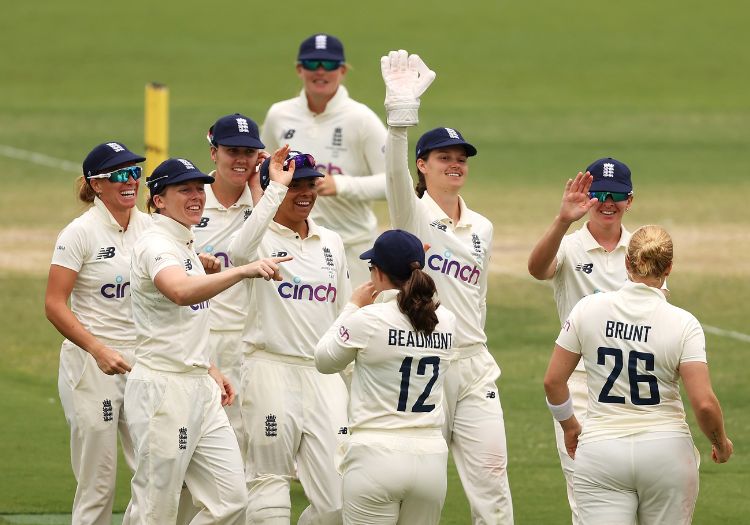
For the last 14 years, England's all too occasional opportunities to play Test cricket have featured at least one of Katherine Brunt and Anya Shrubsole.
So, while it feels difficult to talk about new eras in the context of a format so rarely played in the women's game, this most certainly is one. Because of their combined excellence, there has – until now – never been the need to think about what comes next, only that they would open the bowling together and all else would take shape from there.
But Brunt's announcement, following Shrubsole's a couple of months earlier, has opened the door for a host of others: one senses that auditions will become more widely spread, that England will be keen to see how several of the next generation fare before coming down on a preferred partnership. As Tammy Beaumont put it to The Cricketer: "It's part and parcel of having two of the best-ever bowlers having played for so long that a few players – if they'd been part of a different generation – would have had opportunities already."
Emily Arlott looked well-placed, having almost debuted this time last year, only to come down with Covid. Issy Wong, still a teenager until a month ago, is a two-time travelling reserve on the strength of England's excitement. Freya Davies has seemingly been around for ages but is primed for a Test debut. Lauren Bell has long been considered the next cab off the rank, with an inswinger not dissimilar to Shrubsole's and the height to ask its own questions.
Whoever is given the nod will join Kate Cross, nominally the senior seamer but also, by her own admission, still a Test novice on account of five Tests in eight years. Needless to say, that figure would be significantly higher but for the paucity of opportunities.
Greg Barclay's comments at the start of June to Test Match Special – roundly rejected ever since – won't be far from minds in Taunton once play gets underway, with all eyes once again on the format's future. Especially in England's last two outings – draws against India and Australia – the value of adding a Test to the multiformat series has shone through, providing extra context to the game but also increasing its importance by making it the series' central points-builder.
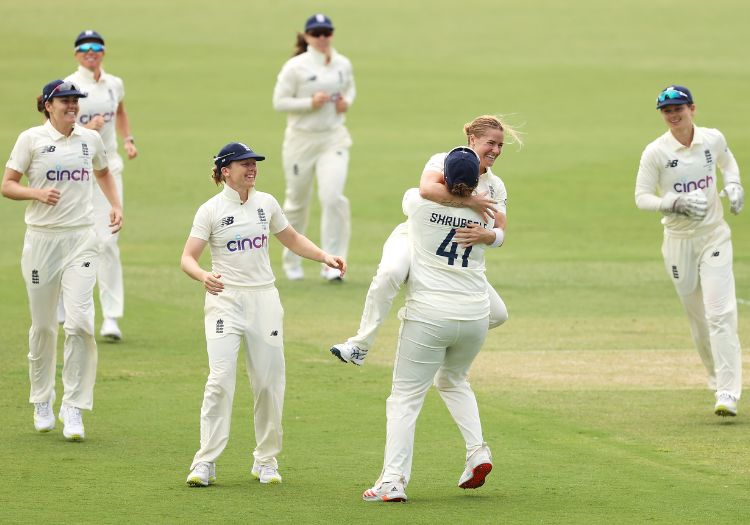
England will be without both Katherine Brunt and Anya Shrubsole (Mark Kolbe/Getty Images)
This one ought to be no different: two teams that have appeared well-matched in their most recent meetings – one win each in this year's World Cup, with South Africa victorious in the T20 equivalent shortly before Covid struck.
But whether South Africa have the reserves to take on England's depth of talent, however, is about to be challenged: the unavailability of star players – Dane van Niekerk, Shabnim Ismail and Chloe Tryon to injury and Mignon du Preez to Test retirement – carves a significant hole in Sune Luus' side, with the injuries to Ismail and Tryon in particular constituting a major double blow on Test Eve. Ayabonga Khaka, another impressive seamer in an excellent full-strength attack, has also been deemed unavailable.
In their absence, much rests on the shoulders of Laura Wolvaardt and Marizanne Kapp, two of the leading cricketers in the world and, in the case of the former, a batter with the skillset to make the next month her own. It is impossible to know how a 23-year-old will fare on Test debut, with little relevant preparation to speak of, but anyone who has watched her open the batting would feel similarly optimistic for her chances.
When the question was put to Cross in a Friday press conference about South Africa as a collective, she admitted that it was hard to even produce an evaluation of their strength as a Test side. They will field at least eight debutantes, with Ismail and Tryon among only five in the squad in possession of prior experience, making it hard to know quite what to anticipate.
The same will be true of England's new opener: Emma Lamb is expected to partner Tammy Beaumont at the top of the innings. The Lancastrian has been on the fringes of the national side for some time but has only been handed a stunted start up to now: three games in across the two white-ball formats, she is yet to score a run. Only once, however, has she faced a ball.
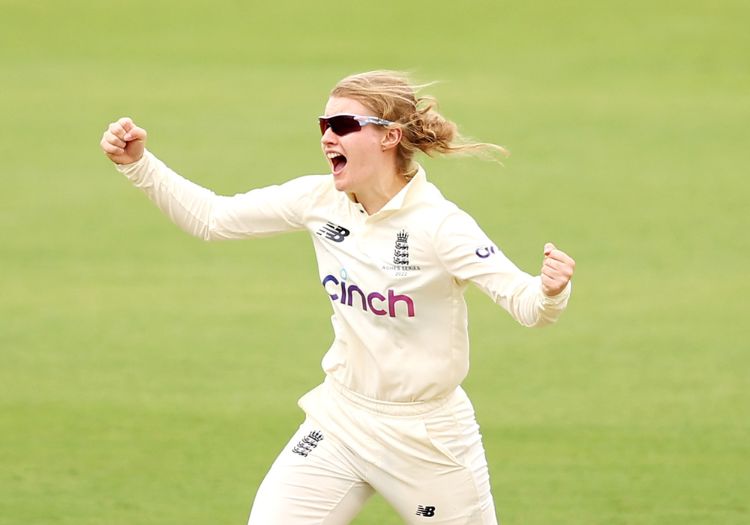
Charlie Dean has become a key part of England's side in the last 12 months (Mark Kolbe/Getty Images)
The feeling, though, is that she leaves the ball well and has the setup to succeed as Lauren Winfield-Hill's replacement. Likewise, Alice Davidson-Richards – should England opt for a second seam-bowling allrounder alongside Nat Sciver – is considered a better player than when she last played for England four years ago.
That she is one of five players included without a central contract tells its own story of how the pool has grown since the regional structure came into place two summers ago.
Perhaps that was even more evident in the England A side selected to take on South Africa last week, which included two teenage left-arm seamers in Freya Kemp and Alexa Stonehouse, as well as Kalea Moore, a young off-spinner whose genuine ability to spin the ball has been specifically highlighted by Lisa Keightley. They offered the tourists a useful run for their money ahead of the real thing.
When Taunton last hosted a women's Test, rain – and a slow surface – intervened as four days' cricket meandered towards the inevitable. There have been two more enthralling draws since, but how England's new era would love to start life with a win.

Welcome to www.thecricketer.com - the online home of the world’s oldest cricket magazine. Breaking news, interviews, opinion and cricket goodness from every corner of our beautiful sport, from village green to national arena.