
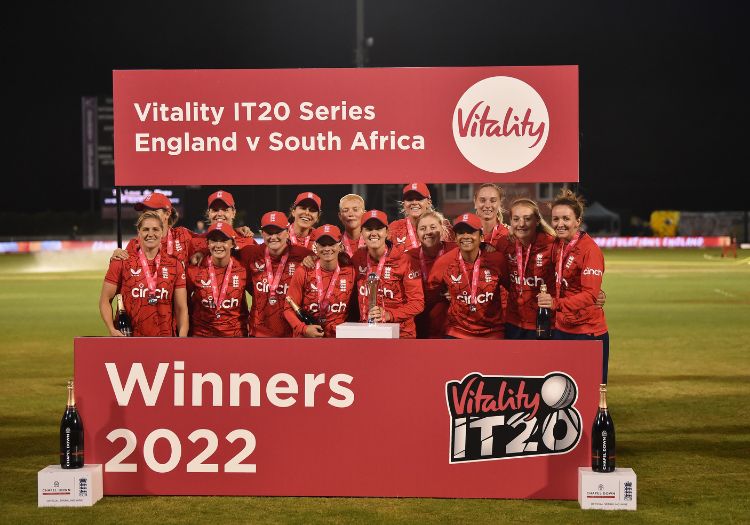
The Cricketer runs the rule over the players on both sides at the end of the multiformat series, which was won 14-2 by England
ENGLAND
Four matches, 206 runs, average 51.5
Still England's leading ODI opener and formed an encouraging partnership with Emma Lamb but was dropped for the T20I series on account of her scoring rate – a rare threat to her place as one of England's senior batter. Started well in the Test before falling for 28 and won't get another chance to rectify that this year.
Her hundred in the ODI at Leicester – in her first innings after being omitted from the Commonwealth Games squad – was a prime show of defiance.
Four matches, 272 runs, average 68, three wickets
Has waited around for her chance for some time and took it with both hands when it came; looked in fine fettle in the Test until being cleaned up by a good delivery, but made her starts count in the ODI series, beginning with a century at Northampton on her 50-over home debut and adding consecutive fifties at Bristol and Leicester, missing out on three figures in both.
She was named as player of the series and headed back to regional cricket on the back of a job well done ahead of the T20Is. A massive month for the Lancastrian, who has nailed down her spot as Beaumont's opening partner.
Seven matches, 280 runs, average 40
A coming-of-age series for the 24-year-old, whose progression in the last 12 months has been remarkable to watch. She couldn't repeat the heroics of her Test debut but began the ODI series with a surprise promotion to No.3 – an excellent move from Lisa Keightley, who has never been shy to push her desire for an ultra-aggressive England team.
She earmarked Dunkley as the ideal player to maintain the impetus set by the openers in the powerplay, and that innovation was rewarded immediately with a superb century at Bristol, the same ground where she made her ODI and Test bows a year earlier. When the T20Is came around, she was elevated further to open alongside Danni Wyatt, a role she will reprise at the Commonwealth Games.
Six matches, 124 runs, average 31
Unsurprisingly didn't feature in the Test match but played two distinct, defined roles in the white-ball formats, where she remains a central figure in Keightley's plans.
She came to the crease in ideal situations as a rapid-scoring finisher in all three ODIs, putting the finishing touches to a straightforward chase at Northampton and adding late impetus at Bristol and Leicester. Looked in good nick through the T20I series without making a big score.
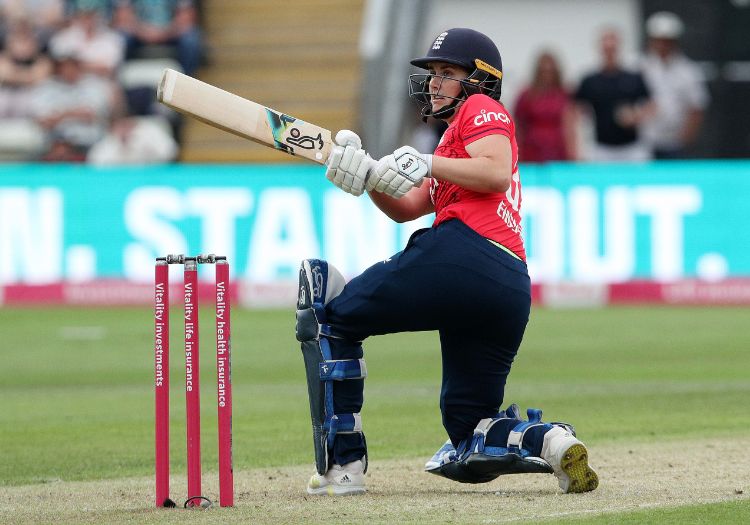
Nat Sciver had a fine series with bat and ball (Ryan Hiscott/Getty Images)
Five matches, 124 runs, average 31
An intriguing month for England's captain who has allowed herself to be moved within her team's batting line-up in order to benefit a subtle regeneration in Keightley's image. Was devastated to be run out by the first ball after lunch in the Test – her favourite format – and then spent the rest of the series either watching her openers make hay in the ODIs or nursing a hip problem through the latter stages of the T20Is.
Surprising that she didn't drop down the order when England were lining up big finishes at Bristol and Leicester, with Wyatt in the wings, but showed her own finishing capabilities in smashing a quickfire 63 to take England within touching distance of their highest ODI total.
Six matches, 371 runs, average 74.2, six wickets, bowling average 31.7
The world's leading allrounder on current form, with the complete game across all formats. Famed for her white-ball power, she guided England from relative strife to a maiden Test hundred, finishing unbeaten on 169, before smashing consecutive, ruthless ODI fifties at Northampton and Bristol.
Had she not been rested for the carnage at Leicester, England would almost certainly have cleared the 400-mark. Remains a useful seam option for Knight and took four wickets in the first ODI; was given another captaincy opportunity at the back-end of the T20I series and heads into the Commonwealth Games at the top of her game.
Two matches, 109 runs, average 54.5, four wickets, bowling average 19.5
One of the stories of the series, even if her Test century ultimately came in a draw; the allrounder had forced her way back into international contention after a four-year absence through her regional performances and repaid that faith with a 207-run partnership alongside Sciver, of which Davidson-Richards made 107.
She featured in just a single ODI – when Sciver was given the game off; didn't have much chance with the bat but nipped in with three wickets. Has done her chances no harm going forwards.
Seven matches, 68 runs, average 22.7, five catches, two stumpings
Always keeps tidily and there remains no doubt that she is the best wicketkeeper in the country; was responsible for Freya Kemp's maiden international wicket with a fine piece of glovework.
With the bat, however, her undoubted ability continues not to match up to her numbers; she was dismissed just three times across the series but didn't pass 28 and lost her wicket in softly more than once.
Three matches, 27 runs, average 27
Limited opportunity for Bouchier, who is yet to nail down a position in England's T20I side but fills a hole in the difficult No.6 role, guiding her team to victory at Worcester and then looking comfortable at Derby before being run out in bizarre circumstances.
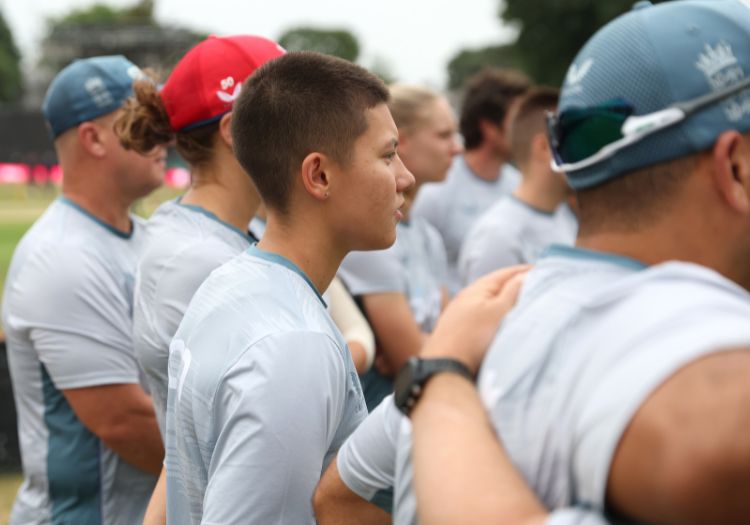
Issy Wong made her international debut in all three formats in the series (Julian Finney/Getty Images)
Two matches, 25 runs, average 25, one wicket, bowling average 14
Didn't bat at Worcester but claimed her first international wicket, with Lara Goodall caught at backward point; when her first chance came with the bat at Derby, she took it.
Sent out at No.3 after Dunkley fell to the first ball of the match, Capsey hit four boundaries in a row in an enterprising 17-ball knock. Some effort for a 17-year-old with the world at her feet.
Two matches, 12 runs, average six, zero wickets
An intriguing pick by England for the T20Is as an example of the aggression wanted by Keightley.
She didn't come off in the first two matches, sent in at No.3 as a floating hitter who might otherwise have found herself as a death-over finisher had England's openers survived the powerplay. Bowls useful off-spin as well and is worth persisting with in a volatile role.
Three matches, three runs, average three, six wickets, bowling average 34.8
The senior bowler in England's Test attack following the retirements of Katherine Brunt and Anya Shrubsole, she took up that mantle, claimed six wickets and gave her team plenty of crucial control.
She struggled to produce the same in the ODIs on excellent, batting-friendly pitches that gave little to the bowlers not taking the new ball. Has been included in the Commonwealth Games squad but feels unlikely to feature in Keightley's first-choice line-up, having gone unused in the T20Is against South Africa.
Four matches, eight runs, average N/A, eight wickets, bowling average 11.3
Brunt's Test retirement raised the question of whether she was nearing the end, but she arguably bowled as well as at any time in recent years during the ODI win at Northampton.
She finished with figures of 3 for 18 through nine overs, swinging the ball both ways and clearly on a mission; Keightley rested her thereafter, before unleashing her once again for the T20Is, where she played a full part and went past 100 wickets in the format at Chelmsford. She looked re-energised in a team of thrilling youngsters.
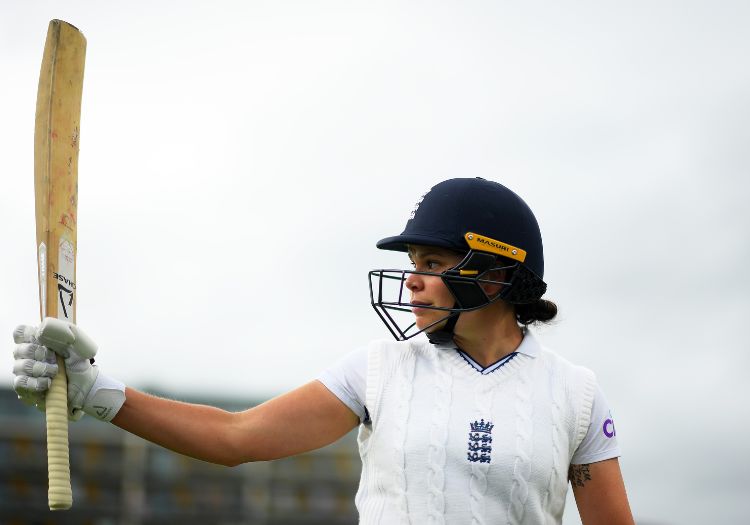
Alice Davidson-Richards made an emotional hundred on her Test debut (Harry Trump/Getty Images)
Five matches, eight wickets, bowling average 30.6
One of the most exciting debuts in years, peaking with a spell at Taunton in the third-evening gloom that ignited the Test and might have set up an England win. She visibly brought energy to her more experienced teammates, running up, bowling fast and clearly loving life.
She bounced out Chloe Tryon at Bristol in her maiden ODI, before cleaning up Goodall with a beauty at Derby to mark her T20I bow. It was a symbol of England's dominance that she didn't bat once, but she has announced herself as the future of the women's game.
Six matches, 68 runs, average 68, 10 wickets, bowling average 19.8
The best spinner in the world enjoyed another fine series, not as potent as often but no less economical in the white-ball leg; South Africa's batters struggled to find a high-percentage option against her, and she didn't go wicketless through a single game.
She was named as player of the series at the end of the T20Is, where she showcased her ever-improving batting alongside two crucial wickets. She smashed 26 runs off a single Masabata Klaas over, having batted equally well in the Test a month earlier.
Three matches, three wickets, bowling average 53
A like-for-like replacement for Anya Shrubsole, at least in the manner of her prodigious inswing, even if she wasn't as prolific in the wickets column; South Africa rarely went after her and, having been touted as an international cricketer-in-waiting for some time, this ought to be the start of a long career.
Three matches, eight wickets, bowling average 18.6
Initially surprising to see her left out at Taunton, owing to a green pitch that wasn't expected to spin and a dodgy weather forecast, Dean came into her own on her return in the ODIs, the format where she has been so impressive since coming into the international game last summer.
She led the wicket-taking stakes in the ODIs, taking four at Bristol and three at Leicester, where she was the senior spinner with Ecclestone rested. She had Laura Wolvaardt in her pocket throughout and offers the twin threat of spin and drift at good pace with an excellent action; easily England's off-spinner of choice.
One match, zero wickets
A tough time for the seamer, who has fallen down the pecking order through little fault of her own. One of the upshots of the pandemic era was that England's squad players on the outskirts of selection didn't have the chance to stake their claim through the regional game.
As a result, others – like Wong and Bell – have developed immeasurably and moved past her. Expensive in her solitary appearance – in the win at Worcester – but hard to judge her at this juncture.
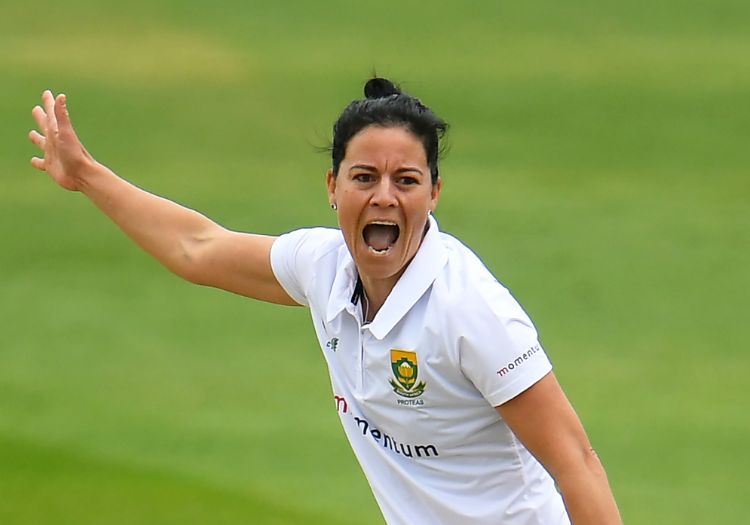
Marizanne Kapp was superb with the bat for South Africa (Harry Trump/Getty Images)
Three matches, four wickets, bowling average 17
A solid return after a tough winter that ended prematurely when the leg-spinner retuned home ahead of the World Cup instead of taking up a spot as a travelling reserve. She explained after the win at Chelmsford that she had used the time off remodelling her run-up and rediscovering her rhythm, the results of which were clear as the series wore on.
One match, two wickets, bowling average nine
The first England player born after the start of Brunt's international career, Keightley has long been after a left-arm seamer and a left-handed batter. In Kemp, who doesn't turn 18 until next year, England have found someone who offers both.
Her first international wicket came from her extra height and the difference in her angle from over the wicket, pushing the ball away from South Africa's right-handers. She is yet to bat for England, but she hits a long ball.
SOUTH AFRICA
One match, 36 runs, average 18
Responsible for one of the series' defining moments: her international retirement at the end of the one-off Test in mysterious circumstances. She had looked in decent touch in her second innings at Taunton, counterattacking for 36 at the beginning of the fourth day, and when hands were shaken it seemed as though South Africa's defiance might set up a competitive white-ball leg.
Instead, Lee stepped away but remained nearby, sitting in the crowd at Bristol and commentating at Derby. Her absence left a major hole in the Proteas' line-up that couldn't be filled and left too much pressure on others.
Seven matches, 275 runs, average 34.4
Looked a million dollars throughout and made three half centuries in three matches in the process but never passed 56, in keeping with a curiously poor conversion rate through her career so far. She ought to have opened the batting in the T20Is rather than coming in at No.4, at which point South Africa were often too far behind the eight-ball to compete.
She might also have been a better option as captain than Sune Luus, even if that is a lot to place on the shoulders of a top-order player still only 23 years of age. It will rankle with someone so primed for Test cricket that her debut only amounted to twin scores of 16.
Seven matches, 125 runs, 15.6 average
A leftie amid an army of right-handers, Goodall made two scores in the forties but never reached fifty despite looking to have the game to make a significant score; at 26, has to start contributing properly following the retirement of Lee and the unavailability of Dane van Niekerk and Marizanne Kapp for the Commonwealth Games.
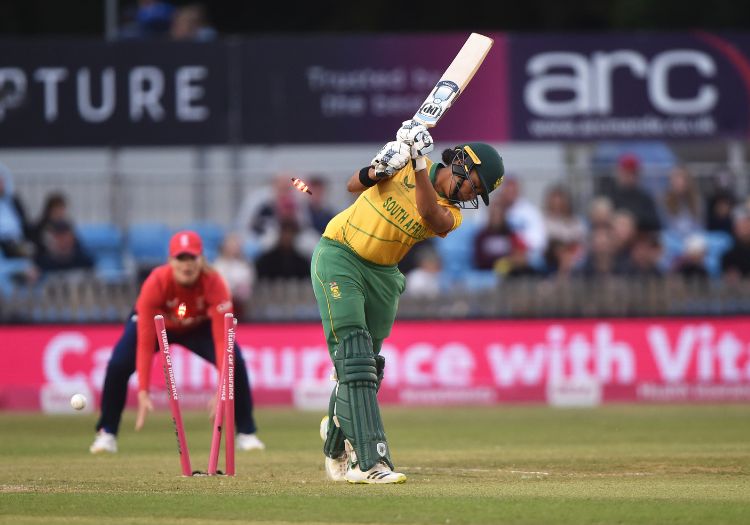
Lara Goodall struggled for runs in the series (Nathan Stirk/Getty Images)
Five matches, 65 runs, average 13
Struggled throughout at the top of the innings, beginning in the Test match where her misjudgement gave Cross the game's first wicket as she was bowled shouldering arms; made 28 in an 87-run opening stand at Bristol alongside Wolvaardt but that was the extent of her contributions before being left out for the T20Is.
Six matches, 58 runs, average 8.3
A woeful tour for the stand-in captain, for whom everything appeared to go wrong. She managed just 58 runs across formats, before missing the final match of the series through illness, while a finger injury appeared to restrict her in the field; she didn't bowl after 10 wicketless overs in the Test. Her captaincy was found wanting, doing much of it from the boundary's edge or at short third, from where she struggled to set the tone.
Trisha Chetty did much of the arm-waving when she was keeping wicket, but Luus' task was not helped by the gradual disappearance of her stalwart teammates. Lee left an unfillable hole, Kapp returned to South Africa for family reasons, van Niekerk was absent with an ankle injury and Shabnim Ismail was only fit to play a bit-part role.
Four matches, 126 runs, average 31.5, four wickets, bowling average 28.3
Criminally underused by South Africa throughout, batting too low in the Test and then not picked for any of the three ODIS before returning once Kapp's departure left the team a seam-bowling allrounder short.
She subsequently made a fine half century at Worcester and was the leading run-scorer on either side in the T20Is. The 28-year-old ought to be one of the first names on the teamsheet as South Africa's rebuilding process takes shape.
Four matches, 340 runs, average 85, one wicket, bowling average 177
A difficult series on a personal level with plenty going on back home, which ultimately led to her early departure ahead of the T20Is. Kapp couldn't be faulted though for what she gave the series until then, churning out a high-class century in the Test and two counterattacking fifties in the ODIs, albeit without a win to show for any of it.
Her bowling was less effective and she admitted regularly that she was struggling with her workload – one of her reasons for not wanting to bat any higher than No.5. Her 150 in the Test turned a near-certain defeat into a draw that would have provided an interesting fifth day, while South Africa were never more assertive than when she was at the crease during the 50-over leg.
Four matches, 51 runs, average 12.8, five wickets, bowling average 57.2
A brutal series for the allrounder, who struggled with the bat and was taken down with the ball. Only eight times in women's ODIs has a bowler conceded more runs in an innings than de Klerk at Leicester, whose eight overs cost 87 runs for a solitary wicket.
Still just 22 years of age, plenty was asked of her, with South Africa's more senior seamers struggling for fitness. She made 38 at Northampton in partnership with Tryon when the tourists would otherwise have subsided cheaply.
Six matches, 190 runs, average 31.7, four wickets, average 32.3
Missed the Test with a hip problem but was arguably South Africa's best player thereafter; such is her approach with the bat, she was somewhat all-or-nothing – with hard-hitting knocks of 88 and 70 in the first and third ODIs but little else apart, including just 24 runs in the T20I series, where she batted too low down – explained by head coach Hilton Moreeng as a decision to give more responsibility to South Africa's youngsters.
Could well be the team's next captain, having been Luus' deputy on this tour; a useful left-arm spinner as well and still one of the game's most powerful batters.
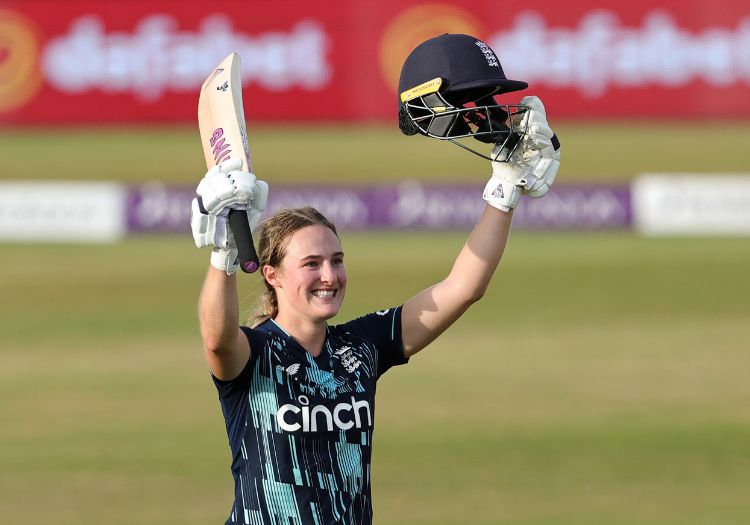
Emma Lamb was player of the series in the ODIs (David Rogers/Getty Images)
One match, 59 runs, average 59
Only called up to the squad following Kapp's withdrawal, Brits played with more intent than South Africa's other top-order batters, ticking along to a well-constructed fifty from No.3 that might have turned into a winning score had anyone offered a similar knock in support.
Three matches, 28 runs, 9.3 average
Ought to have offered far more than she did, having come into the squad for the T20Is after retiring from the two longer formats. Instead, she looked short on match practice and out of form, adding little to a middle order that was crying out for someone of her experience and pedigree.
Four matches, 12 runs, average six
Kept tidily enough but struggled for runs throughout and only affected a single dismissal, running out Bouchier cheekily when the batter lost her bearings at Derby.
Three matches, 24 runs, average eight, one stumping
The more experienced of South Africa's wicketkeeping pair, Chetty didn't feature in the Test despite being one of few in the squad with prior experience, while her runs from No.8 were in a forlorn, losing cause. One of the last of the golden generation that Moreeng described following the series' conclusion.
Two matches, 43 runs, average 43, two wickets, bowling average 60.5
One of the standout performances of the series from a South African perspective was Sekhukhune's backs-to-the-wall effort as nightwatcher on the third evening and the next day to clinch a draw in the Test. She had only previously scored 24 runs for the Proteas.
She was in the team for her bowling, however, and she picked up just two wickets before a groin problem ended her series prematurely.
Four matches, 13 runs, average 6.5, two wickets, bowling average 87.5
A major concern for South Africa heading into the Commonwealth Games, Ismail was absent for the final T20I of the series, having missed the Test and the first one-dayer with a calf issue. She returned in the interim but was far from her best, struggling with a no-ball problem and lacking any potency.
Instead, England leapt on her combination of width and extra pace to punish her. Some bowler when at her best, but disappointing for the series that the 33-year-old was never at her most threatening.
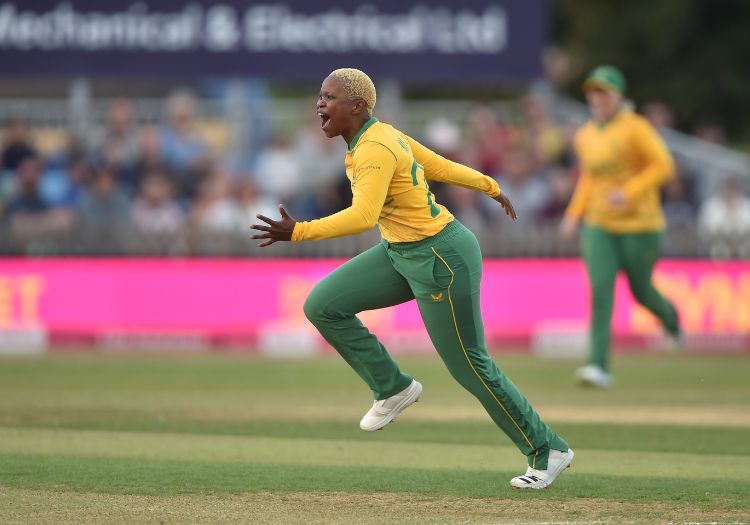
Nonkululeko Mlaba took six wickets in the series for South Africa (Nathan Stirk/Getty Images)
Six matches, six runs, average three, seven wickets, average 31.6
Missed the Test in strange circumstances, with Khaka described as unavailable but without further information given. She returned for the tour's white-ball leg and was ever-present; she was the pick of the seamers at Leicester, Chelmsford and Worcester, highlighting her importance to the Proteas in both limited-over formats.
Three matches, one run, average one, two wickets, bowling average 63
A late call-up once she had recovered from the injury that had kept her out of the preceding tour of Ireland, Klaas was taken down in the T20Is, particularly at Derby where she ended with the most expensive figures for a bowler in a game between two full-member nations, ironically beating her own record that she'd set four years earlier against England at Taunton. She conceded her runs at 12.6 per over through the series.
Three matches, 16 runs, average 16, zero wickets
Another late call-up as South Africa sought reinforcements, the off-spinner impressed in the main even if she didn't have much to show for her efforts.
The 25-year-old went wicketless through the three T20Is but bowled mostly tightly – conceding her runs at just 7.28 runs per over, marginally more cheaply than Tryon.
Five matches, eight runs, average four, six wickets, bowling average 41.5
The left-arm spinner finished the tour impressively, coming in for a solitary T20I and claiming figures of 3 for 22 at Derby. Until then, England had played with her ease, milking her expensively at Northampton and Bristol and attacking her at Leicester as the hosts racked up a huge score.
Mlaba isn't a huge spinner of the ball, though she did produce a beauty to dismiss Jones in the Test and then bowled intelligently at Derby to beat Sciver with an arm-ball. Still just 22, she is part of the Proteas' new era.

Welcome to www.thecricketer.com - the online home of the world’s oldest cricket magazine. Breaking news, interviews, opinion and cricket goodness from every corner of our beautiful sport, from village green to national arena.