
NICK FRIEND: The Gloucestershire spinner has spent the last five years campaigning for better awareness of critical illness cover after losing his wife, Laura, to cancer in 2018
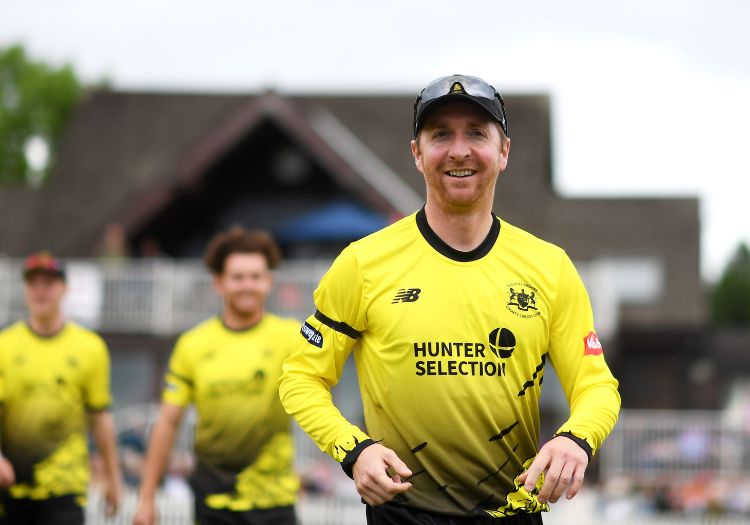
Every professional domestic cricketer in England and Wales is covered by critical health insurance thanks to the tenacity of Tom Smith.
The Gloucestershire spinner has spent the last five years campaigning for better awareness of critical illness cover after losing his wife, Laura, to cancer in 2018.
Smith was recognised at the Professional Cricketers' Association dinner in October with a special award and a standing ovation from 500 peers. His work was rewarded in 2022 with a helmet-sponsor partnership between Vitality and the PCA that provided the funds for every player on the circuit – male or female – to be covered by a critical health plan that only previously existed within Team England.
"It is not a luxury item," he told The Cricketer as part of a wider article on the subject, which is available through the link below.
Smith was not covered and only became aware once it was too late. "It probably wasn't until Laura had her first surgery and had a decent chance of a 10-year survival rate that we realised we were really exposed," he said.
"The first question I always ask a widow or widower is: 'How are you financially?' Because that is the one thing that you can control. If you have the cover, you can pay your mortgage off or put the kids in childcare, and that makes everything else a tiny bit easier in that you don't have to worry about making kneejerk reactions.
"I could have not played cricket for a year, but I carried on playing. It gives you the freedom to be the parent that you want to be. If you haven't got kids, it allows you the mental space to not have to immediately go back to work.
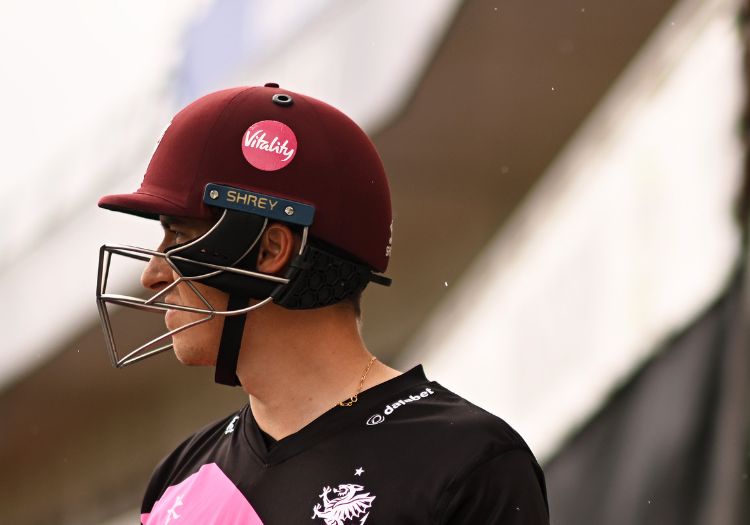
Every helmet in English white-ball domestic cricket has featured Vitality since the deal was agreed in 2022 (Harry Trump/Getty Images)
"I didn't know anything. We bought our first house, and our mortgage adviser told us to think about this cover. We were broke, we'd just spent our money on the house. So, I was like: 'What's the minimum cover that will look after us a little bit and then we'll think about it again?' Sure enough, we took out the bare minimum but never reviewed it because we never had any money again.
"I regret not having a bit more understanding from an early age. That is what really spurred me on: I'd be horrified if something happened to one of my teammates and they didn't understand it."
As well as helping to secure financing for professional cricketers, he has since held talks with the equivalent associations in football and rugby, as well as writing to the Professional Players' Federation, which currently oversees more than 17,500 professional sportspeople across 12 player associations.
"With all these things, that money has to come from somewhere," he said, "and generally it's not extra money but money coming out of another pot. In the rugby world, there is no helmet with ad space, for example. It's tricky, but that has been my biggest learning: just because it's important to me, it doesn't have to be important to anyone else, and I shouldn't feel frustrated or angry that it's not high on someone else's priority list.
"But I know the importance of it, I know the difference it's made to cricket. At the PCA dinner, random players who I'd never met came up to me and thanked me. And then having football and rugby just sitting on it, that hurts. But it doesn't have to be their priority. Their priority might be something really important in their industry, like players with dementia."

Welcome to www.thecricketer.com - the online home of the world’s oldest cricket magazine. Breaking news, interviews, opinion and cricket goodness from every corner of our beautiful sport, from village green to national arena.