
The guardians of the laws step in after Lancashire claim an umpiring error denied them the title against Hampshire at Edgbaston
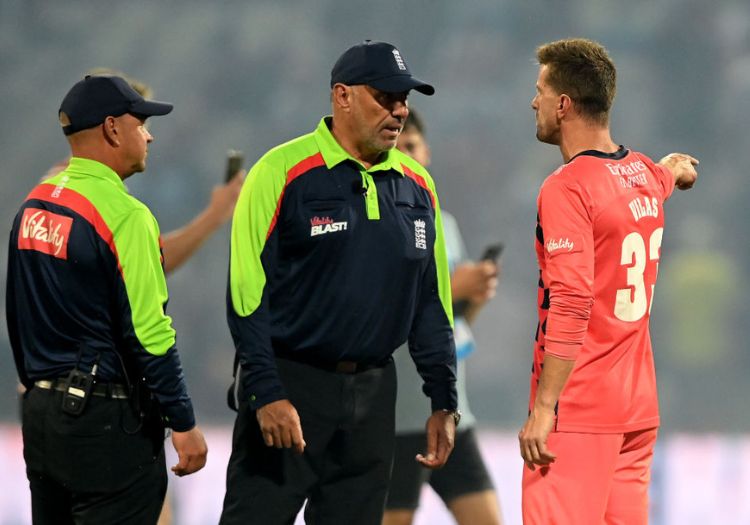
Marylebone Cricket Club, the guardians of the laws of cricket, have issued a clarification regarding the uncertainty around the climax to the T20 Blast final.
Lancashire needed two from the final delivery to secure a tie and secure the trophy based on having scored more runs during the powerplay.
Nathan Ellis, having overstepped during the previous delivery, held his nerve with a slow ball that beat Richard Gleeson and carried through to wicketkeeper Ben McDermott.
Tom Hartley ran through for a bye but slowed upon reaching the striker's end. McDermott dislodged the bails and umpires David Millns and Graham Lloyd appeared satisfied that the ball was dead.
Gleeson went for a second and as Hartley responded, McDermott set off to the opposite end but did not break the stumps as the Hants celebrations started early.
The single meant Hampshire claimed their third title by a single run. Lancashire captain Dane Vilas was left disappointed by the ruling.
He said: "There was a little bit of confusion because we thought the boys were going for another run and Tommy was quite keen on getting that other run. We'll have a look back at the game in a bit more detail."
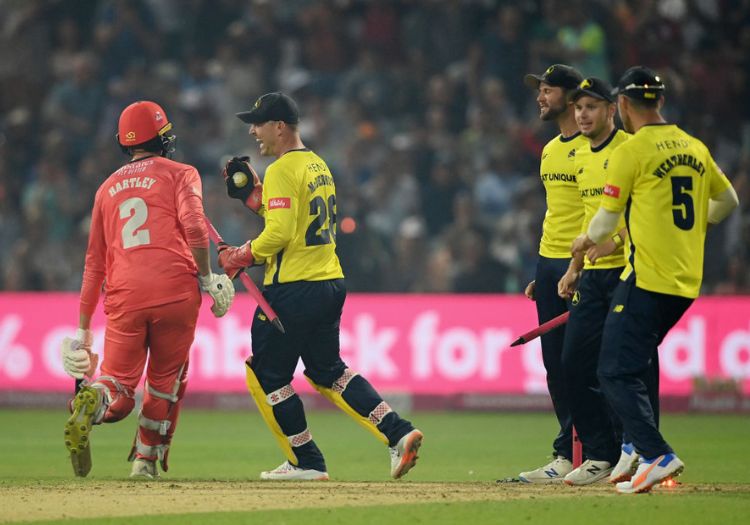
Confusion reigned during a chaotic ending to proceedings (Alex Davidson/Getty Images)
The MCC have released a statement appearing to support the decision from the on-field officials, making reference to the outcome of the game being final
"The match concluded when the ball was deemed to be dead by the umpire, who signalled a bye," a statement read.
"Under Law 2.12.3, the signal for a bye shall be made to the scorers only when the ball is dead.
"Analysis of the footage of the match showed that, when the umpire signalled the bye, the original non-striker was standing still, about four yards behind the striker’s wicket, while the striker was slowing down in his attempt to reach the other end.
"Therefore it was reasonable to consider that the ball was dead and consequently, it's not relevant that the wicket was not lawfully put down at the bowler's end.
"Once the umpire has made the decision that the ball is dead, that decision cannot be revoked."
The MCC made no direct reference to Law 20.2 which states "whether the ball is finally settled or not is a matter for the umpire alone to decide".

Welcome to www.thecricketer.com - the online home of the world’s oldest cricket magazine. Breaking news, interviews, opinion and cricket goodness from every corner of our beautiful sport, from village green to national arena.