
NICK FRIEND AT THE KIA OVAL: From 135 without loss, Surrey found themselves 142 for 6: Hashim Amla could only watch on from the other end as a youthful bowling attack claimed combined figures of 6 for 7 in 49 balls
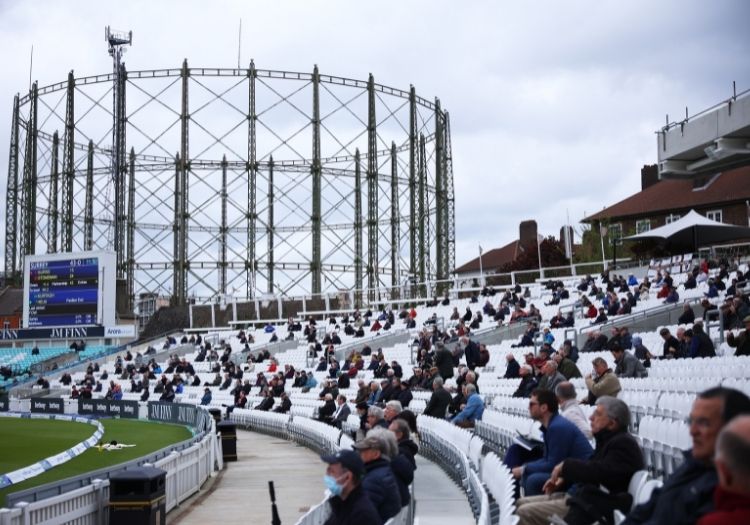
Kia Oval (first day of four): Surrey 146-6, Middlesex
At times over the course of the last year, it has been easy to miss a wicket. In an empty stadium, with only the bustle of the London traffic and the drills of construction workers for company, you might look up from your laptop to find a batsman traipsing from the field, bat under arm, with only a smattering of high-fives and fist-bumps from those in the middle to denote a moment’s success.
So, the impact of fans on their return to the Kia Oval was never more conspicuous than when a home player was dismissed – not least during an eight-over spell during the middle session when, for wont of a better phrase, all hell broke loose.
When Surrey and Middlesex met earlier this season at Lord’s, Peter Handscomb’s side claimed their only victory so far in a difficult campaign, where promise with the ball has been swiftly undone by repeated failings with the bat. And those issues may yet come to haunt them later in this game when their turn arrives. But having won the toss and elected to bowl, after being defied by Rory Burns and Mark Stoneman through the first session, carnage ensued for a 42-minute period on an overcast mid-afternoon.
Each time a wicket fell – first Stoneman, second Burns, third Ollie Pope, fourth Ben Foakes, fifth Jamie Smith, sixth Jordan Clark – the crowd let out a collective gasp that reminded you quite what elite sport has been lacking since the pandemic changed the way we watch our teams.
From 135 without loss, Surrey found themselves 142 for 6: Hashim Amla, who earned the third pair of his career in the corresponding fixture back in April, could only watch on from the other end as a youthful bowling attack claimed combined figures of 6 for 7 in 49 balls to trigger Surrey’s worst batting collapse in first-class cricket since 1903.
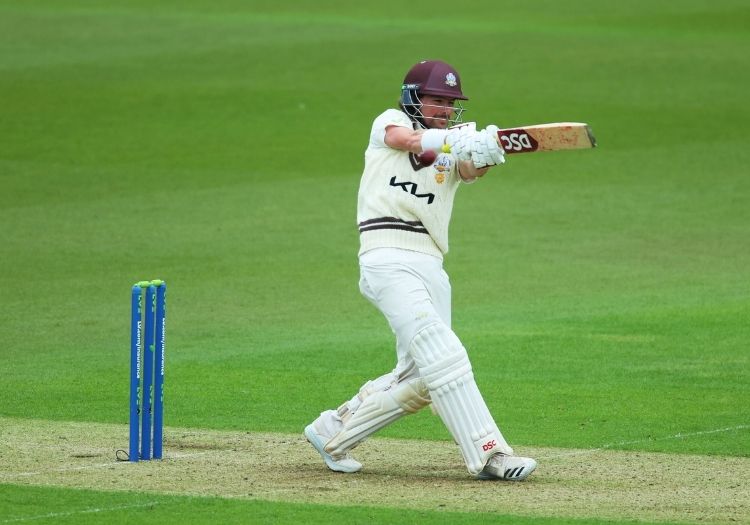
Rory Burns reached fifty for the sixth time this season
Once Martin Andersson was reintroduced to the attack, having struggled for rhythm before lunch, four wickets fell in 14 deliveries – including three to the young allrounder, who trapped Pope in front with his first ball and then had Foakes caught behind in the same over.
Earlier, having survived three close lbw calls, Burns worked his way to a sixth LV=Insurance County Championship fifty of the summer alongside Mark Stoneman, who also reached a half century of his own.
But red-ball cricket is a curious beast, and Middlesex – after a disappointing morning in which they failed to make inroads in ideal conditions – took full advantage of its ebb and flow.
When Surrey last batted on their home patch, they made hay against Hampshire in reaching 560 for 7 – with 215 for Amla and 131 for Pope. Given their first-wicket stand and Middlesex’s recent struggles, the 3,500 in attendance could have been forgiven for anticipating more of the same.
However, Handscomb at the toss had suggested he sensed an Oval surface with more than a sprinkling of greenery and, as the day wore on, he was vindicated – not only in the wicket-taking deliveries that altered the course of the game, but also in the control exerted by his seamers, four of whom have emerged from the county's academy.
Andersson was the most expensive, conceding his runs at 4.25 per over, but Tim Murtagh and Ethan Bamber rarely strayed from their sixpence, while Tom Helm and Blake Cullen were also rewarded for their consistency with a scalp each. Against his former county, in fact, it was only Murtagh who went wicketless.
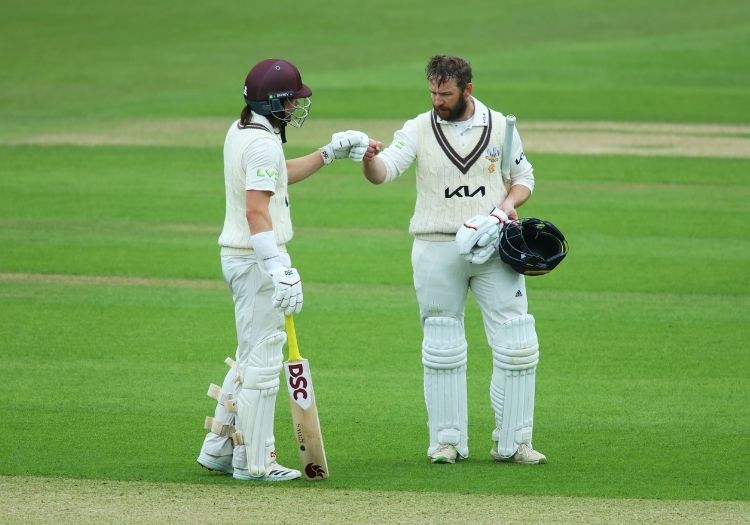
After Rory Burns and Mark Stoneman fell, Middlesex fought back impressively
For fans of irony, the end of the day encapsulated the frustrations of the last year: tea was taken and then the rain set in. Covers were rolled out to drag across the entire width of the ground’s famously lengthy square, with a shield of grey hovering for as far as the eye could see as a gale blew across south London.
But then, the sun came out once more and the earlier scene gave way to an altogether more pleasant horizon. Typically, it was only at that point that play was called off for the evening, with the rain gone but a clean-up operation too time-consuming for an evening resumption.
By then, the vast majority of the spectators had drifted away for the night. Those few hardy souls who remained, though, acted as a reminder of what they – and our game have missed.

Welcome to www.thecricketer.com - the online home of the world’s oldest cricket magazine. Breaking news, interviews, opinion and cricket goodness from every corner of our beautiful sport, from village green to national arena.