
PAUL EDWARDS: The average age at which a professional cricketer retires is 26. For every Marcus Trescothick ending his career with tributes and warm memories there are ten whose dreams of playing for their county and then England remain just that
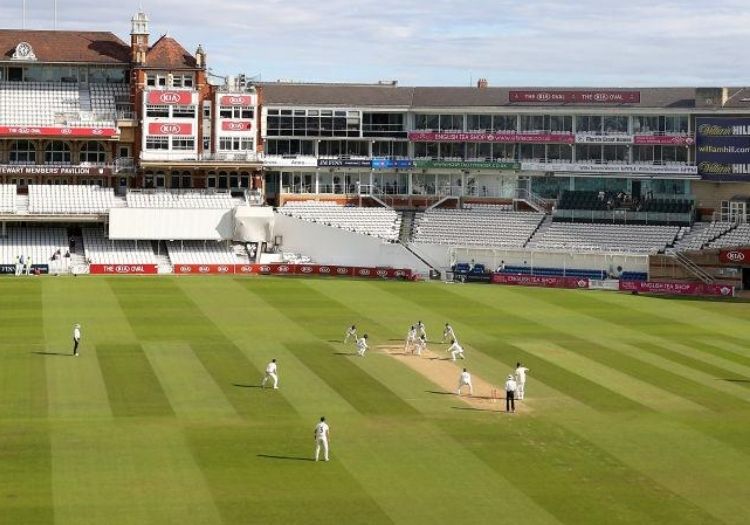
Abnormal service has been resumed. This column was begun in Chester-le-Street and completed in Southport. When it appears I will be on the way to Nottingham. The county caravans are rolling, even if their occupants must travel separately and no one can attend the fair. And for many, mainly young, cricketers something more important than cups will be at stake in this summer’s Bob Willis Trophy and the shortened Blast: their careers will depend on how they perform over the next two months.
First impressions matter. Children understand this before they can spell ‘impressions’. Year Five pupils can sense within ten minutes whether a new teacher is any good or not. It takes longer in professional cricket, even though officials already take great care before they offer a first contract to a young lad or sign a more experienced player from another club. All the same, no one knows exactly how anyone will perform until they make their debut; nor can they be sure whether they will fit into the culture of a dressing room until the first bad day.
These thoughts crossed my mind as I watched the match between Durham and Yorkshire last weekend. They deepened as news arrived of the eight other games around the country. They became a theme of my first four days on the road this season.
In the game at Chester-le-Street Dawid Malan was making his competitive debut for Yorkshire following his move from Middlesex, and the Yorkshire off-spinner Jack Shutt was savouring his first taste of top-level cricket. A month ago, Sean Dickson was a Kent cricketer; now here he was, opening the batting for Durham with Alex Lees (who made a century in his first four-day game against his former colleagues.).
After two injury-haunted years at Trent Bridge Paul Coughlin was playing for Durham again. Alongside him was David Bedingham a 26-year-old South African batsman who has now played 33 first-class games. Bedingham is on a one-year deal at Durham and had his first experience of English four-day cricket when he faced Ben Coad and Matthew Fisher at the Riverside. He made a polished 77 in the second innings and now the coaches know that bit more about him. All these players should be professional cricketers next April but they still had things to prove.
And it all goes deeper and wider than that. Something like 130 cricketers are out of contract at the end of a shortened season in which county budgets are likely to be squeezed very hard. Chief executives may decide that the playing side will have to carry some of the load and directors of cricket will tell some very talented young players they will not be kept on. For a day or two their world will end. There will be memories of county age-group squads, winter nets on winter evenings, all manner of sacrifices, not all of them their own. Now this.

George Balderson made his Lancashire debut
The average age at which a professional cricketer retires is 26. For every Marcus Trescothick ending his long career with tributes, honours and warm memories there are ten whose dreams of playing for their county and then England remained exactly that. Now they work in an office or run their own business. They might lead very fulfilling lives. They might well have come to terms with the fact that they didn’t quite have whatever someone else decided it took. All the same…
Then there are the players who got their first chance of playing county cricket last weekend partly because England had two squads in bio-secure bubbles. Lancashire’s team against Leicestershire at New Road included three players, George Balderson, Ed Moulton and Tom Hartley, who were making their first-class debuts.
Balderson, who is already an England Young Lion, made a useful 29 in the first innings and took a couple of wickets; Hartley, who bowls slow left-arm for Ormskirk, dismissed three Leicestershire batsmen in his 33 overs; Moulton, a Chorley lad, opened the bowling and did so very competently in the first innings but went wicketless on his debut.
Charlie Thurston's match-saving contribution shows way for youngsters
Lancashire lost what sounds like a wonderful match when Leicestershire chased down 150 in 15.4 overs and won with eight balls to spare. But regardless of the result, I suspect the three debutants will be itching for another opportunity. What could be better than four-day cricket at Worcester?
No doubt offering encouragement to the trio of freshmen at New Road was 35-year-old Steven Croft, who played his first game alongside Simon Marshall, Tom Smith and Gareth Cross when Lancashire fielded a quartet of new boys in the game against Oxford University in 2005.
Marshall was 26 when he was released in 2008. Smith was appointed Lancashire skipper in 2015 but played only one first-class game that season before being forced to retire with a back injury a year later. He was 30. Like Smith and Croft, Cross was in the team that won the County Championship at Taunton in 2011 yet was released, aged 29, two seasons later and had a year with Derbyshire.
All the same, if you asked the three players whose careers finished early whether they regretted becoming professional cricketers, I’ll take a decent bet the answer would be strongly in the negative. Once this game’s got you, it rarely lets go.

Dan Moriarty took a five-wicket haul on his Surrey debut
What makes it worse is that the line between making it and not doing so is so very narrow. It always has been. During the latter stages of lockdown, I was writing a piece about John Edrich, the former England opener. Edrich was a left-handed batsman with an odd, straight-backed stance.
It looked uncomfortable, ungainly, and when the Surrey professionals saw it for the first time, they almost all decided that this young bloke would never score runs in the professional game batting like that. Maybe he should go back to Norfolk. Only Bernie Constable, the old pro who always watched players more closely than anyone, noticed Edrich hadn’t yet missed a ball. Before long the apprentice was a fixture at the top of Surrey’s order and in 1963 he played the first of his 77 Tests.
Some people think cricket is a beautiful game. They are right. One has only to think of James Hildreth’s cover drive. Other folk think cricket is a brutal affair. They are also correct. Remember Dale Steyn bowling at his fastest. There is no dichotomy, only two of the many faces of an extraordinary sport. Another face has a hard-nose. It is the face of business.
Before very long we will know who will contest the final of the Bob Willis Trophy. Even before then the Blast will get going and some matches may even be attended by a couple of thousand spectators. Then, maybe in October, a series of meetings will be arranged. At each of them a young player will knock on a door and a few minutes later he will be sitting down in an office filled with screens, files and charts. Then his boss will begin to speak.
For unrivalled coverage of the county season, subscribe to The Cricketer and receive four issues for £15

Welcome to www.thecricketer.com - the online home of the world’s oldest cricket magazine. Breaking news, interviews, opinion and cricket goodness from every corner of our beautiful sport, from village green to national arena.