
After England rescued a series draw at The Oval, The Cricketer looks back at an extraordinary series, asking who fits into a side made up of the best on each side
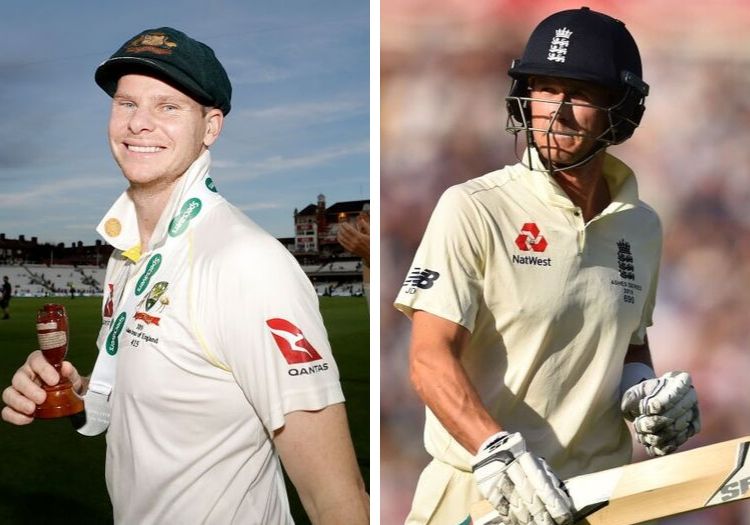
The very best of a bad bunch, and then some. Opening the batting has rarely been so statistically difficult, and yet Burns surpassed all expectations. Little will have surprised those who have observed the quirky Surrey left-hander in recent years; quite simply, this is what he does. His emergence on the international scene was both a victory for county cricket and for his own sheer bloody-mindedness.
No England opener has faced more deliveries in an Ashes series since Alastair Cook’s golden Australian summer in 2011. Burns’ medium-term future is secure, while a solid winter could position him nicely as a possible alternative captaincy option.
Royally messed around by England ever since his recall to the national setup in 2018, he made a gutsy attempt of all that was asked of him this summer. Batting at three against Ireland to protect Joe Root, he was shunted down to four when Root shifted himself up the order ahead of the Ashes. When the Jason Roy experiment reached a palpable low-point, Denly was the man propelled once again, even having begun to look settled at four.
The Kent man, an opening batsman in his early days in county cricket but reinvented as a middle-order stroke-maker in recent years, became Roy’s human shield alongside Burns. A genuinely terrific effort, therefore, to end the series with three half-centuries and an increasing air of authority. Six more runs at The Oval would have given the 33-year-old a fairy-tale hundred; that disappointment should be soothed by trips to New Zealand and South Africa this winter.
A cracking advert for determination, a solid technique and, of course, the value of red-ball cricket. While many in both these two sides waltzed into an Ashes series on the back of an emotionally draining World Cup, Labuschagne had been busy honing his idiosyncratic movements at Glamorgan. An extraordinary set of numbers there – he remains Division Two’s top run-scorer – carried into an altogether different challenge. Test cricket’s first ever concussion substitute, he entered the series at the most difficult moment imaginable.
His response was, quite frankly, staggering. With his top order offering no protection whatsoever – David Warner managed fewer runs than Steve Smith hit boundaries, Labuschagne constructed four fifties in seven efforts. He will be frustrated never to have gone big – 80 was his peak, but without his fortuitous arrival in the contest, it is tough to imagine quite how Australia would have snuck over the line.
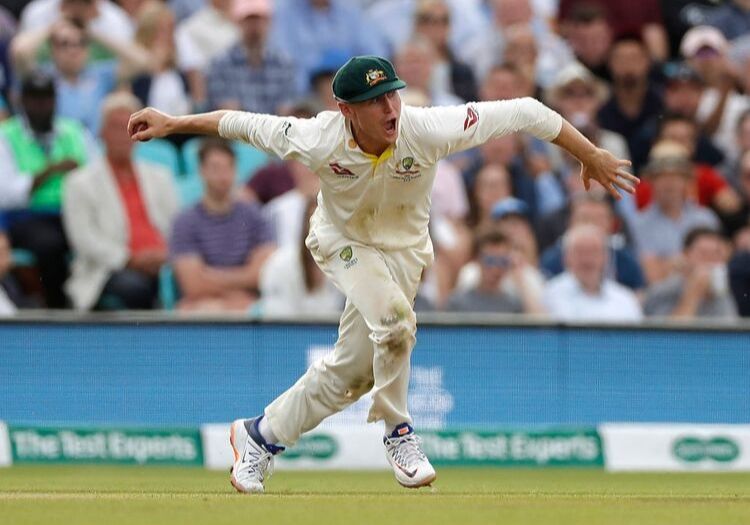
Marnus Labuschagne made four fifties after coming into Australia's team midway through the Lord's Test
The best since Bradman and, perhaps, the best since the game begun. Certainly, nobody in even semi-recent times has accomplished what Smith achieved this summer. Quite simply, this was his series. Those present to watch him go about his work will reminisce for as long as they live – it was a pleasure and a privilege, a sentiment best played out through the changing tone that greeted his entrance and departure from the crease.
The howling Edgbaston boos were replaced at The Oval by a standing ovation. Cricket has never seen inevitability like this; that Smith was ever dismissed seemed to take all those present by surprise, Joe Root included. Ranking individual knocks is an often futile task, but to look back at Smith’s three hundreds is a necessary reflection.
Whether he will ever play a knock as symbolically significant as his twin efforts in Birmingham must be doubtful. Under pressure from the game situation, shepherding the tail, all while a cacophony of jeers accompanied his every step, there can have been few more supreme displays of defiance in the history of the sport. Six innings, 774 runs, an average of 110.57. Cap doffed.
A curious selection from the outset, given the omissions from the squad of Joe Burns and Kurtis Patterson, but Wade bookended his series with fair justification of his presence in this Australian team. Either side of two centuries, there was precious little to speak of, though Wade – naturally – found plenty to say. In the end, however, his punchy, pugnacious approach was not limited to the talk. He walked the walk both at Edgbaston and The Oval, with two counterattacking centuries.
His effort in the final Test was a stunning knock, relishing a frenzied battle with Jofra Archer, his Hobart Hurricanes teammate. The war cry that accompanied his century was a stirring moment. A character that England have learnt to love to hate, but the kind you’d want by your side. More than a bit of Russell Crowe’s Maximus Decimus Meridius about him.
Ordinarily, the player of the series. Steve Smith, though, is not ordinary. He played the greatest knock in England’s Test history at Headingley, dragging his side over the line in a game only he truly deserved to win. He found a willing partner in Jack Leach, but his obdurate stand would have meant nothing without the devastating belligerence of an extraordinary all-round athlete.
If the scenes of two years ago risked being the breaking of Stokes, then this summer has seen his making. He may well have become the most recognisable English cricketer since Andrew Flintoff, whose finest hour was documented on terrestrial television. Stokes replicated that with his World Cup final heroics, and his Ashes exploits – while back behind Sky’s paywall – transcended the sport and found him back on the front pages for the second time in a matter of weeks.
There was another unbeaten ton – in the second Test at Lord’s, a knock seemingly consigned to the annals now. So much has happened since. Stokes, like Smith, deserved to win this series.
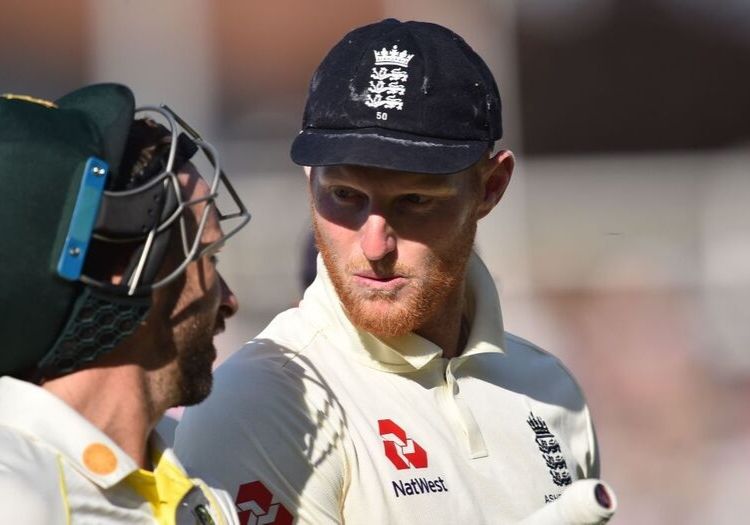
Ben Stokes' hundred at Headingley was the culmination of an extraordinary Test match
A selection dilemma, in truth. Both Tim Paine and Jonny Bairstow endured fairly horrid series. Neither provided anything like a fair reflection of their own ability. Paine edges it for his captaincy; the decision to throw the ball to Marnus Labuschagne at Old Trafford was a match-winning intervention just as the ghosts of Headingley were beginning to rear their head once more. Both keepers managed a half century each, both looked woefully out of touch with the bat, while neither’s keeping was without fault.
Bairstow managed 34 more runs than Paine, but then more is expected – and needed – from his batting. The Australian skipper, though, has performed admirably in the last 18 months. The very definition of a poisoned chalice, it is hard not to see Paine as almost a caretaker in this side, especially since the returns of the Sandpaper Three. He has held himself faultlessly in spite of it all. He has retained the Ashes on English soil. If he called it quits now and sat back to reflect on his part in Australian cricket's necessary renaissance, he could be mightily proud.
The best bowler on either side and a beacon of consistency throughout. Curiously, he never picked up five wickets in an innings, though that highlights the relentlessness of his threat – that 29 wickets were almost equally divided over 10 innings. Alongside Stuart Broad, the only seamer to play in all five Tests, though that rarely showed. An absolute phenomenon; it seems absurd to say, but with 123 Test wickets at 21.45, he remains an underrated operator.
After Jofra Archer’s emergence, some have spoken of the Barbados-born fast bowler challenging Jasprit Bumrah for the mantle of the world’s most dangerous quickie, but Cummins surely trumps both. Frequently touching 90mph and rarely giving anything away, he was a major weapon for Paine, giving England next to no respite. Joe Root – and his off-stump – will be thrilled to see the back of him.
His debut at Lord’s will live long in the memory. Two six-wicket hauls followed at Headingley and The Oval, but Archer’s most thrilling spell came in the second Test. The uncomfortable image of the delivery that struck Steve Smith has become engrained in the minds of all who witnessed it, but that is to forget its wider context.
Smith, untroubled for days beforehand and then subsequently, was forced to hop. He reminded reporters later that Archer had not got him out, but he had been shaken. He changed his method of swaying and ducking to combat the brutality of Archer’s natural movement into the right-hander.
Their duel, which continued at Old Trafford and in the final clash of the summer, was never more thrilling than at Lord’s, however. Smith was rapped on the gloves, compelled to hook compulsively, made to throw himself to the turf just to avoid a man possessed on his Test bow. It seems incredible that his Test career is just four matches old; 22 wickets at an average of 20.27.
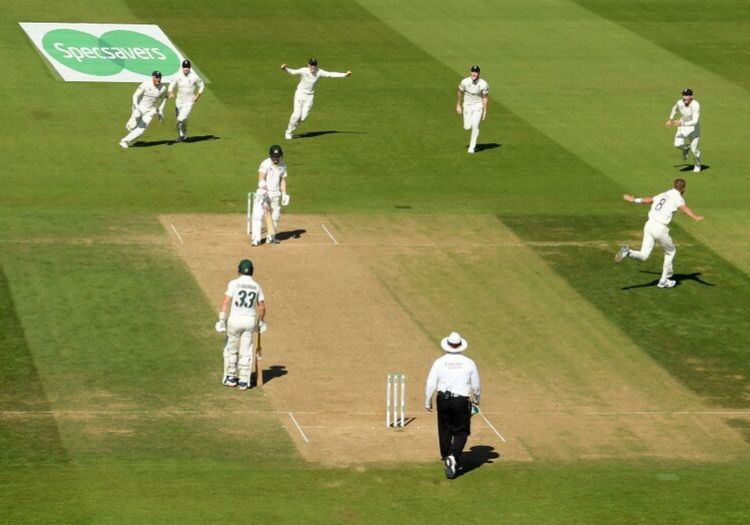
Stuart Broad dismissed David Warner seven times at a cost of just 35 runs
Stuart Broad’s attempt to hold a weary bowling attack together, often back out on the field far sooner than it should have been due to the batsmen’s fallibility, was a stirring display of defiance. Written off by far too many in recent times, he came to the fore in James Anderson’s absence – just as he did at Trent Bridge in 2015, when his eight-wicket haul won England the Ashes. A courageous, ballsy effort, whose efforts merit more acclaim.
His hold over David Warner was spectacular and unprecedented. Never has a man of so much ability been forced to look to utterly bereft. Broad had him on toast – the same plan, replicated over and over again. Even when Warner altered his own game to combat Broad, nothing was doing. Broad has spent much of his career playing second-fiddle to Anderson, cast as a bowler of great spells.
Yet, 467 Test wickets are firm evidence of proof to the contrary. His remarkable heart here was nothing not to be expected, but worthy of considerable admiration. A simply extraordinary bowler, whose energy never dropped even as he toiled away in all five games. Of the seamers on show, only Pat Cummins bowled more overs.
Looking back, it seems an absolute madness that Josh Hazlewood didn’t play in the first Test of the series. Australia’s metronome gave England nothing, taking his 20 wickets at an average of 21.85, while handing England just 2.70 runs per over. He might go about his work with less of the thrill of Archer or Cummins, and less of the bounding excitement of Broad, but his mastery comes in his unfussed method.
Australia have never been quiet about their desire to dominate an opposition captain, and Hazlewood had Joe Root living under his spell. Constantly caught on the crease as the seamer brought the ball back into his pads and targeted his stumps, Root became a sitting duck at times. He could perhaps have done more to counter the threat, but Hazlewood rarely gave him anything on which to feed. A fine bowler.

Welcome to www.thecricketer.com - the online home of the world’s oldest cricket magazine. Breaking news, interviews, opinion and cricket goodness from every corner of our beautiful sport, from village green to national arena.